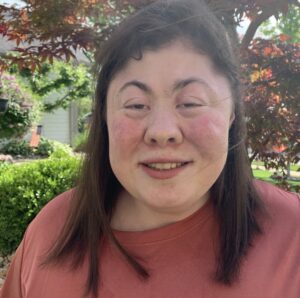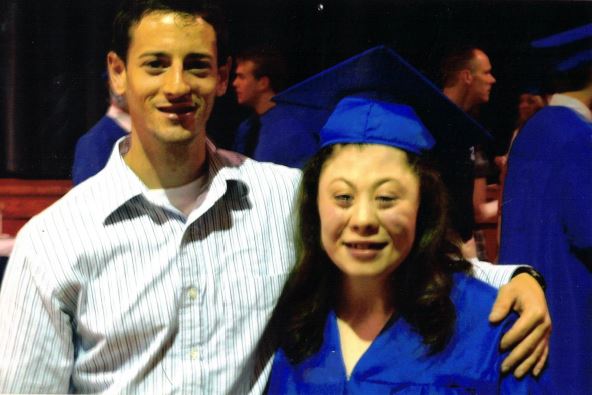
Before you read on, make sure to check out Part 1 of Laura’s story. In Part 1, Laura shares the diagnostic journey, why her family is so rare, and what Carpenter syndrome is. Today, Laura discusses how she manages her condition and the importance of being an advocate.
Managing her Condition
Because Carpenter syndrome is so rare, Laura has often found herself explaining what it is—and what she knows about it—to doctors. More research could help to improve understanding of this condition and its management. Says Laura:
“Research into Carpenter syndrome and other rare disorders is needed. This could help educate doctors more about the patients they are taking care of and possibly even create better treatment plans.”
Currently, Laura manages her condition through regular visits with her care team and healthcare providers. She must also undergo frequent X-rays and MRIs to monitor the deformities of her body. Because of her body’s structure, Laura deals with chronic pain. Medication, injections, and physical therapy are all tools used for pain management.
Laura and her brothers have also had multiple surgeries to try and fix some of their skeletal abnormalities. Some of the surgeries that Laura has had are craniofacial surgery and multiple orthopedic surgeries some which include osteotomies of her left foot and fingers. Both of her brothers have also had multiple orthopedic surgeries as well as heart surgeries to correct skeletal abnormalities as well as heart defects that are associated with Carpenter syndrome.
One of the most difficult parts of managing her care is the general lack of understanding around rare conditions. Laura shares:
“I know that personally, it can take a while to find the right doctor that knows how to best treat my condition. Even though I know doctors mean well, it can be frustrating to hear often that my case is complex or that they don’t know how to treat me. Having a rare disorder can also sometimes involve a lot of medical appointments which can at times be draining and overwhelming for the patient and caregiver.”
Through better awareness, we can hopefully cultivate a medical community that is more aware, more engaged, and more prepared to help those with rare conditions.
Becoming an Advocate
Patient advocates are the cornerstone of the rare disease community. They raise their voices, challenge misconceptions, and inspire change. When it comes to spreading awareness and education, these patient advocates—and their stories—create more support and resources. Getting involved in advocacy, whether on a personal or wider level, can sometimes be scary. But every little bit helps push this community forward. Says Laura:
“Don’t be afraid to advocate for yourself and your needs. This is something I have recently seen how important it is to do. Also, advocating for yourself can mean taking time for yourself. It can be overwhelming at times to live with a rare disorder.”
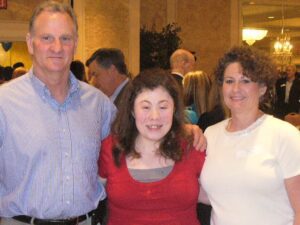
Advocacy may look different for everyone. For some, advocacy is learning how to better communicate with your doctors; for others, advocacy is attending events or reaching out to legislators about policies that can shape the rare disease community. Storytelling can also be a powerful advocacy tool. Patients are experts in their conditions, and spreading their own stories can be helpful and encouraging to others. In Laura’s case, she shares:
“I hope that sharing my story will help inspire others with a rare disorder and can also educate people on the challenges that people with a rare disorder face when it comes to getting a diagnosis and treatment.”