This patient story is sponsored by AVEO Pharmaceuticals, Inc. and is promoted through the Patient Worthy Collaborative Content program. We only publish content that embodies our mission of providing relevant, vetted, and valuable information to patient communities. If you are interested in sharing your story, please call 888-818-1673.
You Are Not Alone
For patients living with advanced kidney cancer, the journey can feel daunting, isolating, and overwhelming. The uncertainty that comes with an advanced cancer diagnosis can cast a long shadow, making even the strongest feel alone in their struggles. Yet, it is essential to remember that you are not alone. Building a strong support system and working closely with your healthcare team to explore treatment options can have a profound impact. With appropriate resources and care, you can find strength, hope, and a clearer path forward during this challenging time.
Acknowledging the Challenge and the Importance of Hope
Living with relapsed or refractory advanced kidney cancer can be incredibly difficult, especially for patients who have undergone multiple treatments. Each setback can feel like another door closing, and the hope for better days can become difficult to maintain. However, advancements mean that there are still options available.
A Journey from Diagnosis to New Possibilities
Meet Chris.
His journey with renal cell carcinoma (RCC) began in a way he never expected, swift and unyielding, completely changing his life in just a matter of days.
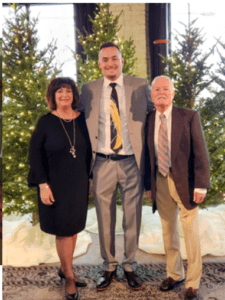
Chris was compensated for his time and expenses in sharing his story.
Known in his community for his charisma, spirited energy, and legendary homemade salsa, Chris was the picture of health. One morning however, Chris woke up with difficulty urinating that quickly became so unbearable it sent him to his primary care physician (PCP). Assuming that his symptoms were just the result of something common and inconsequential, Chris was surprised when his PCP urgently sent him to a urologist that same day. The urologist suspected a mass or tumor was causing Chris’s discomfort after draining urine and blood from his bladder. This suspicion was quickly confirmed through a scan of his kidneys. And just like that, Chris went to sleep one night feeling well and unaware of what was ahead, and before his head could hit the same pillow again, he was scheduling appointments with an oncologist and a surgeon.
Less than a week later, Chris went into surgery being told that there was no way to know until they started the procedure what the outcome would be. Chris was pretty distraught about the abrupt changes happening to him so suddenly and seemingly out of the blue, and especially terrified about what all of it meant for his future. He had very little time to process the possibility of having kidney cancer or what a diagnosis would mean for him. So, Chris knew that if he was going to make it through this, he was going to have to trust his doctors.
But as it turned out, trusting his healthcare team was the easy part. From the start, Chris’s doctors took the time to talk to him about every aspect of his condition, discussing all of Chris’s options and the potential side effects of each. Every decision was made together, ensuring Chris felt informed and supported throughout the process. Sometimes Chris pushed back or even disagreed with the recommendations his doctors put forth, but each time he did, they would explain the reasons to him, with clarity and honesty, ensuring that Chris completely understood what was at stake. And almost as quickly as Chris’s diagnosis came, so did the trust and respect for his doctors.
“Going into surgery was scary, because I didn’t know what was going to happen during it and what they would find out. But I was also confident about it because of the trust in my doctors. Sometimes in life you are in a situation where you have to weigh the pros and cons, and that’s what I did. I was scared but I trusted my doctors completely.”
Once Chris awoke from surgery, he learned that his entire right kidney and both adrenal glands had been removed. A biopsy confirmed renal cell carcinoma. The recovery was difficult, but Chris found comfort in knowing the cancer had been removed and began to rebuild his life, cherishing everyday moments with friends and neighbors.
For the next couple of years, routine scans showed no signs of cancer. Though he had been warned of the possibility of recurrence, Chris began to hope he had beaten the odds. Then, after a routine scan, he received devastating news: the cancer had returned and progressed to advanced RCC. This time, surgery was no longer an option. Chris’s oncologist explained that his only option now would be to seek a treatment that might help slow the cancer’s progression.
The news was difficult to hear, and for Chris, it brought a depth of fear he hadn’t known, but it also marked the beginning of a new chapter in his fight. Yet, despite the overwhelming uncertainty, Chris knew he was not going to give up and that, with the support of his friends, family, and healthcare team, he was not alone. Chris drew strength from the unwavering support of his community, knowing that their encouragement would help him face whatever was coming next. He also leaned on his healthcare team more than ever, relying on their expertise and experience, and as they became his partners in the fight for his life.
Over time, Chris tried treatment after treatment, refusing to lose hope, even as each option failed to slow the cancer’s progression or became difficult to tolerate due to side effects. But instead of giving up, Chris continued to trust his doctors at every turn, determined to fight for every moment and not let the disease take control of his life.
“I don’t want cancer to define me. Yes, I have cancer, and it’s changed my life in many ways, but I will always keep a positive outlook and just continue to find new ways to live with it. I’m just gonna keep going forward, keep doing the best I can, and keep laughing.”
When his oncologist recommended FOTIVDA (tivozanib), Chris was eager to continue fighting and trusted the guidance he was given. FOTIVDA (tivozanib) is a prescription medicine used to treat adults with advanced kidney cancer (advanced renal cell carcinoma or RCC) that has been treated with two or more prior medicines and has come back or did not respond to treatment. Common side effects include tiredness, diarrhea, decreased appetite, nausea, hoarseness, low levels of thyroid hormones, cough, mouth sores, decreased blood levels of salt (sodium) and phosphate, increased levels of lipase in the blood. Together, he and his doctor carefully discussed the potential risks and benefits of treatment and decided that FOTIVDA was the right choice for him.
Chris’s resolve and persistence began to pay off. After starting therapy, scan after scan showed positive results, confirming that the treatment slowed the progression of his cancer. Chris and his doctor continue to monitor for potential serious side effects that may occur when taking FOTIVDA, such as sudden, severe increase in your blood pressure (hypertensive crisis) that can lead to death.
Chris also found support through AVEO ACE, a comprehensive program that provides personalized and ongoing support to those with advanced RCC. Chris was able to easily enroll in the program, which provided him with copay assistance and ensured that his medication arrived reliably at his door. AVEO ACE Program Specialists perform regular check-ins, and the program has become an essential part of Chris’s support system.
Today, Chris wakes up each morning and reminds himself that the next step is to simply get up and do it all over again. His life now moves in rhythm with his scan schedule, each three-month interval bringing a mix of anxiety and hope as he waits to see if anything has changed. While the world looks different than it did before his diagnosis and the future holds more uncertainty, he’s learned to savor the small moments, grateful for each day and the chance to be present. He tries to find joy where he can, to learn something new each day, and to share those lessons with others. Through it all, he remains thankful for another day, determined to keep moving forward, one step at a time. Most of all, Chris feels immense gratitude for his friends, family, and doctors, knowing that he was able to make it here today because he never had to face his cancer alone.
“My journey has been a lot like making salsa. It’s all about finding the appropriate mix of ingredients – support, hope, and treatment, and adjusting them little by little until everything comes together.”
The story shares Chris’s personal experience with FOTIVDA, individual results may vary, and this content is not intended as medical advice. Please consult your doctor with any questions about your condition or to discuss whether FOTIVDA may be right for you.
Why FOTIVDA May Be the Right Choice
The effectiveness and safety of FOTIVDA was proven in a clinical study of people (350 people in total) with relapsed or refractory advanced kidney cancer where at least two prior medicines stopped working. These medicines included an immunotherapy and other treatments. During the study, 175 people were randomly chosen to take FOTIVDA and 175 were chosen to take sorafenib. FOTIVDA helped people with advanced RCC live significantly longer without their cancer growing or spreading. Patients treated with FOTIVDA experienced a 44% increase in the time they lived without tumor growth or spread compared to those taking sorafenib (median progression-free survival: 5.6 months versus 3.9 months, based on 175 patients in each group).
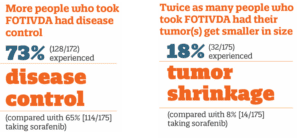
These results offer renewed hope and options for appropriate patients who have already navigated the complexities of advanced kidney cancer treatments and have been treated with two or more prior medicines. While every patient’s experience is unique, FOTIVDA has an established tolerability profile, with fewer interruptions, dose reductions, and discontinuations due to side effects compared to sorafenib. It is conveniently taken once daily for 21 days, followed by a 7-day break. Side effects can occur when taking FOTIVDA, with the most common being tiredness, high blood pressure, and diarrhea. Please call your healthcare provider right away if you experience any side effects. Please see additional important safety information throughout or visit FOTIVDA.com.
Support and Resources for Every Step
Starting a new treatment regimen can feel overwhelming, but patients beginning FOTIVDA are not alone. The AVEO ACE program provides patients with access to ACE Program Specialists, educational materials, and a caring support team to guide them through every phase of treatment. This hands-on approach ensures that patients have the resources and knowledge they need to manage their medication and address concerns as they arise.
Additionally, connecting with others who are living with advanced kidney cancer can make a meaningful difference. Peer support offers comfort, encouragement, and a sense of community, helping patients feel understood and less isolated during challenging times.
To learn more about the AVEO ACE program and to find ways to enroll, please click here.
You Are Not Alone – Chris’s Message of Resilience
Chris’s journey is a powerful reminder that no one has to face advanced kidney cancer alone. His story highlights the importance of hope, support, and perseverance. Chris encourages other patients to keep moving forward, embrace each day, and actively explore treatment options in partnership with their doctor. By sharing his experience, Chris hopes to inspire others with advanced kidney cancer to talk with their doctors about FOTIVDA and to never give up on finding hope and support.
Join the FOTIVDA Ambassador Program
Have experience with FOTIVDA? Help others feel less alone.
If you’ve been treated with FOTIVDA and want to support others facing advanced kidney cancer, consider becoming a FOTIVDA Ambassador. By sharing your story, you can inspire hope, offer encouragement, and make a difference in the lives of others. Email [[email protected]] or Call 888-818-1673 to learn more and sign up.
Important Safety Information
Before taking FOTIVDA, tell your healthcare provider about all your medical conditions including, if you have high blood pressure, a history of heart failure, a history of blood clots in your veins or arteries (including stroke, heart attack, or change in vision), bleeding problems, thyroid problems, liver problems, an unhealed wound, if you plan to have surgery or have had recent surgery, or are allergic to FD&C No. 5 (tartrazine) or aspirin.
Tell your healthcare provider if you are pregnant or planning to be. FOTIVDA can harm your unborn baby. If you are able to become pregnant:
- Your healthcare provider should do a pregnancy test before you start treatment.
- Use effective birth control (contraception) during treatment and for 1 month after your last dose.
- Talk to your healthcare provider about birth control methods that may be right for you.
- Tell your healthcare provider right away if you become pregnant or think you might be pregnant.
- Do not breastfeed during treatment and for 1 month after your last dose of FOTIVDA.
Tell your healthcare provider about all the medicine you take and any new medicine. Taking FOTIVDA with certain other medicines may affect how FOTIVDA works.
FOTIVDA may cause serious side effects, including:
- High blood pressure (hypertension).High blood pressure may be severe, including a sudden, severe increase in your blood pressure (hypertensive crisis) that can lead to death. You should check your blood pressure regularly and tell your healthcare provider if you have increased blood pressure or experience confusion, headaches, dizziness, chest pain, or shortness of breath.
- Heart failure. Heart failure may be serious and sometimes lead to death. Your healthcare provider should check for symptoms of heart failure regularly, such as shortness of breath or swelling of your ankles.
- Heart attack and blood clots in your veins or arteries. Blood clots may be serious and sometimes lead to death. Tell your healthcare provider or get emergency medical help right away if you have, new chest pain or pressure, numbness or weakness on one side of your body, pain in your arms, back, neck or jaw, trouble talking, shortness of breath, sudden severe headache, vision changes, swelling in the arms or legs
- Bleeding problems. Bleeding may be serious and sometimes lead to death. Report or get medical help right away if you have, unusual bleeding from the gums, red or black stools (looks like tar), menstrual bleeding or vaginal bleeding that is heavier than normal, bruises that happen without a known cause or get larger, headaches, feeling dizzy or weak, bleeding that is severe or you cannot control, coughing up blood or blood clots, pink or brown urine, vomiting blood or your vomit looks like “coffee grounds,” unexpected pain, swelling, or joint pain
- Protein in your urine. Your healthcare provider should check your urine for protein before and during treatment.
- Tear (perforation) in your stomach or intestines or an abnormal connection between two or more body parts (fistula).Get medical help right away if you experience tenderness or pain in your stomach-area (abdomen) that is severe and does not go away.
- Thyroid gland problems. Your healthcare provider should do blood tests to check your thyroid gland function before and during your treatment and may prescribe medicine if you develop thyroid gland problems.
- Risk of wound-healing problems. Wounds may not heal properly during treatment. Tell your healthcare provider if you plan to have surgery before starting or during treatment, including dental surgery. You should stop taking FOTIVDA at least 24 days before planned surgery. Your healthcare provider should tell you when you may start taking FOTIVDA again after surgery.
- Reversible Posterior Leukoencephalopathy Syndrome (RPLS).RPLS is a condition that can happen. Tell your healthcare provider right away if you have headaches, seizures, confusion, blindness or changes in vision, or difficulty thinking.
- Allergic reactions to tartrazine (FD&C Yellow No. 5). FOTIVDA contains a dye called FD&C Yellow No. 5 (tartrazine) that may cause allergic-type reactions, including bronchial asthma, in certain people. This occurs most often in people who also are allergic to aspirin.
Common side effects include tiredness, diarrhea, decreased appetite, nausea, hoarseness, low levels of thyroid hormones, cough, mouth sores, decreased blood levels of salt (sodium) and phosphate, increased levels of lipase in the blood.
Other side effects include vomiting and weakness or lack of energy.
FOTIVDA may cause fertility problems in males and females, which may affect your ability to have a child.
Your healthcare provider may change your dose, temporarily stop, or permanently stop treatment with FOTIVDA if you have certain side effects.
These are not all the possible side effects of FOTIVDA.
To report SUSPECTED ADVERSE REACTIONS, contact AVEO Pharmaceuticals, Inc. at 1-833-FOTIVDA (1-833-368-4832) or FDA at 1-800-FDA-1088 or www.fda.gov/medwatch.
Please see the Patient Information in the full Prescribing Information for FOTIVDA® (tivozanib).
You are not alone. With support, information, and potential treatment options, hope is always possible.
FOTIVDA is a registered trademark of AVEO Pharmaceuticals, Inc. © 2025 AVEO Pharmaceuticals, Inc. All rights reserved. US-MAT- 01228 10/25