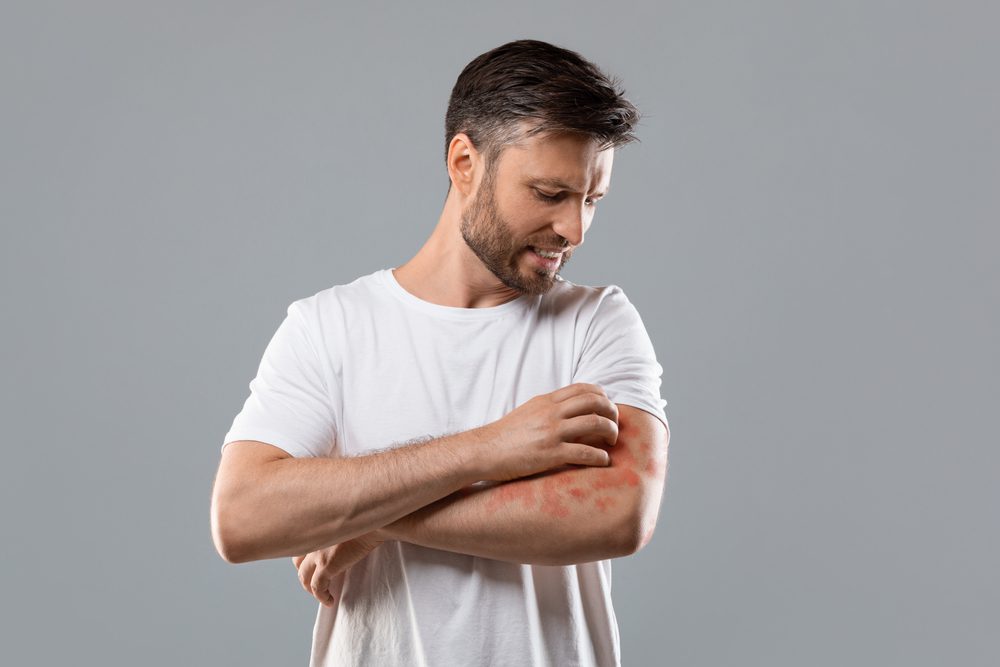
According to a story from Healio, 21 people living with the disease prurigo nodularis took part in a qualitative study over the phone in which they shared the ways in which the disease affects them. The disease is characterized by severe itching and patients reported serious negative impacts on their social, psychological, and physical state.
Study Results
While itching is considered the primary symptom of prurigo nodularis, this study was undertaken with the goal of gaining a full understanding of patient-reported signs and symptoms, and the disease is more than persistent itching. All 21 participants reported itching, dry skin, pain, bleeding, and scabbing of the skin. ninety-five percent said the disease resulted in crusty skin and bumps or lumps. Ninety percent reported stinging or burning pain, and 86% reported skin discoloration and the presence of sores or lesions. Eighty-one percent reported raw skin.
15 of the patients said that itching was the worst symptom, or at least one of the worst. All patients reported disruptions to daily life and sleep. Ninety-five percent said that their relationships and mood/feelings were impacted by the disease, and 81% reported disruptions to their social lives; meanwhile, 71% reported disruptions at work or school.
Eighty-five percent of patients reported feelings of shame or embarrassment about prurigo nodularis, and 57% reported depression symptoms.
The data from this study will be useful for centering patient feedback in the clinical setting and can also serve to establish guidelines for endpoints in clinical trials.
Check out the original study text here.
About Prurigo Nodularis
Prurigo nodularis is a skin disease in which itchy nodules appear, primarily on the limbs. The condition is also called nodular prurigo. Frequent scratching results in excoriated lesions. The cause of the disease is unknown, but it may appear alongside other conditions or diseases. While the disease can appear at any age, average onset tends to be around middle age. Autoimmune disease, low vitamin D, and kidney or liver problems are common in people with prurigo nodularis. Frequent scratching to relieve itching can trigger permanent skin changes. Treatment includes steroids, UVB light, thalidomide, vitamin supplements, azathioprine, and dupilumab. The disease is considered difficult to treat, with many patients reporting lack of wound healing even after treatment for itch relief. To learn more about prurigo nodularis, click here.