Editor’s Note: This opinion piece was originally written by Kim Higbee. The opinions expressed in this article may not be a reflection of Patient Worthy, its employees, or any of its affiliates.
For my four-year-old daughter Harlow, the FDA’s denial of DCA wasn’t just a regulatory decision, it means potentially losing the only treatment that has ever given her hope and stability.
When Harlow was born, we were told she had hypotonia, the clinical term for low muscle tone.
Doctors explained it could be a symptom of upwards of 600 different conditions. That was the
beginning of a long journey for answers.
For nine months, we lived in limbo. Harlow missed milestone after milestone. She was weak, floppy, and unable to do what other babies her age could. She cried constantly, and we assumed it was colic. Only later did we realize that those inconsolable episodes weren’t colic at all. They were likely lactic acidosis and her tiny body’s desperate signal that something was terribly wrong.
Finally, after nearly a year of doctor’s visits, blood draws, cheek swabs, MRI’s, we had a diagnosis; Pyruvate Dehydrogenase Complex Deficiency (PDCD). A rare mitochondrial disorder. Life-limiting. No cure. No FDA-approved treatment. Our only option was a strict ketogenic diet, a harsh enough therapy for an adult much less my baby.
Then came hope.
We learned about a clinical trial at the University of Florida, for a drug called dichloroacetate (DCA). For families like mine, DCA wasn’t just another study but rather it was a lifeline. A chance for something more than survival.
Harlow entered the trial, and then after completing the double-blind portion of it she started on open label of the drug in April of 2023 and we saw changes no one could deny. She had more energy. Her mind was sharper. Her quality of life improved. DCA gave her what the ketogenic diet alone could not: stability, relief, and a glimpse of possibility. The high fat content of the strict ketogenic diet often upset her stomach but with DCA we’ve been able to ease back and make her nutrition more tolerable.
For the first time, we had hope.
That’s why the FDA’s recent decision to deny approval of DCA felt devastating. For regulators, it may be just one drug that “didn’t meet the standard.” But for us, it was like hearing the diagnosis all over again.
Families like mine are told to join trials, push for research and hold onto hope that science will deliver. But when the system sets requirements that can never be met for ultra-rare diseases, it leaves children like Harlow stranded. The truth is there will never be large, statistically perfect studies for conditions this rare. What we do have is evidence, both clinical and lived, that DCA makes a difference.
This is not about lowering the bar. It’s about recognizing that for rare diseases, the bar must be different. It’s about listening to the parents who see their children “come back to life” on a therapy like DCA. It’s about using the flexibility that already exists to weigh patient outcomes, not just spreadsheets.
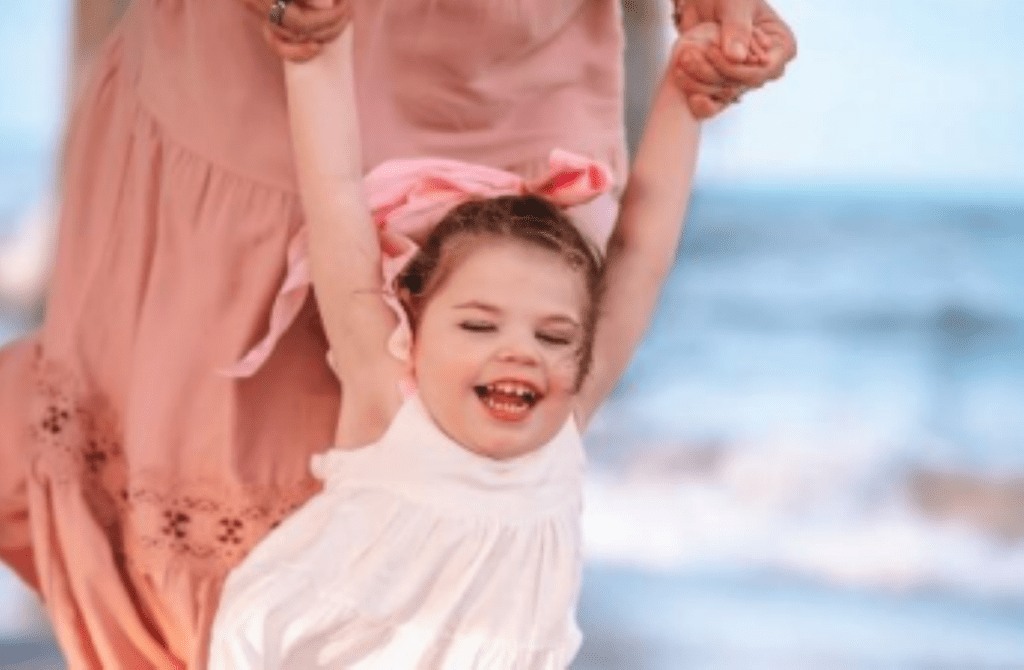
For me, this isn’t about policy. It’s about Harlow. She is four years old. She loves to laugh at her big sister Cassidy, to explore, and to surprise us with her determination. She is not just a number in a regulatory filing. She is my daughter and DCA has given her the chance to live more fully.
The FDA’s denial doesn’t just block a drug. It takes away hope; from Harlow, from us, and from every family fighting PDCD. And that is something no parent should ever have to accept. That’s why I am asking the FDA, publicly and directly, to meet with PDCD families like mine. Hear our voices. See our children. We want a seat at the table to help shape a path forward. A path that values real-world evidence, patient experience, and the unique challenges of ultra-rare diseases.
And to policymakers, I beg you to use your oversight, your platforms, and your influence to make sure rare disease families are not left behind. Regulatory flexibility already exists; what’s missing is the recognition that children like Harlow can’t wait.
For Harlow. For every child with PDCD. For every family still waiting for hope.