 I was introduced to Amber Olsen, the “mama bear” in my new documentary film, The Zebra and the Bear, in the spring of 2016. A mutual friend asked if I would be willing to meet with the mother of a child with a rare disease who was looking for someone to help her make a short video for a GoFundMe campaign. They were trying raise millions of dollars to fund research into a cutting-edge gene therapy treatment.
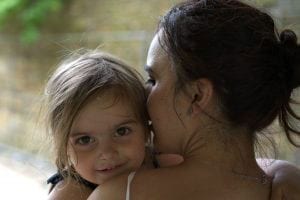
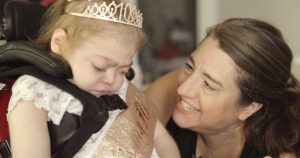
When we met over coffee, Amber told me the story of how her 2-year old daughter Willow had been diagnosed with a fatal, ultra-rare disease called Multiple Sulfatase Deficiency (MSD), an inherited genetic condition that leaves the body without the enzymes necessary to filter out natural waste by-product created by normal cellular activity.
At the time, there were only a handful of children who had been diagnosed with MSD, and there was no known treatment or cure. Doing her own research, Amber learned that the progression of the disease would be relentless and painful. As the cellular waste built up, all of Willow’s vital systems – brain, muscles, vision, respiratory, digestive – would soon begin to fail. A doctor told Amber and her husband Tom to go home, treat her symptoms, and keep her comfortable until she died, likely before her 10th birthday. It was a devastating blow that would change the course of their lives, and the lives of their two older daughters, Kylee and Jenna, in unimaginable ways.
Unwilling to accept that nothing could be done to cure Willow, Amber and Tom immediately went to work learning as much as they could about MSD—the science behind it, and any possible way forward that would help their daughter live.
Early on, Amber found a mother in New York on Facebook whose child had a similarly deadly lysosomal disease called Sanfilipo Syndrome. She told Amber that she had recently spent over $30,000 to purchase a herd of sheep in New Zealand, which she was planning to use for large animal testing. Amber’s first thought was, “Am I supposed to buy my own sheep?”
As Amber told me this detail, I realized that there was a larger story here about an “ordinary” family embarking on a solitary quest to raise millions of dollars and push for a pioneering gene therapy treatment. They had no road map, no guide, and the odds were stacked high against them. They were utterly unprepared, and as much as their friends and acquaintances sympathized with their situation, no one could truly understand what they were going through.
I thought theirs would be a fascinating story, but more importantly, I was struck by how unfair and, I’ll say, immoral it was that in the year 2016, in the wealthiest country in the world, a mom and dad had to upend their lives and figure this out on their own.
Shortly after that first meeting, I asked Amber and Tom if they would allow me to make a film about their experience. They agreed, and for the next seven years or so, I spent time with their family, went with them to fundraising events, Willow’s appointments, meetings with scientists and specialists working on a gene therapy treatment, and generally tried to capture a sense of their lives as parents of a child with a fatal, ultra-rare genetic disease with no known treatment or cure.
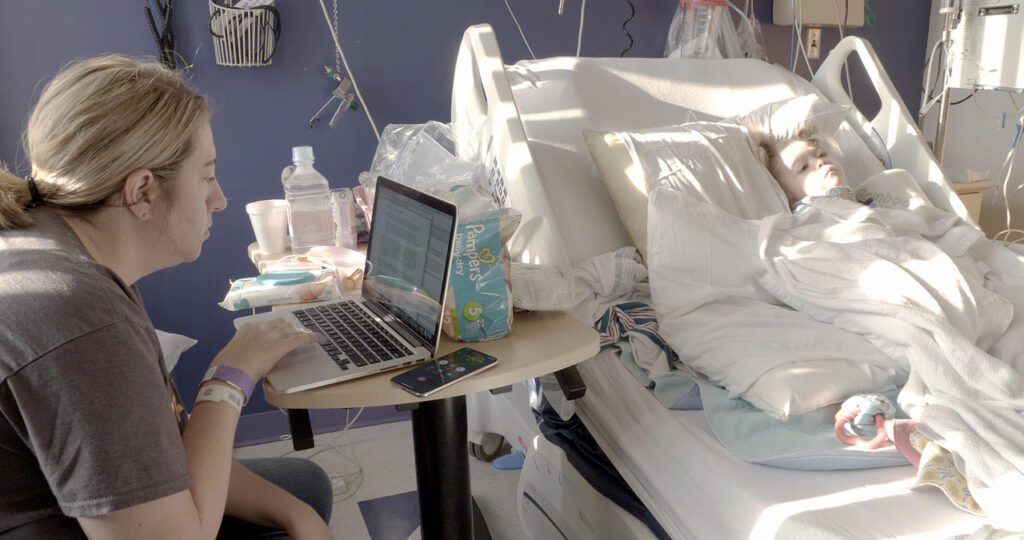
Throughout that time, I witnessed the staggering emotional and financial burden of trying to raise millions of dollars to fund and manage a complicated research project, all while their daughter Willow’s condition continued to deteriorate. Within two years of the diagnosis, Willow could no longer walk, crawl, sit up, hold a toy or even swallow. As Amber said, “the lights are going out.”
Around 2021, the NIH announced the Bespoke Gene Therapy Consortium, a public-private partnership between the NIH, FDA and multiple pharmaceutical and life sciences companies working to streamline the development and delivery of gene therapies for rare diseases. Scientists working on a gene therapy for a rare disease could apply for one of 6 – 8 spots in the program, and if selected, the disease would be adopted into the BCGT which would then fund and manage the project towards, ideally, a clinical trial.
The Children’s Hospital of Philadelphia (CHOP) submitted the application with Dr. Rebecca Ahrens-Nicklas and Dr. Laura Adang as the co-Primary Investigators.
Willow turned 11 in August of 2024 (her little birthday celebration was the last thing we shot), and the research that Amber pushed so hard for ultimately led to MSD being selected for the Bespoke Gene Therapy program, which all but guarantees that children with MSD will begin being treated in clinical trial within the next year or so.
The NIH Bespoke grant announcement was a real victory that will potentially lead to a gene therapy treatment for this terrible disease. Sadly, Willow passed away a few months after she turned 11, surrounded by her family and long-time caregivers. As her mother Amber said, “She’s been freed from her MSD body.”
Willow’s legacy will live on and will likely save the lives of future generations of children unlucky enough to be born with MSD.
Through dozens of screenings at research hospitals like CHOP, pharmaceutical companies, genetics conferences and rare disease advocacy organizations, The Zebra and the Bear is helping to educate the healthcare/scientific community about gene therapy, but also about how a rare disease diagnosis can be devastating for families.
As Amber says in the film, “The truth is rare diseases are not in fact rare. There are over seven thousand of them, affecting millions of families.” Which means that families around the world are experiencing the pain and heartbreak of watching their children suffer. The Zebra and the Bear shows us what families shouldn’t have to do in order to care for and ultimately save their children.
The Zebra and the Bear will be available on Amazon, Apple TV, Google Play, Youtube Movies & TV and Vimeo On Demand on Black Friday – Nov. 28.
To host a screening with your organization, email ROCO Films at [email protected].
 About the Author: Patrick O’Connor is an award-winning writer/director whose recent documentary film, The Invisible Patients, had its national PBS broadcast premiere on AMERICA REFRAMED in 2018. The film also screened at the Heartland, Cucalorus, Chicago International Social Change Film Festivals, as well as at dozens of universities and national conferences on bio-ethics and healthcare. In 2021, he released Look Away, Look Away, a documentary that captures the fierce five-year battle that led to the removal of the Mississippi state flag in 2020. The film won the 2022 Erik Barnouw Award for Best Documentary from the Organization of American Historians. Both films are available to stream on Apple TV, Kanopy and Amazon.
Patrick lives in Pass Christian, Mississippi with his wife, the writer Margaret McMullan. You can find him on Facebook and Instagram.