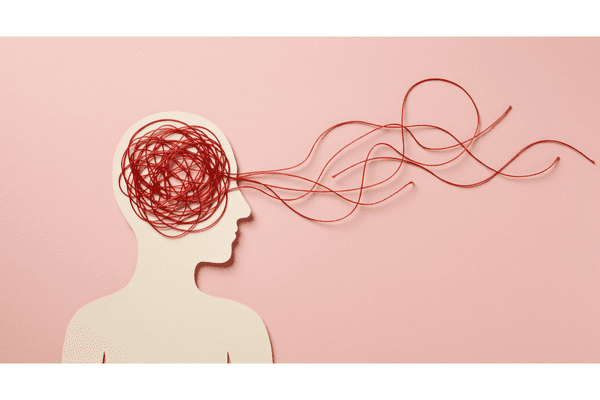
When we hear the word diet, most of us automatically think of food. But what about our thoughts? Let’s look at them in terms of consumption as well.
According to researchers from Queen’s University in Canada who used fMRI brain scans to isolate “thought worms,” the average person has over 6,000 thoughts per day. This figure challenges the popular claim that humans have 60,000 to 70,000 thoughts daily. There are also many other estimates. Regardless of the exact number of daily thoughts, we all have A LOT!!
For the purposes of this article, let’s use the lowest figure of 6000 thoughts. Now imagine that every thought you have is a snack that you eat. If you consider even just half of the 6000 or so thoughts we have a day as snacks, that’s a huge daily diet of information!!
When we eat food, our body goes through many metabolic changes. Unless you are an outlier with unique health conditions or on the other side of the coin and have great genes, good food will generally create better health, and bad food will compromise the body and make us more vulnerable to health problems. The same thing happens with our thoughts. What we mentally chew on also creates physiological changes in the body.
Negative thoughts trigger a stress response, causing the release of hormones like cortisol and norepinephrine. These negative stressful thoughts can disrupt the body’s hormonal balance, increase inflammation, and increase the risk for obesity, diabetes, and heart disease. Thinking negatively also just makes us feel downright crummy!
Positive thoughts trigger beneficial metabolic changes such as better heart rate variability, better immune function, healthier gut and digestion, stronger cognitive function and concentration, better sleep, a reduction in stress hormones, and a boost in mood-regulating neurotransmitters like dopamine and serotonin. A positive perspective also helps us cope better with obstacles and setbacks, fostering greater resilience in the face of challenges.
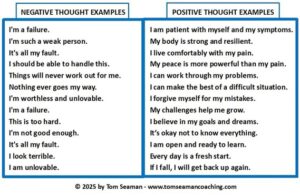
This begs the question, what thoughts are you consuming and digesting? What impact are they having on you? Are you aware of the negative or positive impact they are having? Below is a list of some positive and negative thoughts that might sound familiar.
If you question whether thoughts really do create changes in the body, please try the following – picture a lemon in your hand. Cut the lemon. Squeeze the lemon and watch the juice squirt all over. Then picture holding it up to your nose and smelling it. Now put the lemon in your mouth and taste it. More than likely, especially if you take your time doing each step, this will probably cause you to salivate.
For most people for whom this happened, all it took was thinking about eating a lemon. You weren’t even doing it. Since changes in the body can occur with just thoughts, it is critical that we are aware of the ones we give the most consistent attention. Then consider how they make you feel, especially if you already have an existing health condition.
For over 25 years I have had a neurological movement disorder called dystonia, accompanied by pain, dizziness, and fatigue. My thoughts most certainly impact my health and that is the case for everyone I know with this condition and many other heath conditions. There is not one single person I know who has ever said that stress has made them feel better. And what causes most stress? Our thoughts.
Be especially careful of the adjectives you choose to describe things. They can create calming emotions such as joy, excitement, peace, contentment, and love, or on the other side of the pendulum, stressful emotions of anger, bitterness, guilt, resentment, and hatred.
For me, this is the nuts and bolts… when we judge anything (good or bad) we define it (“this stupid pain”, “that damn surgery”, “I hate that I can’t run anymore!”, “My rotten doctor”, etc.), we give it life because of the emotion attached to the adjective before the “thing.” That thing then begins to define us, which can either lift us up or tear us down (click here to see my blog about the power of the mind).
Try reframing your negative and judgmental thoughts and words. When I say something like, “if only I didn’t have dystonia I could run/jog again,” I am punishing myself with harsh judgment. Instead I say, “I miss running/jogging, but I am so happy I can go for a walk today.” Reframing my thoughts helps me embrace the things I am able to do with more excitement and joy, and grieve less over abilities that may have been lost.
There is not a lot we have control over in life. But we do have control over how we respond to life events and control over the thoughts we consume and chew on. This is where we all need to focus more of our attention if we want to give ourselves a better chance of feeling better. The more I embrace this fact, it makes a very positive impact on my ability to cope better with the symptoms of dystonia and other life challenges. But it must become a daily practice.
That said, I invite you to try something. Choose your favorite quote, word, affirmation, prayer, or anything else. Put it to memory and recite it daily until you know it forwards and backwards. NOW, live that quote, word, affirmation, etc., for a week or two. In every situation you find yourself at a crossroad, refer to it and apply it. See if it makes a difference in your day. Then when it becomes a part of you with enough practice, add a new one. Keep doing this so that your “thought diet” is filled with healthier patterns. Below are three quotes to drive this home. The last one is my favorite, which I use throughout the day.
“We suffer not from the events in our lives, but from our judgment about them.”
-Epictetus
“Nothing is good or bad. Thinking makes it so.”
-William Shakespeare
“When we change the way we look at things, the things we look at change.”
-Wayne Dyer
The only thing we can really change about most things is how we think about and respond to them. If you feel that you are being controlled by your thoughts, try some of these ideas above and take back control. You deserve to feel as well as possible, body and mind.