When there is no treatment for your child’s rare disease, how do you find a way forward? For one mother in the Czech Republic, the answer was to start asking questions, connecting with researchers, and helping move science closer to patients.
By Jana Bohmová, Jonas’s mother
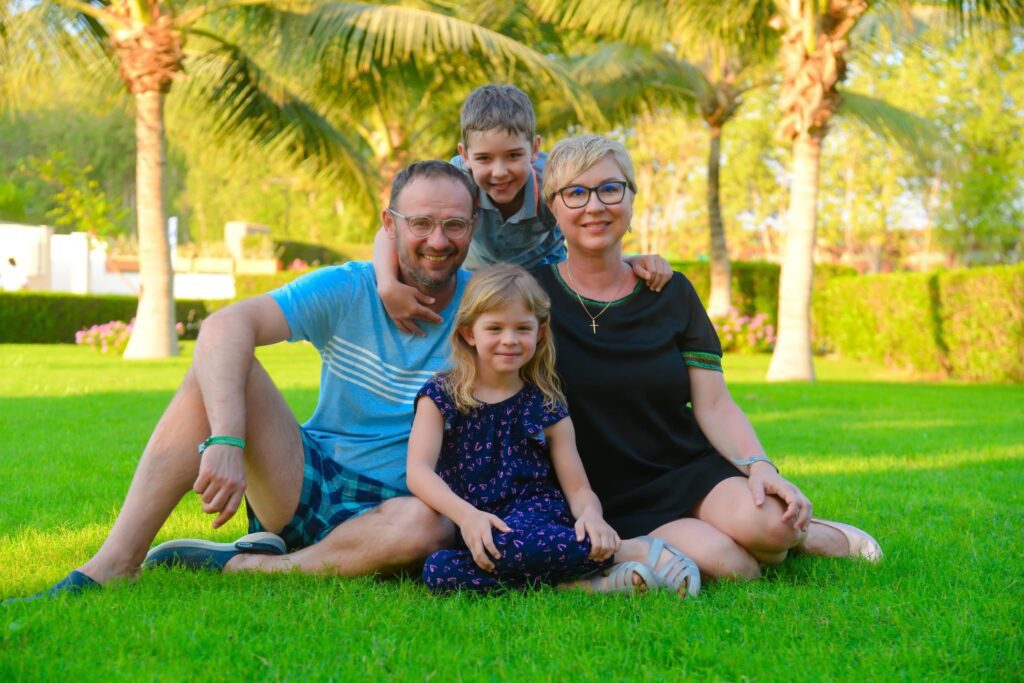
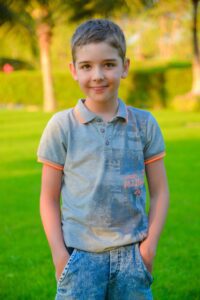 My son Jonas dreams of having his own caravan one day. He imagines travelling to beautiful places, spending time in nature, and enjoying the freedom of discovering the world around him.
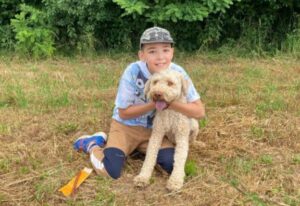
He loves fishing with his dad, playing chess, working on computers, and spending time with his little sister Niki and our dog Teddy.
He is curious, cheerful, and full of dreams.
But Jonas also lives with ECHS1 deficiency (ECHS1D), an extremely rare inherited metabolic and neurodegenerative disease that affects mitochondrial function. It makes ordinary activities increasingly difficult, and today, there is no effective treatment that can stop its progression.
The Journey to a Diagnosis
The first signs appeared long before we knew what was happening.
Jonas was six years old when we finally received his diagnosis. At the same age, he also received hearing aids.
For years, we had been looking for answers. Receiving a diagnosis finally gave a name to what was happening to our son, but it also brought a frightening reality: medicine had no treatment to offer him.
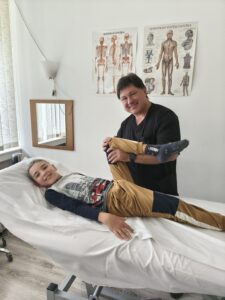
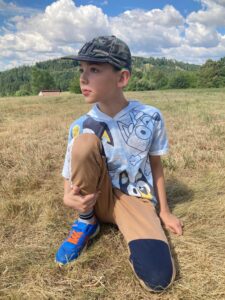
Living with ECHS1D means facing challenges that many families never have to think about. Jonas struggles with balance and fine motor skills. Everyday tasks require more effort, and fatigue can limit what he is able to do.
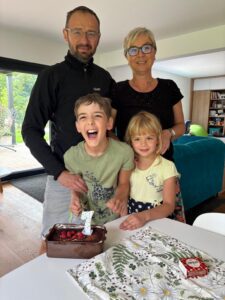 We do everything we can to preserve his abilities and independence. Regular rehabilitation is an important part of our lives. But rehabilitation cannot stop the underlying disease.
As parents, we know that time matters.
And yet, despite everything, Jonas continues to approach life with remarkable positivity. He has taught us to appreciate the smallest achievements and moments of happiness.
Our priorities have changed. Sometimes, the most important thing in the world is simply seeing him smile.
When “There Is No Treatment” Is Not the End of the Story
 I never imagined that one day I would be reading scientific papers about gene therapy or corresponding with researchers around the world.
I am not a scientist. I am a mother who started asking questions.
What do we know about ECHS1D? Who is studying it? Could existing medicines help? Is gene therapy possible? What can we do today rather than simply wait?
Gradually, I discovered that although there is no effective treatment yet, there are scientists working to change that.
And that changed the way I looked at our future.
Research efforts include several promising directions:
Gene therapy: Scientists are exploring ways to replace the function of the faulty ECHS1 gene and potentially address the underlying cause of the disease.
Brain organoids: Researchers are developing laboratory models derived from patients’ cells to better understand how ECHS1D affects the brain and to explore potential treatments.
Drug repurposing: Scientists are investigating whether existing medicines, or combinations of them, could offer therapeutic benefits.
For families like ours, the fact that real scientific work is moving forward means everything.
From One Family’s Hope to a Shared Mission
 We have joined forces with the US-based nonprofit Cure MiTo Foundation to launch Hope for Jonas, a campaign dedicated to advancing research into ECHS1 deficiency.
Our goal is not to raise money for our family’s personal expenses. Donations support research that may eventually lead to treatments for Jonas and other children living with ECHS1D.
We have also launched a simple awareness campaign called One Coffee for Jonas.
The idea is that something as ordinary as the price of a cup of coffee, when multiplied by thousands of people, can help support meaningful scientific progress.
We know that research takes time, resources, and the commitment of many people. But we also know that progress often begins when someone decides that the current situation is not good enough.
No child should be left without hope simply because their disease is extremely rare.
What Does the Future Hold?
I cannot predict what the future will look like for Jonas.
My greatest hope is that scientists will find a way to stop or slow the progression of ECHS1D before the disease takes away more of his abilities.
I want him to keep discovering the world, playing chess, enjoying nature, and dreaming about his caravan.
But I also want something bigger.
I want the next family receiving an ECHS1D diagnosis to hear something different from what we heard.
Not simply, “There is no treatment.”
But perhaps, one day, “There is something we can do.”
I am not a scientist. I am just a mother who refuses to stop asking what might be possible.
And if our efforts can help bring a treatment even one step closer, not only for Jonas but for other children too, then every step of this journey will have been worth taking.
 Help Advance ECHS1D Research
Learn more about Jonas and follow his journey:
Instagram: https://www.instagram.com/hopeforjonas/
Official Hope for Jonas fundraising campaign through Cure MiTo Foundation:
https://give.curemito.org/campaign/856013/donate
Every donation supports research. Every share helps raise awareness. And every step forward brings hope to families waiting for a treatment.