In a groundbreaking medical achievement, eight babies have been born in the UK free from incurable mitochondrial disease, thanks to a pioneering fertility technique using DNA from three people. The news marks a hopeful turning point for families burdened by these devastating hereditary conditions, which can cause severe disability or even death in infants.
Mitochondrial diseases are inherited solely from the mother and affect about one in 5,000 babies. According to the BBC, these tiny but essential structures within our cells convert food and oxygen into energy; when mitochondria are faulty, the body struggles to function, leading to symptoms such as muscle weakness, heart problems, seizures, and organ failure. For many families, the diagnosis brings years of uncertainty and heartbreak, as some endure the loss of multiple children.
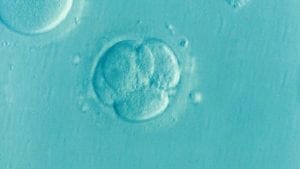
The innovative solution, developed at Newcastle University and the Newcastle upon Tyne Hospitals NHS Foundation Trust, combines the DNA of a mother and father with healthy mitochondria from a donor woman. The process involves fertilizing eggs from both the mother and the donor with the father’s sperm. Scientists then extract the parents’ genetic material and transfer it into the donor’s egg, which contains healthy mitochondria. The result is a child with more than 99.9% of their DNA from their parents, and just 0.1% from the donor—enough to prevent the transmission of mitochondrial disease.
These first eight children, including a set of twins, were all born healthy, meeting expected developmental milestones. Although one baby experienced epilepsy that resolved naturally and another has a treatable heart rhythm issue, none have shown signs of mitochondrial disease. For parents, the technique has lifted a tremendous emotional burden. One mother expressed her gratitude, saying the treatment gave her hope and, ultimately, a healthy baby. Another described the joy and relief of seeing her family finally complete.
Doctors and scientists acknowledge that further research is needed to perfect the method and ensure its safety. In a few cases, a small amount of defective mitochondria was still present in the babies, but at levels far below what would cause disease. Monitoring will continue to assess long-term outcomes.
The creation of these “three-person babies” is not without controversy, as the change is permanent and will be passed to future generations. Still, the UK stands out as the first country in the world to both develop the technology and legislate for its use, following a parliamentary vote in 2015. Advocates emphasize that this is not genetic engineering for enhancement, but a vital intervention to prevent suffering.
For families like the Kittos, whose daughter lives with mitochondrial disease, this breakthrough brings hope that future generations may live free from its devastating effects. As Liz Curtis of the Lily Foundation put it, these births are the “first real hope of breaking the cycle of this inherited condition.” The successful arrival of these babies marks a new dawn for affected families and a remarkable achievement in medical science.