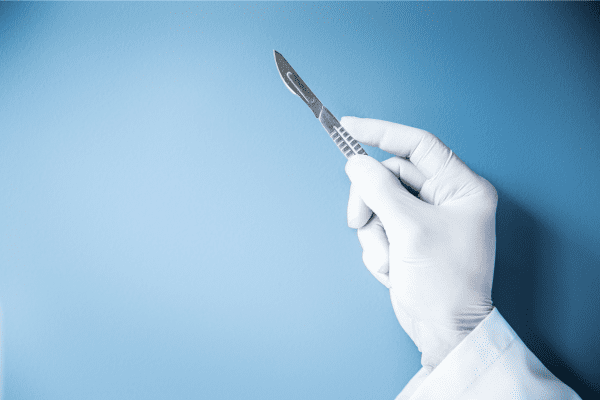
Professor Zdeněk Sofer of the University of Prague and his team developed and validated a “Lab-on-a-Scalpel” concept which is a surgical tool incorporating an integrated diagnostic sensor. Their findings were published in the journal Analytical Chemistry and reported by MedicalXpress.com.
The focus is on the critical challenge which may be defined as the time lag between collecting the sample and results from the lab. A patient’s biochemical profile may change rapidly during an invasive procedure. Traditional methods have proven to be too slow. It is critical to provide the real-time data required to make immediate, informed decisions.
Prof. Sofer and his team created a compact electrochemical sensor that is disposable, 3D-printed, and can be incorporated into the handle of a standard medical scalpel. The design is impressive due to its accessibility and simplicity. Studies using artificial blood samples demonstrate the high accuracy of the device beginning in the 91% range.
Using a common desktop-sized 3D printer, the team fabricated a multi-layered sensor from a special filament combining a bioplastic (polylactic acid) with conductive carbon nanomaterials and allowing the device to perform complex electrochemical analysis.
The team validated their concept by testing whether the scalpel can detect epinephrine (adrenaline) that may be used when biological fluids are limited. Studies using artificial blood samples demonstrate the high accuracy of the device starting at 91%. Each efficient sensor is disposable and can be produced on demand
The Professor commented that it is critical to avoid waiting for a lab report. The team’s goal was to design a multifunctional tool minimizing the number of surgical instruments in the room while at the same time maximizing the amount of information available to the surgeon, especially in emergency surgeries. He further stated that future applications for this technology could eventually lead to robot-assisted surgery where robotic platforms would perform in accordance with the patient’s biochemical profile.
Although this study is a proof of concept, it confirms that it is possible to create diagnostic tools through available technology while opening avenues for smart surgical instruments that will eventually create smart instruments that will make surgery more responsive and safer.