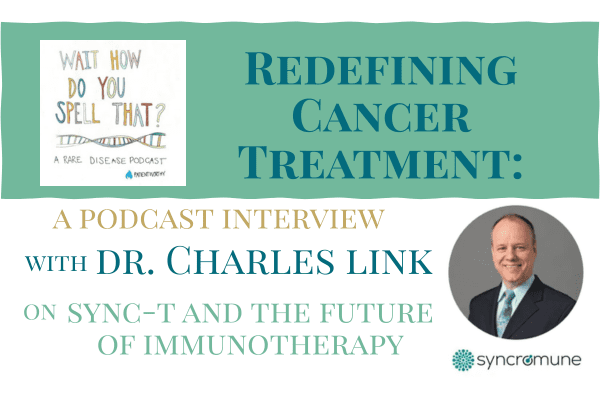
On this episode of Wait, How Do You Spell That?, host Bree Clare sits down with Dr. Charles Link, a pioneering oncologist whose career has fundamentally shaped modern cancer medicine and immunotherapy.
Dr. Link’s journey is nothing short of extraordinary. A distinguished graduate of the United States Air Force Academy, he earned his medical degree with honors from Stanford, completed his residency at UCSF, and trained in oncology at the National Cancer Institute. Over his remarkable career, he’s served as Director of the Stoddard Cancer Research Institute, led Medical Oncology and Hematology Associates of Iowa, and founded groundbreaking biotech companies including NewLink Genetics and BioProtection Systems.
His contributions extend far beyond the clinic. Dr. Link’s translational research played a crucial role in the approval of the world’s first Ebola vaccine, a triumph of scientific innovation and global collaboration. He’s authored over 120 scientific articles and raised more than $100 million in research funding, earning accolades from the NIH, American Cancer Society, and Susan G. Komen Foundation.
Today, as Executive Chairman of Syncromune and Adjunct Professor at the Lankenau Institute for Medical Research, Dr. Link is spearheading the development of SYNC-T, a revolutionary in-situ immunotherapy platform. This innovative approach synchronizes tumor antigens, multi-target biologic drugs, and immune cells at the tumor site, essentially educating the immune system to recognize and attack cancer.
The conversation also explores an exciting Phase 2 clinical trial now enrolling patients with Metastatic Castration-Resistant Prostate Cancer (mCRPC). Whether you’re a patient, caregiver, or science enthusiast, this episode offers hope and inspiration from one of medicine’s greatest innovators.
Please enjoy the episode here:
To learn more about Dr. Link and his team’s work at Syncromune, visit Syncromune.com
And if you or someone you know has mCRPC and would like to learn more about the LEGION-100 clinical trial, please visit Legion-100 Clinical Trial