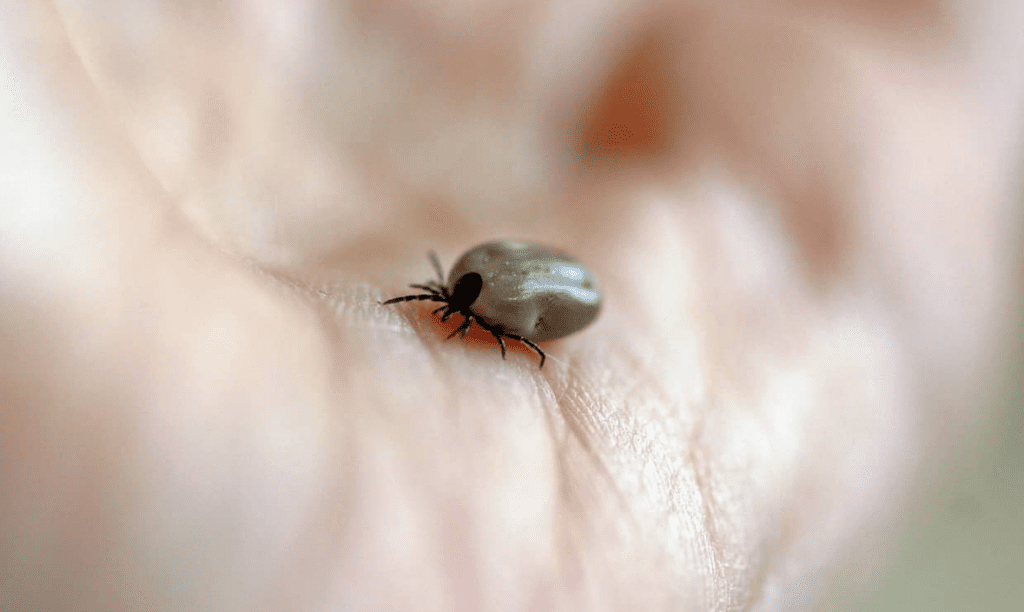
A recent article by Dr. Rosalie Greenberg explores the possible relationship of infections caused by ticks and psychiatric conditions in children, including PANS or PANDA which are sudden onset.
For some teenagers, what looks like a mental health struggle might actually be an uninvited guest from the Great Outdoors. Researchers looked at 37 young people diagnosed with pediatric bipolar disorder (PBD) to see if hidden infections from tick bites were playing a role in their symptoms.
The Hidden Connection
The study focused on patients in New Jersey, a “hot spot” for ticks. Doctors didn’t just look for Lyme disease; they screened for several “co-infections”—tiny organisms that ticks carry alongside Lyme.
The results were eye-opening. The researchers found that:
“Overall, 92% (34/37) had evidence of tick-borne exposure, with 81% (30/37) meeting both laboratory and clinical criteria.”
In plain English, four out of five kids in this group didn’t just have the antibodies for these bugs; they had active signs of infection.
The Main Culprits
While most people only worry about Lyme disease, this study found that other pathogens were actually more common in these patients:
- Babesia (51%): A parasite that lives in red blood cells.
- Bartonella (49%): Often called “Cat Scratch Fever,” this bacteria can affect the nervous system.
- Borrelia burgdorferi (22%): The classic bacteria that causes Lyme disease.
Why the Brain Gets Confused
The study suggests that these infections don’t just cause physical aches; they can cause immune dysregulation. This means the body’s immune system goes into overdrive, causing inflammation in the brain.
According to the author, Rosalie Greenberg, the overlap between bipolar disorder and these infections—such as mood swings and chronic “brain fog”—points to a need for more research. She notes that:
“Findings suggest that tick-borne pathogens may play a role in the pathogenesis of bipolar symptoms in youth.”
The Fine Print
Before we assume every mood swing is a tick bite, it’s important to remember this was a small “case series.” Because it only looked at 37 kids from a single doctor’s office in a high-risk area, we can’t say for sure that this applies to everyone with bipolar disorder. However, it does suggest that for some “treatment-resistant” cases, a round of antibiotics might be just as important as traditional therapy.