Once concentrated largely in tropical and subtropical regions, dengue is posing an expanding public health challenge as climate conditions, urbanization and population movement increase the number of people at risk. Vaccines and innovative mosquito-control programs are offering new tools, but experts emphasize that dengue prevention will require a multipronged approach.
Dengue, a mosquito-borne viral infection capable of causing severe and occasionally fatal disease, has increased dramatically worldwide in recent decades, as discussed on Vox.
The World Health Organization (WHO) reported 505,430 dengue cases in 2000. By 2024, that figure had reached a record 14.6 million reported cases, along with more than 12,000 dengue-related deaths. Dengue is now endemic in more than 100 countries, and approximately half of the world’s population is considered at risk.
The expansion reflects several converging factors. WHO points to the changing geographic distribution of the mosquitoes responsible for spreading dengue, particularly Aedes aegypti and Aedes albopictus, as well as climate change, rising temperatures, rainfall and humidity, urbanization and population movement.
Those trends have transformed dengue from a predominantly tropical concern into an increasingly significant global health threat.
From mild infection to severe disease
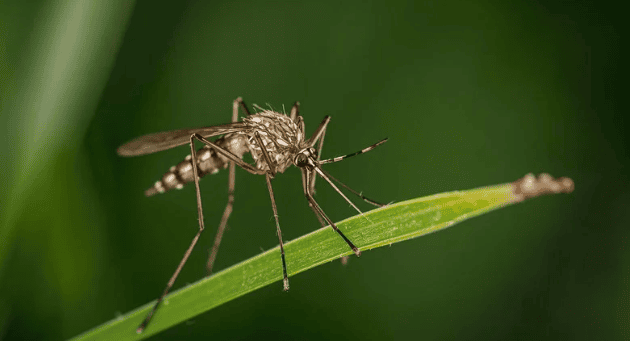
Dengue virus is transmitted primarily through the bite of an infected female Aedes aegypti mosquito. Many infections cause no symptoms or only mild illness. When illness does occur, patients may experience high fever, severe headache, pain behind the eyes, muscle and joint pain, nausea, vomiting, swollen glands and rash. Most symptomatic patients recover within 1 to 2 weeks, although fatigue may persist for several weeks.
A minority develop severe dengue, which can become life-threatening. Warning signs may emerge after the fever subsides and include severe abdominal pain, persistent vomiting, rapid breathing, bleeding, extreme thirst, weakness and pale or cold skin. Patients experiencing these symptoms require immediate medical attention.
One of the complications of severe dengue is plasma leakage, which can contribute to shock and fluid accumulation. Careful clinical management is therefore essential.
There is currently no specific antiviral treatment for dengue. WHO recommends supportive care, including adequate hydration and acetaminophen, or paracetamol, for pain. Aspirin and nonsteroidal anti-inflammatory drugs such as ibuprofen should be avoided because they can increase bleeding risk. Severe dengue frequently requires hospitalization.
Four serotypes complicate immunity
The biology of dengue has made both infection and vaccine development unusually complicated.
Dengue is caused by four closely related viral serotypes, known as DENV-1, DENV-2, DENV-3 and DENV-4. Infection can produce long-term protection against that particular serotype, but protection across the other serotypes is more complicated.
Importantly, people experiencing a subsequent dengue infection have an increased risk of developing severe disease.
That immunological complexity has been a central challenge for scientists attempting to create vaccines capable of producing safe, durable protection.
One of the first major breakthroughs was Dengvaxia, a live-attenuated dengue vaccine developed by Sanofi Pasteur. Its introduction was later complicated by evidence that vaccination could increase the risk of severe dengue among some people who had not previously been infected, prompting tighter restrictions on its use.
The episode illustrated an important challenge for dengue vaccine developers: protection must be evaluated not only against several viral serotypes, but also according to an individual’s previous exposure to dengue.
A newer vaccine enters the picture
The vaccine landscape has subsequently evolved.
Takeda’s Qdenga, also known as TAK-003, is a live-attenuated vaccine containing weakened versions of all four dengue virus serotypes and using DENV-2 as its genomic backbone. WHO prequalified the vaccine in May 2024.
WHO currently recommends TAK-003 for children ages 6 to 16 in settings where dengue transmission is high, administered as a two-dose series three months apart. The organization says countries should consider incorporating the vaccine into routine immunization programs in locations where high dengue transmission represents a significant public health problem.
WHO does not recommend programmatic use of TAK-003 in areas with low to moderate transmission until its efficacy-risk profile against DENV-3 and DENV-4 among people without previous dengue infection is more thoroughly assessed.
The distinction underscores why vaccination is expected to function as one component of dengue prevention rather than a stand-alone solution.
Peru outbreak demonstrates dengue’s potential impact
Recent outbreaks illustrate how quickly dengue can overwhelm communities and health systems.
The material provided for this article appears to refer to Peru’s record 2023 outbreak, rather than an outbreak occurring in June 2026. CDC investigators reported that Peru experienced 222,620 dengue cases and 381 dengue-associated deaths during the first 30 weeks of 2023. That was approximately 10 times the average number of cases reported over the same period during the preceding five years.
Extreme rainfall associated with Cyclone Yaku affected several of the areas reporting large numbers of cases, while dengue activity increased dramatically in metropolitan Lima, where locally acquired infections had historically been uncommon.
The supplied claim that Peru had roughly 160,000 dengue deaths as of June 27, 2026 should therefore not be published as written. I could not verify that figure, and the CDC’s documented 2023 outbreak figures are dramatically lower.
Fighting dengue by changing the mosquito population
Vaccines are not the only emerging strategy.
One innovative approach uses Wolbachia, a naturally occurring bacterium, to interfere with mosquitoes’ ability to transmit viruses. Mosquitoes carrying Wolbachia can be released into communities, where the bacterium can spread through the local mosquito population.
Such biological approaches could complement conventional mosquito-control measures and vaccines as public health authorities seek more sustainable ways of interrupting transmission.
For now, established vector-control measures remain central to dengue prevention. WHO recommends reducing mosquito breeding sites and protecting individuals against mosquito bites through measures including repellents, body-covering clothing, window screens and appropriate mosquito nets.
An integrated response
Dengue’s accelerating global burden highlights the need for an integrated approach incorporating vaccination where appropriate, mosquito control, disease surveillance, rapid diagnosis, clinical management and community education.
WHO recorded more dengue cases in 2024 than in any previous 12-month period, underscoring the scale of that challenge.
New vaccines and mosquito-control technologies offer reasons for optimism. But neither eliminates dengue on its own. WHO specifically describes vaccination as part of a broader control strategy incorporating vector control, appropriate case management, community education and engagement.
As dengue reaches new geographic areas and places greater pressure on health systems, the central public health challenge will be putting those tools together effectively, while continuing to evaluate interventions against rigorous epidemiologic evidence.
What are your thoughts about becoming a Rare Disease Advocate? Share your stories, thoughts, and hopes with the Patient Worthy Community.
Rose Duesterwald September 30, 2026