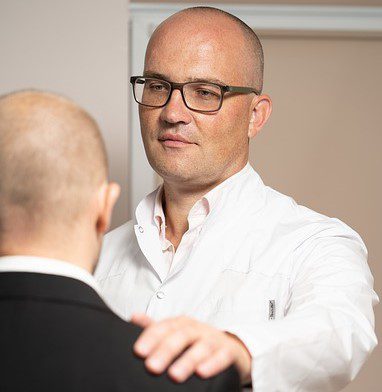
Dr. Duneel Dhand, an internal medicine physician and author, told KevinMD about two events in his life that motivated him to treat his patients with compassion.
A Doctor’s Character
As Dr. Dhand explains, most people have an idea about the amount of effort, dedication, and knowledge that is needed in order to fulfill medical school requirements.
Yet as Dr. Dhand points out, one subject is largely ignored. That is character development. He believes that a doctor’s ability to communicate and have compassion in treating patients is not only on an equal footing with medical knowledge but in some cases, it far surpasses clinical skills.
Dr. Dhand Shares Two Personal Experiences
The doctor said that both experiences left a lasting impression on him. The first occurred when he was a medical student in the UK. According to Dr. Dhand, although the U.S. and U.K. healthcare systems are different, both countries, as well as the rest of the world, share the same breakdown of communication between patients and doctors.
The Med Student’s Misdiagnosis
It seems to be common for medical students to eventually identify with some of the medical conditions they are studying. That happened to Dr. Dhand as he was studying for his final exams.
He was convinced that he had a particular illness and decided to see a local primary care practitioner (PCP) for a physical exam. During the session, he went into great detail explaining his symptoms. Dr. Dhand sensed that the physician was not particularly impressed with his explanation but complied with his request and ordered the exam.
It did not help that the PCP did not offer any encouragement, but then he became angry and berated the young med student saying he was wasting the doctor’s time and had worsened his own condition unnecessarily.
Dr. Dhand recalls leaving the session feeling worse than when he arrived at the appointment. At least he was compensated by receiving good test results.
However, that experience remained with Dr. Dhand for a long time.
The Need for Compassion
The second experience that remained at the forefront of Dr. Dhand’s plans for his future in medicine involved his mother and rather off-handed treatment by her doctor.
Apparently, while his mother was walking her rather large, energetic Bull Terrier, the dog pulled his mother forward and she injured her hand. She went to see a plastic surgeon with an excellent reputation. Dr. Dhand was away at university at the time. His mother called him after her appointment and was extremely upset. She related the doctor’s opinion as one of “nothing could be done”. He actually said that working with her problem would be “like flogging a dead horse”.
Fortunately, and especially since it was her right hand, the doctor was wrong. With gentle therapy, her hand healed completely.
Dr. Dhand readily admits that when he compares these two problems to the life-threatening illnesses experienced by so many people, the two instances described herein are not the worst things that can happen to someone.
Looking Forward
Yet both experiences did impact Dr. Dhand’s entire practice. He became determined that he would be a compassionate doctor. One that exhibits empathy and the determination to conduct each session with effective communication and compassion. His patients will not leave his office feeling worse emotionally than when they arrived.
He reminds other physicians that the patients sitting before them are sometimes at extremely low points. A major part of their job, he explains, is to be reassuring, listen, and avoid frustration or harsh words. The fact that the doctors are busy cannot enter into the equation.
As Maya Angelou famously said: “People will forget what you said, people will forget what you did, but people will never forget how you made them feel.”