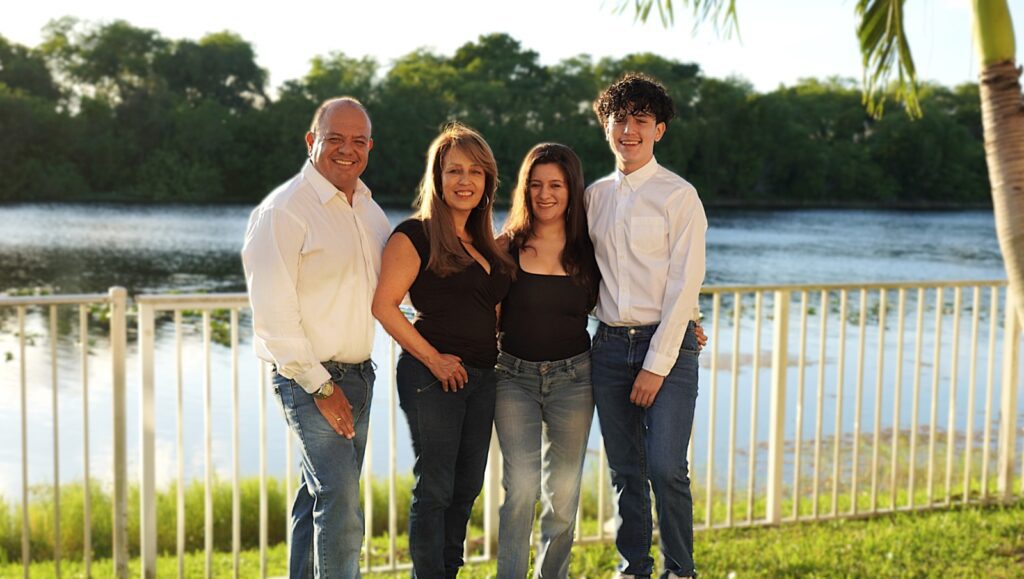
As a little girl, I believed miracles only existed in movies. They felt distant, beautiful stories meant for someone else. I never imagined that my own life would one day reflect something that could only be described as miraculous.
My name is Gabriela Palacios, and this is my journey.
From the very beginning, life was not simple for me. Milestones that came naturally to other children, talking, walking, and eating, required tremendous effort. I struggled socially and academically, constantly feeling as though I was racing to catch up. To achieve what my classmates accomplished with ease, I had to work three times harder.
Even before I was diagnosed, my teachers sensed that something was wrong. I had difficulty keeping up academically, and my processing speed was slower than that of other students. Because of this, I was placed on an Individualized Education Program (IEP) years before anyone understood why I was struggling. The support helped, but there was still an unanswered question: what was really happening inside my body?
At just two years old, I experienced chronic ear infections that required ear tubes. Soon after, I developed pneumonia in both lungs. I was diagnosed with failure to thrive, acid reflux, and celiac disease. My body seemed to be in a constant fight.
When I was eight, a new and frightening challenge emerged. I began having episodes of extreme physical exhaustion. Simple tasks like getting dressed, eating, or walking became overwhelming. My parents consulted countless specialists searching for answers, but clarity remained out of reach.
The impact was devastating. Despite overwhelming fatigue, I couldn’t sleep. Eating often ended in
vomiting. Hospital admissions became routine. At one point, doctors misdiagnosed me with seizures,
which delayed proper treatment and understanding.
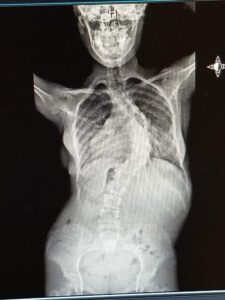 In June 2018, I was diagnosed with 60-degree scoliosis. The curvature threatened my heart and lungs. I wore a brace to slow its progression, but the curve worsened, making surgery unavoidable.
Just two days before my 14th birthday, while attending a surgical consultation, we received devastating news: my grandfather had suddenly passed away. His funeral was held on my birthday. I felt like I had lost the one person who loved me without judgment, no matter what I was going through. A part of me felt like it died that day.
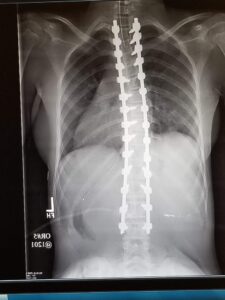
Despite the emotional weight, I faced spinal fusion surgery with determination. Surgeons placed 28 screws and two rods in my back. It was life-altering, but it gave me stability and protected my heart and lungs. I’m so grateful for Dr. John Ashgar and the amazing work he did.
 On April 8, 2019, my life changed forever.
That afternoon, my family and I went to a Colombian restaurant, where I ate honeycomb soup and pork skin, both of which I loved. That night, I became restless. According to my parents and my younger brother Nicolás, I began sleepwalking, changing clothes repeatedly, bumping into walls, and acting aggressively.
At 2 a.m., my parents rushed me to the hospital. There, Dr. Nelson Obikwu made a critical decision that saved my life. He tested my ammonia levels. The result: 500. Normal levels are in the 20s.
I was immediately transferred to Nicklaus Children’s Hospital, where specialists finally discovered the cause: Lysinuric Protein Intolerance (LPI), a rare metabolic genetic disorder within the urea cycle disorder (UCD).
I later learned that I am patient number 10 in the country diagnosed with LPI.
After years of confusion, we finally had an answer.
After my diagnosis at age 15, I underwent a comprehensive psychoeducational evaluation. The results were painful. The testing suggested that my cognitive functioning was at approximately a third-grade level, even though I was in seventh grade.
Professionals recommended that I be placed in a special-needs school. My mother was told she was “expecting too much” from me.
But here is what they did not fully understand: I had been living for years with untreated hyperammonemia affecting my brain.
I already had an IEP before my diagnosis because educators knew something was wrong. After the diagnosis, my IEP became even more structured and intentional. With accommodations, academic support, and relentless effort, I began to grow.
I was not incapable. I was medically compromised.
There is a difference.
Today, I am 21 years old and a sophomore at Nova Southeastern University, majoring in Speech-Language Pathology and Communication Disorders with a minor in Psychology. I have been accepted into a dual admission program that secures my place in the master’s program.
I am also a student intern at Arley Therapy Services, a play-based therapy clinic.
The same girl who once tested at a third-grade level is now preparing for graduate school.
That is resilience. That is support. That is faith. That is family.
LPI and UCD are part of my story, but they do not define me.
Your diagnosis does not define you either.
There may be moments when the darkness feels overwhelming, when hospital rooms, lab results, and educational labels try to tell you who you are.
Do not believe them.
With proper medical care, support systems like an IEP, determination, and faith, growth is possible. Progress is possible. Purpose is possible.
Miracles are real.