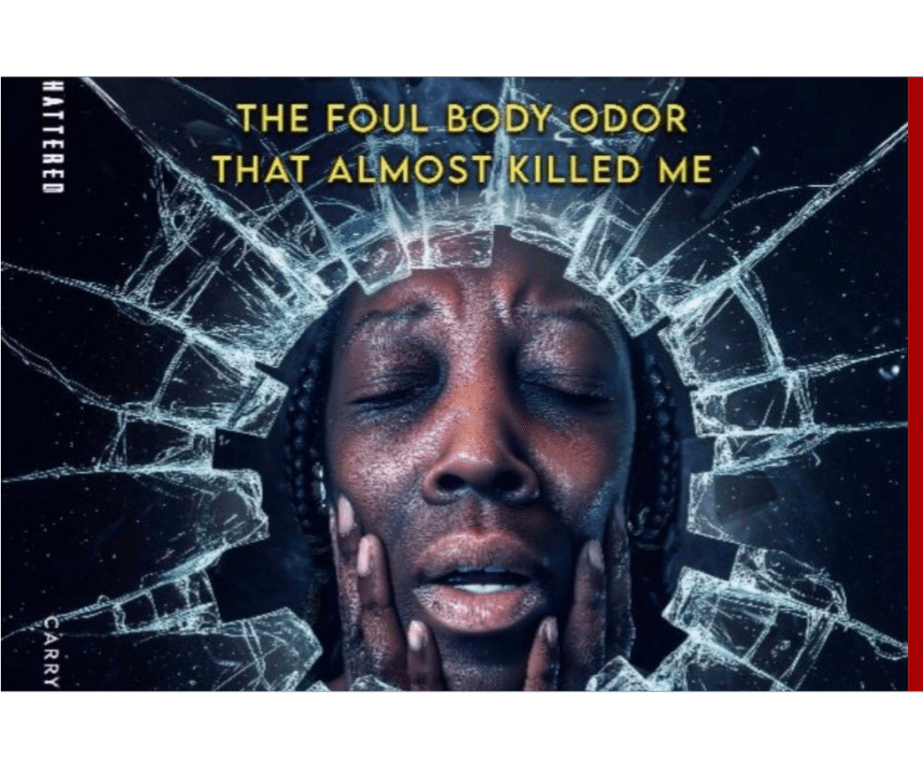
You can not see, hear, or touch my rare condition. I STINK! (LITERALLY)
I wasn’t sure if I was going to tell my story. But I cannot forget a seventeen-year-old girl crying under a table with a knife in her hand because she smelled bad and no one would help or believe her.
My name is Carry Wilson. I was born in Meridian, Mississippi, in 1974, and raised in Chicago, Illinois, from the age of three. I am a 51-year-old African American mother of two.
In 1990, at the age of fifteen, my body began emitting a foul, unexplained odor. Naturally, I went to the doctor to find out why. I had no idea that this odor would change the entire course of my life—and shape my mental health for decades to come.
I came from a poor, working-class family. My dreams were simple: become a registered nurse and one day own property. I was determined. Not even dropping out of high school at sixteen and giving birth to my first child—a beautiful daughter—was going to stop me.
But that birth triggered something I did not understand at the time: a rare metabolic condition called Trimethylaminuria (TMAU), formerly known as Fish Odor Syndrome.
By eighteen, the condition had taken over my life.
The odor was strong, unpredictable, and humiliating. It could smell like urine, fish, garbage, bleach, feces, or even a skunk. Soap and water could not wash it away. It seemed to seep from every pore of my body.
Yet when I sought help, doctor after doctor told me the odor did not exist.
They said it was in my mind. Instead of investigating a physical cause, the medical system labeled me delusional.
For seven long years, I searched desperately for a diagnosis. During that time, I was homeless, hungry, depressed, and suicidal—all while raising two children. I worked twenty to thirty different jobs because coworkers made cruel comments about how I smelled. Meanwhile, doctors insisted there was nothing wrong with me medically.
My search for answers took me from Chicago to New Orleans, Louisiana. In both cities, I spent time in psychiatric wards and homeless shelters. My history of suicidal thoughts only made doctors more certain that my problem was psychiatric—not medical. Each hospitalization became another mark against my credibility.
In total, I saw at least thirty doctors and specialists. None diagnosed me.
Then in 2003, something life-changing happened. I walked into a library and searched on a public computer. There, I discovered information about Trimethylaminuria. For the first time, I read words that described my exact symptoms.
I was not crazy.
I was not delusional.
I had a condition—and there was a name for it.
Years later, in 2023, I faced another battle and beat cancer. Surviving cancer forced me to reflect on everything I had endured. I realized I had survived more than cancer—I had survived dismissal, humiliation, and despair.
That victory made one thing clear: it was time to tell my story.

Shattered: The Foul Body Odor That Almost Killed Me (Based on a True Story) is the unbelievable true story of human strength being stretched to its core. I give a candid and deeply personal account of my struggle to obtain proper medical care for a rare and incurable metabolic disorder. It is the story of a woman plagued by an odor so devastating that it cost her jobs, stability, dignity, and nearly her life.
It is also the story of a medical system that failed to listen.
Despite clear evidence and my own research, medical professionals repeatedly dismissed my concerns. Instead of investigating further, they assumed I suffered from a psychiatric disorder. Desperate and isolated, I was hospitalized multiple times for suicidal ideation— experiences that only increased the stigma and made it harder to receive proper medical attention.
My journey is both troubling and, I hope, inspiring. It is a cautionary tale about what happens when patients—especially poor, Black women— are not believed. But it is also a testament to perseverance. I survived suicidal thoughts. I continued searching for answers when every door seemed closed.
Most importantly, I never gave up.
This story is for anyone who has been told their symptoms are “all in their head.”
And it is for every person battling an invisible condition who needs to know:
You are not alone.
And last but not least. I tell my story for that seventeen-year-old girl under the table with a knife.
That seventeen-year-old girl was me.
I am Carry Wilson.