When David Williams noticed a slight tremor in his right hand, he convinced himself it was something manageable, perhaps a compressed nerve that would eventually resolve on its own. For two to three years, he lived in denial, going about his life as the project manager of 250 people at NASA Glenn Research Center, playing golf every Wednesday evening when weather permitted, and cherishing time with his young son. But denial, he would later learn, is a luxury that Parkinson’s disease doesn’t allow for long.
In 2000, at 54 years old, David received his diagnosis from a neurologist at Cleveland Clinic. His doctor delivered the news in a classic medical fashion:
“I have good news and bad news.” To this day, David sighs and shakes his head. “I don’t even remember what the good news was,” he says.
The bad news was all he could process, a lifelong neurological condition with no cure. In the weeks that followed, David visited three to four other doctors, desperately hoping someone would contradict the diagnosis. No one did.
The shock rippled through his entire family. His wife Charice, his children, his sister, and his friends all fell into a state of denial and concern. But it was Charice who would become his anchor through the storm that followed.
The Hidden Struggle 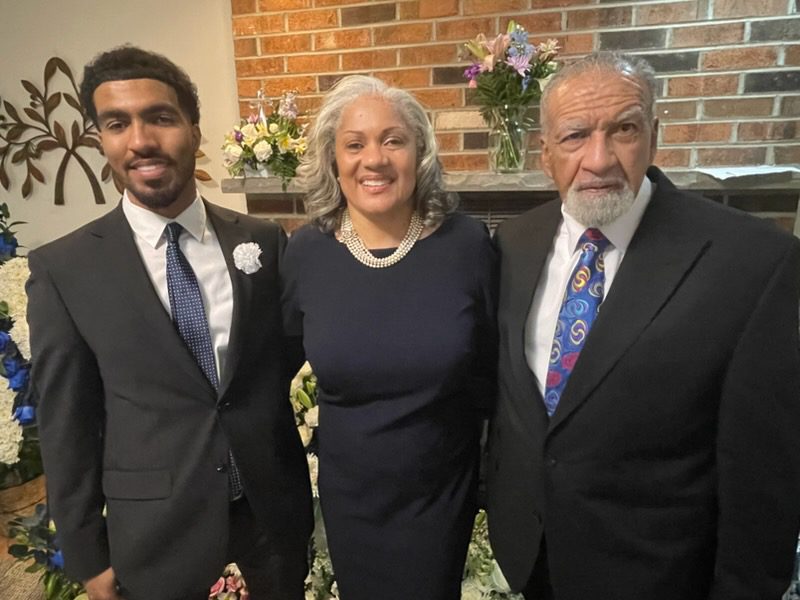
What David discovered over the years is that Parkinson’s disease is deceptive. While the tremors in his arms and legs are the visible manifestation of his condition, the true battle was happening in his mind.
“The mental struggle is worse than the physical struggle,” David admits.
As a proud, accomplished man accustomed to control and leadership, the loss of bodily autonomy triggered waves of anxiety and depression that threatened to overwhelm him more than any tremor ever could.
Charice witnessed this internal war. When they married, she knew she hadn’t married him just for his looks, she married him for his mind, his warmth, and his unwavering spirit. When Parkinson’s arrived, she wasn’t primarily concerned with the physical symptoms. Her deepest fear was losing the positive, upbeat personality and loving spirit that defined him.
“There isn’t a day that goes by that he doesn’t tell me he loves me,” Charice reflects, revealing the foundation of their partnership: respect, daily affirmation, and a commitment to never go to sleep angry.
But being a caregiver to someone with a chronic disease brought its own hidden struggles. Charice is dealing with conflicting feelings at the same time. Resentment can arise from the constant demands and loss of personal freedom, while guilt follows closely because those feelings seem unfair toward someone she cares about. She is responsible for maintaining hope, not only for David, but for herself too.
She realized she had to create an entirely new standard of living, one that looked nothing like their previous life, yet maintained the thread of hope that kept them both afloat.
The Power of Community
The turning point came when Charice joined several caregiver support groups, which have changed over the years based on Dave’s symptoms.
“You can read all the books in the world about Parkinson’s,” she discovered, “but the best information is given from those who are experiencing it themselves.”
Through this community, Charice found others walking similar paths, people who understood the unique challenges of caregiving for someone with a progressive neurological disease. The groups became her lifeline, a space where vulnerability was validated and wisdom was shared.
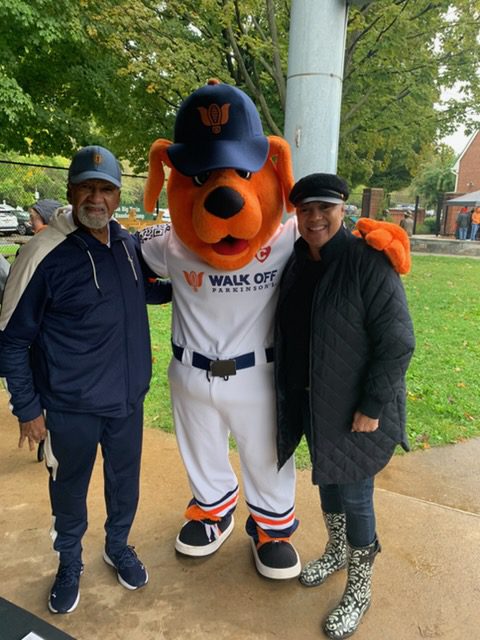
David, too, found profound meaning in community. He became a member of the Parkinson’s Foundation of Washington DC and participated in their Walk-A-Thon. But something even more transformative happened when David and Charice began traveling as brand ambassadors, meeting people from around the world living with Parkinson’s disease. Hearing their stories, witnessing their struggles and triumphs, gave David and Charice perspective on their own journey. They weren’t alone in this battle, thousands of others were fighting the same fight, some with less support, some with fewer resources. This realization shifted something fundamental in how David approached his diagnosis.
A Spiritual Awakening
“Life is more spiritual now,” David reflects. “It’s all about balance.”
 This philosophy became his North Star. David begins each day with prayer and meditation, centering himself spiritually before the physical demands of the day begin. He adopted the Serentiy prayer, finding in its wisdom a framework for acceptance:
“There is a reason I have Parkinson’s, whether I know that reason or not. Embracing it helps me to heal from it.”
David’s approach reframes the entire relationship with disease. “It is a battle,” he says, “but it doesn’t have to be a war.” This distinction is profound – battle acknowledges the struggle; a war suggests total annihilation. By choosing the former, David maintains his agency and dignity. He has Parkinson’s, Parkinson’s doesn’t have him.
The balance David speaks of extends to every aspect of life: diet, exercise, travel, and quality of life. He adjusted his diet thoughtfully, increased his exercise regimen, and was amazed to discover that just two days after exercising, he could feel the invigorating effects rippling through his body and mind. He continued playing golf, the sport he loved, adapting his approach rather than abandoning it. These weren’t small victories, they were acts of defiance against the disease’s attempt to shrink his world.
The Magic of Connection
A critical insight emerged from David and Charice’s journey: the energy between patient and caregiver must be synchronized. “People feed off each other’s energy,” Charice explains. This means her responsibility extends beyond physical care, she must intentionally cultivate hope, positivity, and joy so that David can absorb and mirror it back. Conversely, David’s commitment to a positive mindset directly supports Charice’s ability to sustain her own hope and resilience.
David discovered the transformative power of something simple yet profound: smiling. “A smile is the act of sending a positive spirit out to the world,” he says.
It’s not superficial positivity; it’s a deliberate transmission of spiritual energy. When he smiles, the negative energy disperses, and the positive rises to transform not just his mind, but the minds of those around him. On difficult days, this practice becomes a lifeline.
Daily Affirmations and Synergy
Every morning, David wakes with an intention: “Today is going to be a better day than yesterday, with help from God.” This isn’t naive optimism; it’s a spiritual discipline. When it gets hard, and it does get hard, David and Charice have learned to consciously choose to look at the positive. They acknowledge every step they’ve taken and celebrate every step they’re taking, recognizing that every experience holds meaning.
A Message of Hope
When asked what he would say to others struggling with Parkinson’s disease, David’s message is clear: “Parkinson’s is not a death sentence. It is manageable. With the right attitude and support, you can survive.”
He speaks from hard-earned experience. A friend once told him, “You are not going to leave this life alive. You are going to die from something, so you might as well live your life with stride.” This wisdom lodged itself in David’s heart. If he can manage Parkinson’s with grace and continue thriving, anyone can.

Today, David and Charice continue their advocacy work, actively engaging on social media and creating journals focused on gratitude and exercise for those with Parkinson’s. David even wrote a book, sharing his journey and philosophy. The title of the book is Mind Over Parkinson’s. David is continuously looking for new projects. This staves off Dementia and Alzheimer’s. Just recently he started collaborating with an AI Music Generation Tool to provide content while he selects the title, genre and key phrases for the lyrics. He just finished producing his first song called “Somewhere Along the Way’”.
Together, David and Charice send a message that is consistent and powerful: life changes with a Parkinson’s diagnosis, but it doesn’t have to diminish. Instead, it can deepen, becoming more purposeful, more spiritual, more connected to what truly matters.
In choosing balance over defeat, hope over despair, and community over isolation, David and Charice have transformed a devastating diagnosis into a catalyst for spiritual growth and meaningful living. Their story reminds us that while we cannot always control the diseases that find us, we can absolutely control how we respond to them. And sometimes, that response becomes our greatest gift, not just to ourselves, but to everyone whose life we touch.