Can you take me back to when you first became aware that you had a health condition as a child. Did you overhear the adults in your life speaking about it?
“I was diagnosed with CAH at birth and from a very young age, my family was very open and talked about my condition. My parents always tried to explain what was happening and even encouraged me to take the lead at doctor’s appointments. They’ve consistently supported me in becoming my own advocate.”
What was the journey like as a little one? Did going to the doctors and getting blood draws scare you? How did your condition impact your time in school?
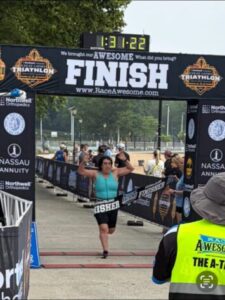 “Since I was diagnosed with classic CAH at birth, I don’t really know anything different, but my experience with it has shaped who I am. As a child, there were moments that felt overwhelming, especially knowing how much blood was being drawn. Though once you have 20+ vials taken nothing scared me when it came to giving blood, plus the chocolate muffins and apple juice were always a plus. Working with my doctors and managing my medication has allowed me to participate in sports like swimming and other activities, which is one of the greatest joys of my life. I love swimming because pushing myself in the water helps me stay healthy.
Since college, I’ve remained active – I’m now a swim coach, and this year alone I’ve participated several races including multiple triathlons and a half marathon. I’m especially excited to take on a half Ironman this September! Growing up, I also had to teach everyone around me, like the people on my swim team, my coach, and my friends, how to look for the signs of potential adrenal crisis and show them how to give me an emergency steroid injection, if necessary.”
At what age did you start to read about your condition? Was that frightening or did it give you a feeling of some control?
“I’ve been fortunate that my family has always been very open in talking with me about my condition, so I was introduced to it gradually from a young age. Because of that, learning more about it didn’t feel frightening. Instead, it gave me a sense of understanding and control. I’m incredibly grateful for their continued support, which helped me feel empowered rather than overwhelmed.”
How would you describe the physical impact of this condition to someone who has never heard of it?
“Classic CAH affects my adrenal glands, which means my body doesn’t make enough cortisol, a hormone we all need to handle everyday stress, illness, or injury. When cortisol is too low, it can make someone with CAH feel nauseous, dizzy, or extremely weak, and in serious situations it can lead to an adrenal crisis. CAH can also cause the body to produce too many androgens, which can create additional physical challenges. In my case specifically, increased body hair is a challenge. Some people with classic CAH may also experience symptoms related to long-term steroid treatment. It’s important to say that everyone is different and may experience symptoms differently. ”
Walk me through a typical “good day” versus a challenging day. What does managing your health look like on a 24-hour basis?
“Because I’ve never known life without CAH, living with this condition is just my normal. Taking medication three times a day and making sure I always have my shot kit with me are part of my routine. That’s what a typical day looks like for me, and it doesn’t feel difficult or unusual.”
In what ways has this condition required you to adapt your daily routines, career, or hobbies? What are some things people might not realize you have to plan for?
“One big difference in my childhood was I didn’t go to sleepovers or attend sleep away camp, mostly because of the medication schedule and the need for someone to know how to help me in an emergency. That’s something people don’t always realize – even when CAH doesn’t limit what I can do, it still requires planning and awareness from the people around me. Since I was diagnosed at birth, I never had to ‘adapt’ my routines, career, or hobbies – this has just always been my normal. I swam throughout college, and there were no limitations with sports.”
How did your relationship with your own body change after you were old enough to understand your diagnosis?
“As I’ve grown into adulthood, I feel much more confident in myself and in managing my condition. I’ve learned how to be in tune with what my body needs, and I understand it much better now than I did as a teenager. I also appreciate what CAH has taught me about who I am and how to be proud of who I am even if I am ‘different.'”
Living with a chronic, rare condition requires incredible resilience. What are the heaviest emotional hurdles you face, and how do you navigate them?
“One of the heaviest emotional hurdles for me was the transition from my pediatric endocrinologist to an adult provider. I had been in such a good place with my pediatric team that starting over felt overwhelming and frustrating. When trying to switch to an adult endo I realized that there was not that much expertise in terms of CAH. Eventually with the support of my family and my doctors, I worked through that process and eventually found an endocrinologist local to me who was the right fit. Having people around who understood what I was feeling made it much easier to navigate those emotions.”
In what ways has this condition shaped who you are today? Do you view yourself differently now than you did as a teenager?
“CAH is a part of who I am, but it’s not the only thing that defines me. It shaped me in a number of ways, including showing me how to advocate for myself and others. It has caused me to slow down and think about the risks associated with everything, from sports to working. I hope sharing my story helps others with CAH feel more comfortable and empowered to talk about their condition. As I’ve gotten older, I’ve become even more committed to sharing my experiences so others can learn from them.”
How has this condition impacted your relationships with family, friends, or romantic partners?
“Everyone in my circle is aware of my condition and incredibly supportive, especially my family. I’ve also met some friends through my involvement with the CARES Foundation, a nonprofit dedicated to improving the lives of people with CAH through support, advocacy, education, and research. Being part of that community has given me friendships and connections I might never have found otherwise.”
Do you feel like the people in your life truly understand what you are going through, or is there a sense of isolation that comes with a “rare” label?
“I tell the people in my life that I have CAH because it’s important for them to be aware. It’s a part of who I am, and there’s no reason to feel any shame about living with a condition like CAH. Yes, it makes you different but different is good. Because I’m open about it, I do feel understood by the people close to me. Being honest helps prevent that sense of isolation that can come with having a rare condition. I have always said that if someday there were a gene therapy to cure CAH I would not do it because CAH has molded me into the person I am and I am proud of that.”
How do you navigate conversations about your health with people who are meeting you for the first time?
“When I meet new people who I feel will be important in my life I let them know I have CAH. I’m very open about having CAH. I explain what it is, what symptoms to watch for, and how they can help me if I ever go into an adrenal crisis. I think it’s incredibly important for the people around me to know how to give the injection and what steps to take right away.”
What has been your experience navigating the healthcare system as a patient with a rare disease? Do you feel heard by your medical team?
“A major challenge I faced was finding an adult endocrinologist. I stayed with my pediatric endocrinologist for as long as possible, but once I aged out, I tried transitioning to a provider within the same health system as my other doctors. Unfortunately, they weren’t familiar with CAH and even confused it with type 1 diabetes. I ended up returning to my pediatric endocrinologist, who connected me with an adult endocrinologist. I’ve seen them a few times now and finally feel heard and understood by my medical team as an adult.”
If you could give one piece of advice to doctors or researchers working on your condition, what would it be?
“My biggest piece of advice would be to learn more about CAH. One of the hardest parts for patients is turning 18 and trying to transition to an adult endocrinologist, only to find that many providers have very little awareness of the condition. This often leaves patients and parents in the position of having to educate the doctor, instead of the other way around. We need to get to a place where adult providers are familiar with CAH and can be a reliable resource for families. My parents experienced this first-hand, and it’s still a major gap in care.”
When you look toward the future, what are your biggest hopes, and what are your main anxieties?
“My biggest hope for the future is to continue my work with kids and adults living with CAH. It would have been life‑changing for my parents and for me to see someone my age living with CAH when I was younger, and I hope to be that person for someone else.
My main anxiety is that awareness and understanding of CAH in adult healthcare still has a long way to go, and I worry about how future patients will navigate that transition. I hope CAH awareness continues to increase so the next generation has an easier time with the transition from pediatric to adult care.”
How do you maintain hope or a sense of purpose on the days when the physical or emotional toll feels exceptionally heavy?
“I don’t know what it’s like to live without CAH, so maintaining hope has never really been difficult for me – it’s simply my normal. On the days that do feel heavier, having my parents deeply involved in my CAH journey really helps. They’ve always been active with CARES and having that support system reminds me that I’m not navigating this alone.”
For another patient who has just been diagnosed with this same condition and feels completely overwhelmed, what words of wisdom or comfort would you want to share with them? Are there any resources or support groups either in person or on-line that you would recommend?
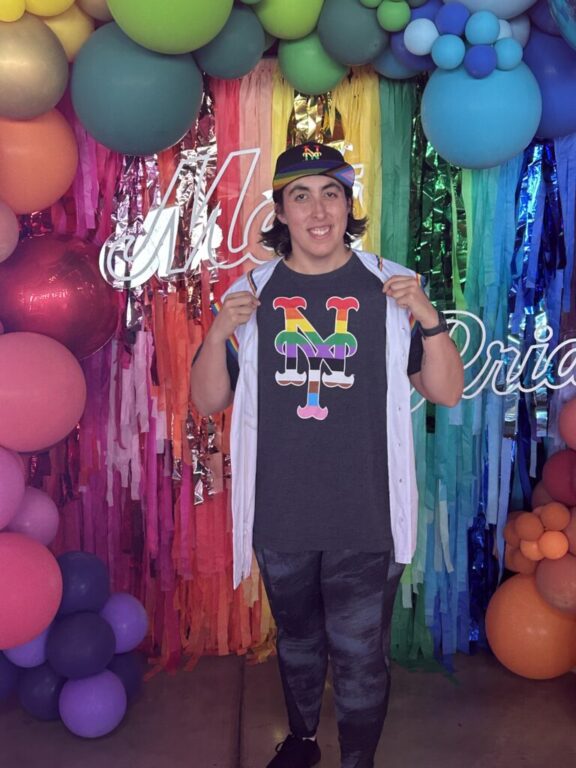
“Growing up, I always wished I had someone around my age to look up to, someone who could show me what life with CAH looked like as an adult. My parents’ biggest fear was me going away to college, but I’m 25 now, and I’m here to show newly diagnosed patients that you can keep doing the sports and hobbies you love and still go to college while living with CAH. CAH is part of who you are, but it’s not the only thing about you. You learn to advocate for yourself, and over time you’ll find a treatment plan that fits your life.
CARES Foundation was founded 6 months before I was born, and my parents came across it when they were looking into resources or a support system for CAH when I was diagnosed. In fact, my dad was the second CARES Foundation president and one of their longest members. It has been a blessing to grow up with CARES and see the new generation coming in.
I also recommend WhatTheCAH.com as a resource because it provides valuable information on CAH and provides real stories, useful tools and resources for people living with the condition. The website also shares stories and insights from people living with CAH to build community.”