Editor’s Note: Patient Worthy is honored to share this article, originally written by Renzo Luzzatti, President and CEO of US-Rx Care.
The White House recently announced intent to impose tariffs of 100% on imported generic medications beginning in 2028 and increasing the tariff to 200% in 2029. Generics reflect approximately 90% of all medications filled annually in the US. The intent of the tariffs is to encourage domestic manufacturing rather than relying on manufacturing outside the US. It can take years and millions if not billions of dollars for drug manufacturers to scale up manufacturing operations and obtain needed FDA manufacturing approvals for products coming off of those manufacturing lines. In addition, domestic production does not necessarily mean lower cost than options currently in place around the world. So bringing manufacturing into the US does not necessarily translate into lower prices for consumers, in fact costs may be higher.
The vast majority of generic forms of medications are sourced from manufacturing facilities outside the US, India being one of the leading source countries. Assuming manufacturers invest needed capital to satisfy US demand for generic medications through domestic manufacturing, the likelihood of bringing needed supply on-line by 2028 is not high. Thus, if the tariffs do go into effect, consumers and health insurers will certainly experience higher drug prices. The cost per month for generic medications ranges from $10-$15, thus a 200% increase would drive the cost to $30-$45, a meaningful increase. For the roughly 4 billion generic prescriptions filled annually in the US, that is an annual cost increase to the healthcare system of $80-$120 billion dollars at a time when consumers and payers are already buckling after many years of steady increases in drug prices.
For employers and health plan sponsors that take advantage of international pharmacies to ship medications at reduced cost to plan enrollees, these tariffs make that option less attractive, effectively cutting off that lifeline to access medications more affordably. Cost savings on medications shipped from licensed pharmacies in first world countries (without tariffs) are often over 50% compared to the same medications dispensed domestically.
The prospect of higher drug prices in the US comes at a time when considerable attention is being placed on drug cost in the United States, where we already spend more than 4 times the amount paid in other first world countries for the same medications. This is purely due to the fact that we have a free-market pricing model in the US, whereby drug prices are set by governments elsewhere around the road. We are also unique in the world for having Pharmacy Benefit Managers (middlemen positioned between drug manufacturers and pharmacies) that have been rightly chastised for also driving up drug prices in the US by demanding payments from manufacturers to include their medications on insurance plan formularies which dictate whether a medication is covered by insurance and the cost share to plan enrollees.
Thankfully, multiple companies have come into the market with transparent and fiduciary PBM’s that are successfully reversing drug cost trend. A much welcome breakthrough for insurers and patients. The primary driver behind the cost saving trend revolves around a de-conflicted service model, whereby the most common conflicts of interest that drive up cost in the PBM industry are absent. In a conflict free environment, where the PBM is focused solely on acting in the plan sponsor’s best interest, there are just two areas of focus, 1) ensuring insured patients have access to needed medications and 2) ensuring both patients and plan sponsors do not overpay for medications. When focused solely on “doing the right thing” versus maximizing PBM profits through elevated drug prices, reduced pharmacy spend of 30%-50% or more is common.
Policies that drive up medications costs, are certainly unwelcome at this time when significant progress is being made to reduce drug spend. Ultimately, we need policies that drive down the cost of medications in the US, not fuel ever higher prices. At the same time, employers in the US have started to take control of their own destinies by seeking a pharmacy benefit manager fully aligned with their own fiduciary duties as plan sponsor. Fiduciary PBMs are held to the same legal standard as a plan fiduciary as defined under Employee Retirement Income Security Act (ERISA), which guarantees a service model that is 100% free of any conflicts of interest, fully transparent, and solely focused on looking out for the best interest of the plan and plan enrollees. At the end of the day, is that not what should be expected of any vendor touching any component of plan benefits?
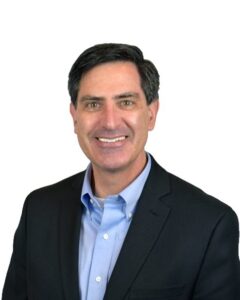 About Renzo Luzzatti: Renzo Luzzatti is the President and CEO of US-Rx Care, where he pioneered the nation’s first fiduciary Pharmacy Benefit Manager to restore transparency, accountability, and client-first ethics to the PBM industry. With more than 30 years of leadership in pharmacy risk management and benefit optimization, he has guided employers, health plans, and policymakers toward sustainable models that deliver better outcomes at dramatically lower costs.
LinkedIn URL – https://www.linkedin.com/in/rluzzatti/