
A Q&A with Robert Groysman, MD, on why standard tests can miss long COVID—and how individualized care may help patients break the cycle
When the first wave of COVID-19 patients began reporting persistent symptoms in 2020, many encountered medical dead ends. They were told, “It’s anxiety,” or advised to “give it time.”
Nearly seven years later, millions of people continue to experience debilitating symptoms, often without clear answers or effective treatment. Robert Groysman, MD, founder of the COVID Institute and author of eight books on long COVID, says the problem may not be that these patients are untreatable—but that the medical system is looking for the wrong kind of solution.
After treating thousands of patients with long COVID, Groysman believes care must move away from a one-size-fits-all model and toward a more individualized approach.
Why do so many long COVID patients struggle to get diagnosed?
Dr. Groysman: Long COVID is one of the most complex and difficult conditions to diagnose because it can affect multiple systems in the body at the same time. Patients may experience brain fog, balance problems, exhaustion, heart palpitations, digestive issues, hormonal changes and many other symptoms.
Too often, they’re told, “Your tests all came back normal. We don’t know why you’re feeling this way.” Then they’re sent from one specialist to another—and, in some cases, referred to a psychiatrist. That can leave patients feeling dismissed and no closer to getting their health back.
If routine tests come back normal, does that mean nothing is wrong?
Dr. Groysman: No. One of the challenges with long COVID is that much of the damage may be functional rather than structural. Standard scans and tests are often designed to identify visible structural abnormalities, but they may not capture how the body’s systems are functioning—or malfunctioning.
COVID can disrupt several systems at once and throw them out of balance. Because those systems are interconnected, dysfunction in one area can affect another, creating self-sustaining cycles of illness.
What do you mean by “self-sustaining cycles”?
Dr. Groysman: Think of a car battery. You need the battery to start the car, but once the engine is running, the battery isn’t responsible for keeping it moving. COVID can initiate the damage, but the virus may no longer be active when the body continues to experience problems.
Some symptoms, such as the loss of smell and taste, may resolve on their own. But other disrupted mechanisms may continue without intervention. The longer these cycles persist, the more difficult they can become to interrupt.
Why hasn’t medicine found one treatment that works for everyone?
Dr. Groysman: Because long COVID doesn’t look the same in every patient. There can be hundreds of possible symptoms and combinations of symptoms.
As long as researchers and physicians look for one universal treatment, they may not find it—because it may not exist. The absence of a single cure does not mean there are no treatment options. It means care must be targeted to the individual patient.
What underlying problems may be driving long COVID?
Dr. Groysman: In my experience, there are six root areas of dysfunction that may contribute to long COVID:
- Dysautonomia: Disruption in the regulation of balance, heart rate and blood pressure
- Endothelial dysfunction and microclots: Damage to the inner lining of blood vessels and impaired blood flow
- Mitochondrial stress: Problems with cellular energy production that can contribute to severe fatigue
- Mast cell activation: Flare-ups and immune reactions that can resemble autoimmune responses
- Gut dysbiosis: Imbalances in the gut that may contribute to digestive distress and increased intestinal permeability
- Hormonal dysfunction: Disruption of the endocrine system following infection
These mechanisms do not operate independently. They interact through a network of ongoing signals and feedback loops, which is one reason two patients can have completely different symptoms.
What is the biggest misconception about treating long COVID?
Dr. Groysman: The biggest misconception is that there must be one treatment that fixes everything. Long COVID is a network disorder. Different systems influence one another continuously, so treatment has to account for the patient’s individual pattern of dysfunction.
A patient may primarily need support for autonomic regulation, while another may be dealing with significant hormonal, gastrointestinal or vascular issues. The first step is identifying what is happening in that particular patient rather than assuming every case follows the same roadmap.
What kind of physician is best equipped to treat long COVID?
Dr. Groysman: Long COVID can affect nearly every major organ system, which makes traditional medical silos difficult for patients. A cardiologist may focus on the heart, a gastroenterologist on digestion and an endocrinologist on hormones—but the patient may be experiencing problems across all of those areas at once.
Patients need an approach that looks at the body as an interconnected system. That means evaluating the full picture, identifying the most likely drivers of symptoms and developing a treatment plan based on the individual rather than relying on a single specialty or standardized protocol.
What gives you hope for patients who have been sick for years?
Dr. Groysman: Patients should not assume that the absence of a single cure means they are destined to live with debilitating symptoms forever. Long COVID is complicated, but complicated does not mean hopeless.
The medical community needs to recognize the condition’s complexity, take patients’ symptoms seriously and move toward precision-targeted care. When we identify and address the mechanisms that are keeping the illness going, we have a better chance of helping patients move forward.
Patients should consult a qualified healthcare professional regarding persistent symptoms following COVID-19. Treatment approaches should be individualized and based on a comprehensive medical evaluation.
Biography: Robert Groysman, MD
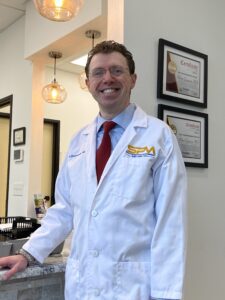 Robert Groysman, MD, is a highly trained anesthesiologist and interventional pain management specialist who emerged as a leading expert on long COVID early in the pandemic. His journey into this field began in 2020 with the innovative use of the stellate ganglion block procedure to address symptoms associated with long COVID. Driven by a commitment to evidence-based medicine, Groysman dedicated himself to researching and developing effective treatments for this debilitating condition, which affects up to 15% of the population. He is offering his insights worldwide on long COVID and the related conditions through published research, a book series, a diagnostic app, and other training tools and materials.