Editor’s Note: Patient Worthy is pleased to share this story, submitted to us by Connie B.
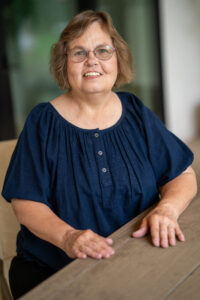 What if one diagnosis could change the way an entire family understands its past, present, and future? Well, that’s what happened to me and my family.
I was the middle child of three children, and from the time I started walking, my parents knew something wasn’t quite right. My legs were bowed, and after visits to multiple doctors, I was eventually diagnosed with what was then known as vitamin D-resistant rickets. At the time, nobody talked about genetics, inheritance, or family risk. My diagnosis was treated as an individual health condition, not part of a larger family story.
As a child, I accepted that this was simply something I had to live with.
I wore braces, took medications, and did my best to keep up with other children. I grew up in a rural community where I never met anyone else with the condition. Because I felt so alone in my experience, it never occurred to me to ask whether anyone else in my family had experienced similar symptoms. Looking back, I wish I had known to ask questions about bone pain, joint problems, or other health challenges that may have existed within our family tree.
For much of my early life, I believed my initial diagnosis affected only me. And then everything changed.
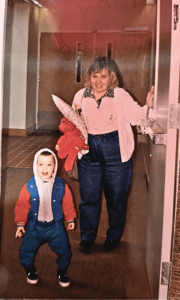 In 1995, someone mentioned the possibility that my condition could be genetic. It was the first time I had ever heard that idea, and it set off a chain of events that would transform how my family understood our health history. Genetic testing ultimately confirmed that I had X-linked hypophosphatemia, or XLH, and that my son Chris had inherited it as well.
I learned that XLH is rare, affecting up to 1 in 20,000 people, and that it isn’t something you outgrow.1 It’s a lifelong condition that can progress over time to affect many parts of the body, from the bones and joints to the teeth and muscles.1
The diagnosis also helped me understand that XLH was not just my story, it was our family’s story.
Until then, I had viewed my condition through the lens of my own experiences. Suddenly, I realized that genetics connected my diagnosis to future generations. Learning that XLH could be passed from parent to child completely changed how I thought about the disease and the importance of talking openly about it.
As a mother, that knowledge became especially meaningful.
I always watched my children closely. After all, I knew firsthand the challenges that could come with living with XLH. My daughter was born first and did not inherit the condition. Later, when my son Chris was born, I noticed symptoms that reminded me of my own childhood. I repeatedly voiced concerns and advocated for him until genetic testing ultimately confirmed that he, too, had XLH.
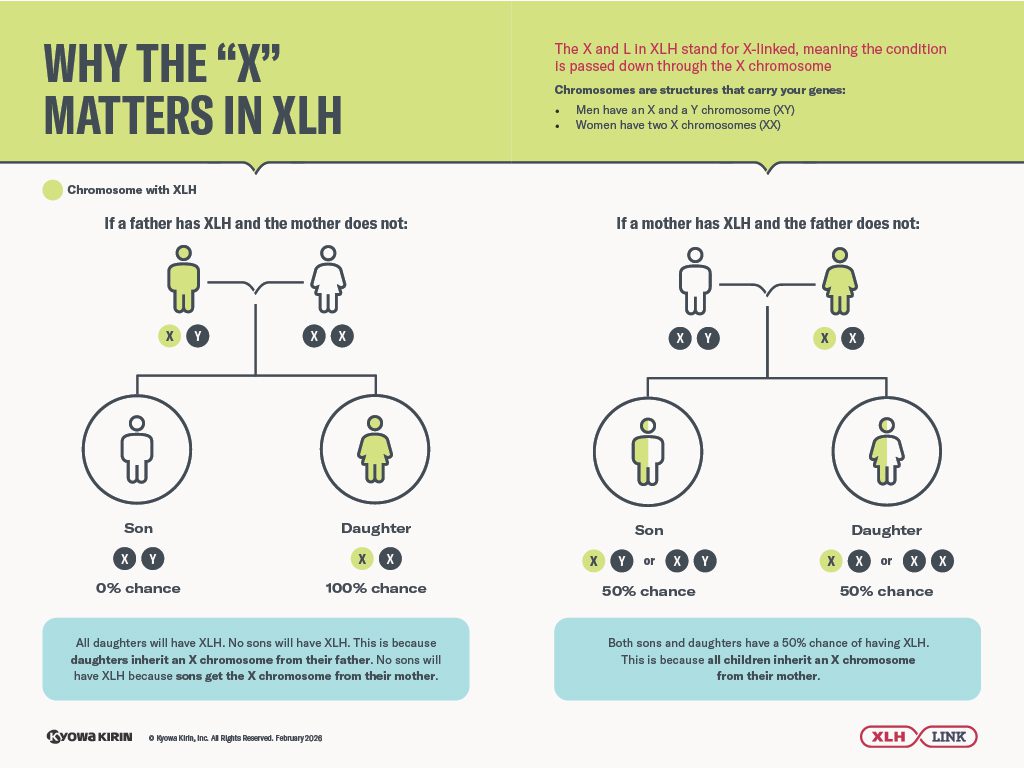
Learning about inheritance helped me understand something I hadn’t known when my children were born: a mother with XLH has a 50% chance of passing the condition to each child.2 Suddenly, pieces of our family’s puzzle began falling into place. What had once seemed confusing and unpredictable became easier to understand through the lens of genetics.
That realization changed what I did next: I knew this information could not stop with me — it needed to be shared. So, I became much more open about discussing it with family members. I wanted relatives to understand what the condition was, how it affected daily life, and why it was important to know their family health history. I realized that conversations could help people.
Over time, those conversations became even more important as our family grew.
Today, I am the proud grandmother of five granddaughters. Two of them have XLH. Because our family understood the genetic nature of the disease, they were able to receive testing early in life. Instead of wondering what was causing symptoms, they had answers.
Watching another generation navigate XLH reinforced just how powerful family conversations can be.
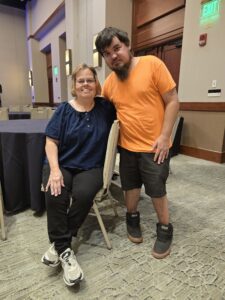 My granddaughters’ experiences are different from mine because our family knows more than we did decades ago. We understand the importance of monitoring symptoms, asking questions, and partnering with healthcare providers.
Along the way, I learned that family conversations are about more than genetics. They’re about building connections, helping loved ones feel less alone, and turning uncertainty into understanding.
Had I known from the beginning that XLH was inherited, there are many conversations I would have started sooner, including asking more questions about family health history. And while I cannot change the past, I can share what our family has learned.
If you or a loved one is living with XLH, don’t underestimate the power of a conversation.
XLH Link has many tools to help get the conversation started, including an XLH Inheritance Guide, a digital family tree builder, and XLH Conversation Cards. These tools could have helped me feel more confident talking to aunts, uncles, and cousins about XLH, and may help other families avoid years of worry and uncertainty.
Connie is a spokesperson for Kyowa Kirin who shares her personal experience to help increase awareness about XLH.
References:
- Dahir K, et al. X-linked hypophosphatemia: a new era in management. J Endocr Soc. 2020;4(12):bvaa151.
- Aljuraibah F, Al Amiri E, Al Dubayee M, et al. Diagnosis and management of X-linked hypophosphatemia in children and adolescent in the Gulf Cooperation Council countries. Arch Osteoporos. 2021; 16(1):52.