
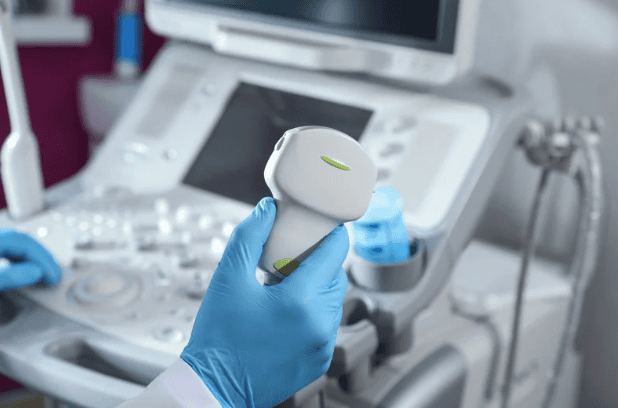
The University of Michigan has opened a $10 million research center dedicated to histotripsy, a technique that uses focused sound waves to destroy tumors. The center will make specialized equipment and expertise available to researchers from other institutions, with the goal of learning where the treatment may be useful and helping research move forward.
Histotripsy is a noninvasive treatment: it does not require an incision. Precisely aimed ultrasound creates tiny bubbles in and around targeted tumor cells. As those bubbles rapidly expand and collapse, they break apart the cells. The treated tissue becomes liquid that the body can gradually clear.
The approach is different from surgery, radiation and chemotherapy, and it may offer some patients a treatment option that avoids an operation. But histotripsy is not appropriate for every tumor or every patient, and it is not a replacement for established cancer treatments in general.
What is known so far?
The U.S. Food and Drug Administration authorized histotripsy for treating liver tumors in 2023. The University of Michigan report says more than 130 treatment systems have been installed worldwide and used to treat over 5,000 patients.
That experience is an important step, but it does not mean histotripsy has been tested or authorized for every cancer. The center plans to study whether the technology could be developed for other cancers, including those of the thyroid, pancreas, breast, prostate, brain and skin, as well as sarcoma. These are research goals—not established uses. The release also says the university expects possible FDA authorization for kidney and pancreas tumors in the following year; those approvals were not yet in place at the time of the announcement.
Researchers will also explore possible applications beyond cancer, including brain diseases. Those uses remain under investigation.
Why open a research center?
The center’s equipment is not commercially available, which can make it difficult for outside researchers to study the technology. The new facility will allow scientists to come to Ann Arbor to conduct research with the equipment and the team’s expertise. A mobile research system may also travel to other locations in the United States, free of charge.
The center plans to support laboratory and clinical research, train future scientists and clinicians, and eventually help prepare clinicians to study new uses in human trials. Its organizers hope that broader access will make it easier to test important questions, such as which tumors might respond, how best to deliver treatment, and how histotripsy compares with other options.
What could this mean for patients?
If future studies show that histotripsy is safe and effective for additional cancers, it could become another option for some patients. Because it uses sound waves rather than an incision, it may reduce some burdens associated with surgery. However, possible benefits and risks can vary by cancer type and individual circumstances. Research is needed to establish how well it works, who may benefit, and how it fits alongside other treatments.
For now, patients should not assume histotripsy is available or suitable for their cancer. The treatment is authorized for liver tumors, while many of the other proposed applications are still being studied. Patients interested in it should ask their oncology team whether it is an appropriate option or whether a clinical trial may be available.
The center represents a major investment in research, not proof that histotripsy will work for every cancer. As University of Michigan researchers and outside collaborators test the approach, their findings may help clarify where this technology can—and cannot—play a role in cancer care.