Editor’s Note: This story was submitted to Patient Worthy by Ghulam Ali, Founder & CEO, Muscular Dystrophy Pakistan.
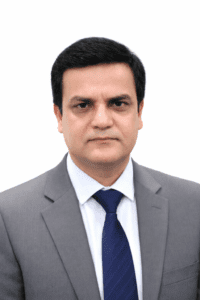 I am 35 years old and hold a Bachelor’s degree in Rural Development from the University of Sindh, Jamshoro. My journey with Muscular Dystrophy began in 2007, when I was 18 years old and playing cricket in my village. During a match, I tried to catch a high ball but fell unexpectedly. That fall marked the first sign of what would later be diagnosed as Limb-Girdle Muscular Dystrophy (LGMDR1).
In 2008, I joined the University of Sindh for my four-year Bachelor’s degree. At that time, I was still fully active and did not pay much attention to my occasional weakness. However, as the years passed, my symptoms slowly and gradually worsened. In my second year, I began to experience difficulty standing up from the floor and felt a burning sensation in my legs while walking. Climbing stairs also became challenging, and I often needed support.
By my final year of university, I decided to seek medical advice. Getting my diagnosis was not a smooth process. In Pakistan, awareness and diagnostic facilities for rare diseases like LGMD are very limited. I had to consult multiple doctors before receiving a confirmed diagnosis. The lack of specialized genetic testing locally made the process longer and emotionally exhausting. After a long wait, I got an appointment with a neurologist at Liaquat University Hospital in Hyderabad. The doctor performed several tests, including MRI and EMG, and later informed me that I had a chronic form of Muscular Dystrophy. He explained that there was currently no cure, only supportive medicines to manage symptoms.
At first, I kept this diagnosis private, not wanting to worry my family. I was confused and deeply worried. There were many questions about my future, mobility, career, and independence. However, my mother noticed my weakness and insisted I tell her the truth. When I did, my family offered full emotional support despite the challenges ahead. Over time, I chose acceptance over fear. I realized that while I may not control the condition, I can control my response to it.
Currently, there is no definitive cure for LGMD2A. My management plan focuses on physiotherapy, maintaining mobility, proper nutrition, and regular monitoring. While progression cannot be completely stopped, careful management helps maintain functionality and quality of life. At present, I am able to walk approximately two to three kilometers a day, though I face several physical challenges on a daily and ongoing basis. These include difficulty climbing stairs, jumping, or getting up from the ground. I am unable to lift my arms fully above my head or bend my legs while standing, and I experience occasional sudden falls. Performing everyday activities such as wearing jeans has also become difficult.
Due to the progression of this condition, I have faced challenges in securing employment with both governmental and non-governmental organizations. Despite these limitations, I have continued to dedicate myself to advocacy and research in the field of muscular dystrophy.
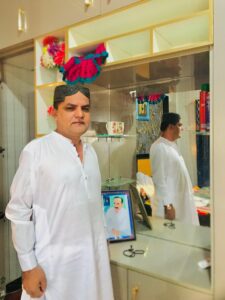 In 2016, I began researching Muscular Dystrophy to better understand the condition. After years of effort, I finally received a confirmed genetic diagnosis in 2021: Limb-Girdle Muscular Dystrophy Type R1 (LGMDR1). My mobility has continued to decline since then, and daily tasks have become more difficult. Yet my determination has only grown stronger. Faith, acceptance, and purpose have been my strongest coping tools. I focus on advocacy, awareness, and community engagement. Transforming personal struggle into public service has given my life deeper meaning.
My family has been my greatest strength throughout this journey. In addition, connecting with other patients and advocates has provided emotional encouragement. This experience ultimately led me to establish Muscular Dystrophy Pakistan, a national organization dedicated to awareness, education, advocacy, and support for individuals and families affected by Muscular Dystrophy. Through this platform, I aim to ensure that no one in Pakistan faces this journey alone. I hope for early diagnosis programs in Pakistan, better access to genetic testing, and inclusive healthcare policies for rare diseases. I also hope to see stronger global collaboration to bring effective treatments to patients worldwide.
To those living with Muscular Dystrophy, you are not alone. A diagnosis is not the end of your story. It is the beginning of a new chapter. Seek support, stay informed, and never lose hope.
Strength is not defined by muscle power but by resilience of the heart and mind.