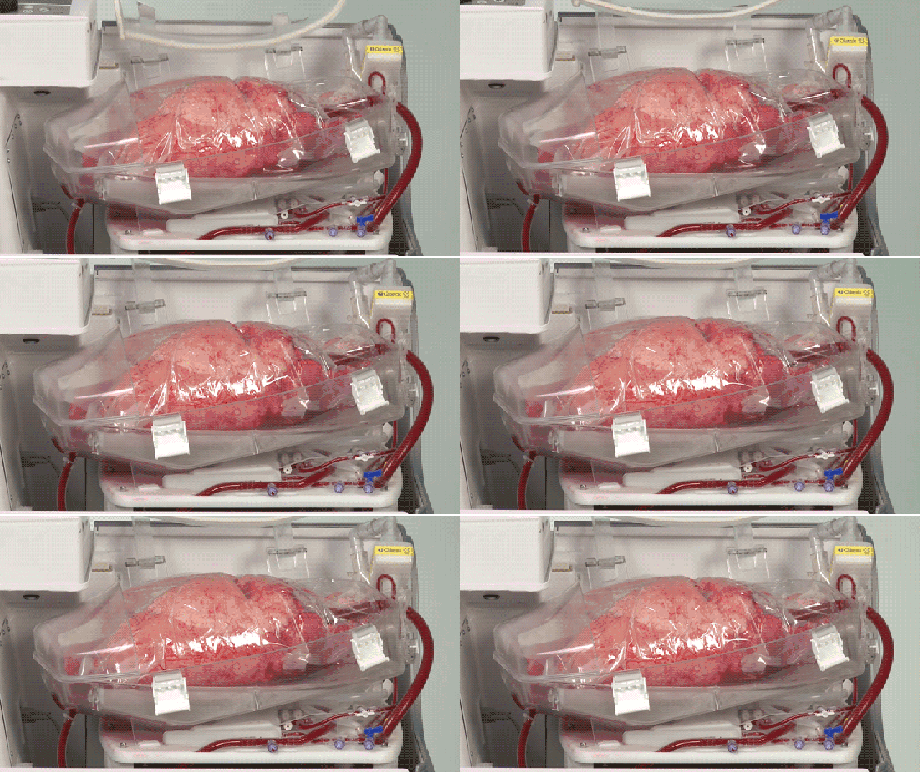
As reported on TechTimes, the U.S. Food and Drug Administration (FDA) has granted Premarket Approval to the TorEx® Lung Perfusion System, a new ex vivo lung perfusion (EVLP) platform developed by Canada-based Traferox Technologies. The device is designed to help transplant centers evaluate donor lungs that might otherwise be discarded, potentially increasing the number of organs available for transplantation.
According to Traferox, approximately two-thirds of lungs initially considered unsuitable for transplant were ultimately accepted after assessment with the TorEx system. The approval marks an important development for U.S. transplant programs, providing a hospital-based EVLP option that allows clinicians to examine donor lungs under near-physiologic conditions before making transplant decisions.
Addressing Persistent Donor Lung Shortages
Lung transplantation continues to face a significant supply challenge. While organ donation rates have improved, many recovered lungs are never transplanted because clinicians cannot confidently determine whether the organs will function adequately after surgery. Industry and registry data indicate that a large proportion of donated lungs are declined due to concerns about quality, oxygenation, pulmonary edema, or donor-related risk factors.
Traditional evaluation methods rely heavily on cold preservation. Once recovered, lungs are typically stored at low temperatures and assessed within a limited timeframe. Under these conditions, transplant teams cannot directly observe how the organs perform, often leading to conservative decisions and high discard rates.
Although U.S. lung transplant volumes have reached record levels in recent years, demand continues to exceed supply, leaving many patients waiting for suitable organs.
How the TorEx Platform Works
TorEx uses normothermic EVLP technology, which keeps donor lungs functioning outside the body at approximately 37°C (98.6°F) during assessment. After recovery, the lungs are connected to a perfusion circuit and ventilated while receiving a specialized acellular perfusate solution containing nutrients, medications, and supportive agents.
The system circulates the solution through the lungs using a low-flow approach intended to reduce the risk of fluid accumulation. During the evaluation period, clinicians can monitor key physiologic parameters, including:
- Oxygen transfer efficiency
- Pulmonary vascular resistance
- Lung compliance
- Ventilation pressures
This real-time functional assessment provides information that is unavailable during conventional cold storage, helping clinicians determine whether a previously rejected organ may be suitable for transplantation.
The platform supports up to six hours of evaluation, after which the transplant surgeon makes the final decision regarding organ acceptance.
Built on the Toronto EVLP Model
The technology is based on the widely recognized Toronto EVLP protocol developed at Toronto General Hospital by transplant researchers Dr. Marcelo Cypel and Dr. Shaf Keshavjee. Their pioneering work demonstrated that lungs considered high-risk could be assessed outside the body and, in many cases, safely transplanted with outcomes comparable to those achieved using standard donor organs.
Both physicians are co-founders of Traferox and currently hold leadership roles within the company.
Engineering Considerations
A key feature of the Toronto approach is the use of an acellular perfusate rather than blood-based circulation. By eliminating red blood cells, the system reduces the risk of cell damage caused by mechanical pumping during perfusion.
The protocol also employs perfusion flows below normal cardiac output. While this strategy helps minimize edema and maintain organ stability, it means the lungs are evaluated under conditions that do not fully replicate post-transplant physiology. As a result, EVLP can improve decision-making but cannot guarantee clinical outcomes after transplantation.
TorEx and LungFX Offer Different Models
TorEx enters the U.S. market shortly after FDA approval of LungFX, another EVLP platform developed through United Therapeutics.
Despite sharing the same goal of increasing donor lung utilization, the two systems follow different operational models. LungFX is delivered through centralized facilities that perform EVLP assessments on behalf of transplant centers. Recovered organs are shipped to specialized sites, where they are evaluated before surgeons review the results remotely.
In contrast, TorEx is intended for in-house use. The mobile system can be operated directly by transplant centers, allowing hospitals with EVLP expertise to conduct assessments within their own facilities without relying on external processing centers.
This distinction may influence adoption patterns, as different programs weigh the costs, staffing requirements, and workflow implications of each approach.
Clinical Experience and Remaining Challenges
Traferox reports that more than 400 TorEx procedures have been completed to date. The company states that roughly 67% of lungs classified as marginal were ultimately approved for transplantation following evaluation. These figures have been reported by the company and collaborating centers, although independent verification beyond the trial data has not been published.
EVLP technology has been associated with broader clinical and economic benefits, including increased transplant activity and reduced waiting times at institutions with established programs. However, the approach also carries limitations. Researchers have noted that prolonged perfusion may trigger inflammatory responses in donor lungs, while mechanical ventilation during assessment can contribute to ventilator-related injury. In addition, EVLP adds procedural complexity and cost.
For these reasons, EVLP is considered a decision-support tool rather than a replacement for clinical judgment. Even with FDA approval, the ultimate responsibility for organ acceptance remains with the transplant surgeon.
Outlook
The approval of TorEx adds another FDA-cleared EVLP option to the transplant landscape and highlights growing interest in technologies aimed at recovering organs previously deemed unusable. If the platform’s reported success rates are replicated in broader clinical practice, it could help expand the donor lung pool and provide more transplant opportunities for patients awaiting life-saving procedures.