Before you read, don’t forget to check out Part 1 of our interview with Laura, Nicole’s mom. In Part 1, we discuss Nicole’s diagnostic journey, what acute lymphoproliferative syndrome (ALPS) is, and ALPS symptoms. Today, we’ll discuss the search for treatments, “writing the book,” and the importance of raising awareness.
Searching for a Treatment for ALPS
Learning that Nicole had ALPS was frightening to hear, especially because doctors were so open about the fact that they didn’t quite know how to treat it. Doctors began experimenting with potential treatment options: antimalarial drugs, chemotherapy, investigational drugs, blood transfusions every few days. When Nicole was diagnosed, Laura was pregnant with her son; doctors even recommended saving his cord blood as a potential treatment. Laura shares:
“There were many times when I thought that there was no way she was getting better. She couldn’t be a kid because if she fell, her spleen would rupture, and she had to be isolated because she was so immunocompromised. Her treatments were trial and error. We’d get our hopes up and then think: is this going to help or is it going to cause more problems?”
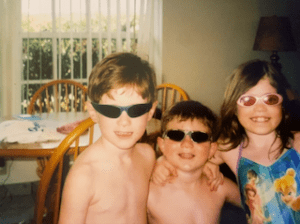
For eleven years, the family managed as well as they could. Nicole underwent blood tests every few days. It was sometimes difficult for Laura’s two sons; her middle son would always ask if Nicole would be okay or if she was going to die.
Then, when Nicole was 13, the family received a phone call from Dr. Margaret Karpatkin, MD at NYU who Laura refers to as the family’s “guardian angel.” She helped the family navigate some of the new testing and medication, stating that things would progress.
Later, the Roublick family also got in contact with the Children’s Hospital of Philadelphia (CHOP). It is here that the family met their second guardian angel, Dr. Teachey. CHOP was doing research into ALPS and wanted to see if Nicole would join a trial to see whether a certain medication might be helpful. After just two weeks on RAPAMUNE (sirolis), Nicole’s spleen shrank, and her blood counts began to rise. This therapy, taken once daily, has helped Nicole immensely.
Writing the Book
This journey has been long and arduous, but Laura, Nicole, and their entire family have worked to raise awareness and increase understanding. When Nicole was diagnosed, the doctor said that she would most likely be writing the book on ALPS. The family has taken on that challenge wholeheartedly. As Laura explains:
“When Nicole was diagnosed, it was like somebody stabbed me in the heart. From that moment forward, I would go anywhere, call anybody, or do anything to help her. And we have written our book. Nicole is a success story, but it took us a really long time and a lot of chapters to get to where we are now. I have to be her voice, her author. I wouldn’t say we have a happy ending, but it’s not a sad ending either. It’s a promising ending. There will be a sequel—maybe a cure or Nicole becoming an advocate herself—because her story is not finished.”
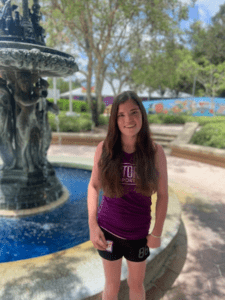
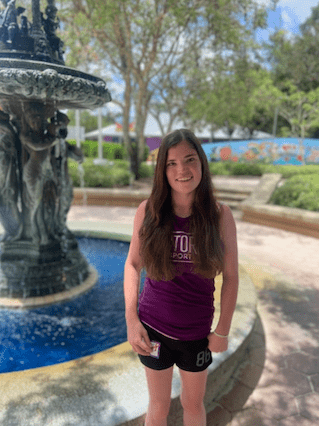
Currently, Nicole is 23 years old and lives at home with her parents. She has high-functioning autism and severe anxiety. But to her parents, she is thriving. Laura says:
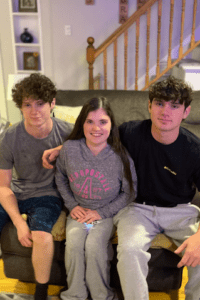
“If you would have told me twelve years ago that we would be here, I wouldn’t believe you. It’s been hard for her and hard for us, but we’ve adjusted. Nicole’s two brothers understand everything that is going on. We’ve had to miss events because Nicole needed a transfusion or wasn’t doing well, but this has made us appreciative. It has made my marriage stronger because we’ve learned about and understand this together.”
As the family moves forward, there are new challenges on the horizon, new chapters to write. Nicole has outgrown pediatric doctors, for example, but older doctors are not informed on ALPS. The family has kept her with Dr. Teachey, as well as a hematologist and oncologist in New York City who collaborates with Dr. Teachey as needed. It has gotten easier over time—Laura and Nicole are both experts on ALPS now and understand when something is wrong—but what the future brings is still unknown. For now, the family is just doing their best to remain resilient and hold onto hope.

The Fight to Raise Awareness
Throughout the last 23 years, Laura has learned how to be an advocate and how to raise awareness. She recalls a time in the hospital when she spoke with a woman whose daughter had passed away from brain cancer. When Laura asked how the woman remained so strong, the woman replied, “You don’t have a choice. I could lay down and just give up, or I can do something. So do it. Stick it out.” Another time, someone handed her “Welcome to Holland.” These messages resonated deeply with Laura, who decided to carve out her own path towards advocacy. She shares:
“I’m doing this for Nicole. I watched this all happen but I’m not the one being treated. I’m not the one walking around with this. Nicole is. She didn’t ask for this and sometimes I feel guilty. So I raise awareness for her and for me and for my boys, because one day they’re going to take a bigger role in her care. This awareness is for everyone that has reached out and asked for help. I remember how alone and horrible I felt. I just wanted to talk to someone and hear their story, their success, but I didn’t have that. I can now tell people that yes, I was there, and here is what can happen. Here’s how bad she was and now look how good she is. Don’t give up.”
Laura tries to take whatever time she can to speak with others. People have contacted her through the family’s website, Facebook, and even fundraisers. One woman called to say that her husband was just diagnosed with ALPS; another man in Florida said that Laura saved his son’s life by directing the family to Dr. Teachey.
For those she hasn’t been able to speak with yet, Laura offers advice:
“Take care of yourself mentally and physically. It’s okay to not want to be around other people. Do what makes you feel right and what you need to do to get through this. Reach out to people in the rare community, even if it’s not your diagnosis. Find a support group for your condition, or even one for grief. And as you go through this process, you’ll find what you need to write your own book.”