
 Rare Disease Month is deeply personal to our family. Before Pruitt, our youngest son, we had never heard of Ornithine Transcarbamylase (OTC) Deficiency, nor did we truly understand how fragile and complex the human body can be. Rare Disease Month gives us the space to say our son’s name out loud, to tell his story, and to honor the 6 months he spent fighting harder than anyone ever should have to. It means families advocating fiercely, learning medical language overnight, and living with constant fear and hope intertwined. It means loving a child through uncertainty, celebrating small victories, and grieving losses that the world may never fully see. Rare Disease Month is about awareness, but for us, it is about remembrance. It is about Pruitt and the countless other children and families walking similar paths.
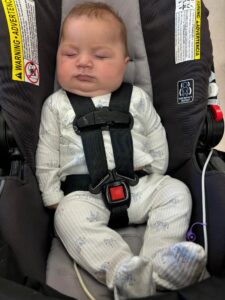
Pruitt—whose name means Brave Little One—was born on May 17, 2024. His delivery was smooth, & from the very beginning he latched and nursed without any issues while we were on the postpartum floor. On May 19, we brought our seemingly healthy baby home.
Our world changed forever in the early morning hours of May 20 when Pruitt began to become uninterested in feeding. Soon after, he began making uncomfortable grunting sounds while breathing. We brought him to the hospital, where he was admitted through the emergency department & immediately underwent a septic workup. We were then admitted to the pediatric floor, and while being transported for a CT scan, Pruitt coded and required rapid response intervention, including intubation. He was then admitted to the PICU as blood, urine, & cerebrospinal fluid cultures were obtained. At that time, all signs pointed to a possible bacterial or viral infection.
After more than 24 hours of cultures returning negative, the genetics team was consulted. On May 22, a geneticist ordered an ammonia level, and we were shocked to learn that Pruitt’s ammonia measured 1,256 µMol/L (normal is below 72 µMol/L). Due to severe hyperammonemia, there was concern for an inborn error of metabolism—specifically a urea cycle disorder—so continuous renal replacement therapy (CRRT) was initiated to remove the excess ammonia.
On May 24, Pruitt was diagnosed with Ornithine Transcarbamylase (OTC) Deficiency, a rare X-linked genetic disorder caused by a complete or partial absence of the OTC enzyme, which is essential for removing nitrogen from the body through the urea cycle. Without this enzyme, nitrogen accumulates as ammonia builds up in the bloodstream, which is highly toxic to the brain and other organs, and can lead to progressive and life-threatening complications.
On May 27, we received verbal confirmation that I was a carrier of the OTC gene—something that came as a complete surprise, as I had been asymptomatic my entire life, and had previously carried and delivered two healthy boys without complications.
 Pruitt had his first MRI on May 28. The neurologist expressed concern about bright areas seen on the images but explained that infant brains sometimes have the ability to regenerate. On June 2, Pruitt was successfully extubated, and we were finally able to hold our little boy again—a moment we had long waited for. A follow-up MRI on June 6 showed that no regeneration had occurred & revealed additional areas of injury. A third MRI performed one month later suggested extensive supratentorial brain damage.
On June 10, our two older sons were tested for OTC deficiency. We were relieved to learn that both results were negative. During Pruitt’s initial hospitalization, he required dialysis multiple times as doctors worked to establish a sustainable nutritional plan that allowed enough calories & a careful amount of protein. Eventually, with a specific tailored feeding and medication plan, he began to improve. Toward the end of June, he was transferred from the PICU to the general pediatric floor, where he continued to be monitored and stabilized.
We were finally discharged from the children’s hospital on June 28 where we had to become medical parents on our own from home. On August 27, Pruitt underwent GJ tube surgery, and a permanent port was placed in his chest. This port allowed for easier lab draws and faster access to Ammonul when ammonia levels began to rise.
Throughout his short six months of life, Pruitt was closely monitored with weekly ammonia & amino acid labs, along with weight checks to adjust his feeding & medication regimen as needed. Some weeks required more frequent testing due to elevated ammonia levels. We had to be very hypervigilant with his condition with monitoring and following a strict medication and feeding schedule. He was hospitalized nearly every month for hyperammonemia, and his medications were continually increasing as he grew. At five months old, Pruitt was evaluated for a liver transplant, but he never had the opportunity to receive one due to complications.
 Pruitt was admitted for his final hospital stay on November 7 with rhino-entero virus. Despite medical intervention, he passed away on November 22, 2024, just a few days after turning six months old, due to hyperammonemia and multi-organ failure.
OTC deficiency can present suddenly and without warning, especially in newborns. Early symptoms may include poor feeding, vomiting, lethargy, rapid or labored breathing, low body temperature, irritability, and seizures. Triggers for dangerous ammonia spikes can include illness, infection, fasting, increased protein intake, or physical stress. Without rapid diagnosis and treatment, hyperammonemia can cause irreversible brain damage or death.
We share his story so that other families may be diagnosed sooner. Pruitt changed us forever, and through him, we will continue to raise awareness. Find us on Instagram or visit thebravelittleonefoundation.com to learn more.


-300x300.jpg)