Sharing My Stripes 🦓
This Rare Disease Month, I’m honored to share my journey living as someone with a rare disease and what Rare Disease Month means to me.
This isn’t just a story; it’s a reality that changed my life and my new normal forever. At first, I was very scared and even hopeless because I had been diagnosed with things I hadn’t even heard of before. The shock of the diagnosis and learning there are no cures was actually devastating. If it wasn’t for social media, I would’ve been in big trouble. I ended up finding virtual support groups to help me navigate. I also made some new connections and friends on Instagram who shared my diagnosis. It was at that time I learned exactly how much you can learn from people who are complete strangers but have something super important in common with you.
As I tell my story, maybe I can help inspire and enlighten others who live with vascular compressions like Nutcracker Syndrome. I’ve learned that people rarely have just one vascular compression. I have three, but I know of people who have up to five vascular compression syndromes. You are absolutely not alone.
My diagnoses are also considered invisible illnesses. These are chronic illnesses where you can’t necessarily look at someone and tell they have any health issues or rare diseases. Rare diseases that cause pain are the most unexpected, uncomfortable, and misunderstood experiences I fight through each moment I am awake. To soften the situation and make it easier to cope with, instead of saying I have five appointments in five different places instead of going to work, I say I’ll be in “appointment land” next week.
Living with things like Nutcracker Syndrome and other rare diseases, there can be new discoveries. Even new personal discoveries, such as “I’ve never met anyone else in person who shares my diagnosis.” The people I engage with who have it live states away from me, and sometimes countries away from me. Social media made that type of engagement possible for me. I’ve learned a lot from my peers, even how to advocate for adequate treatment and healthcare.
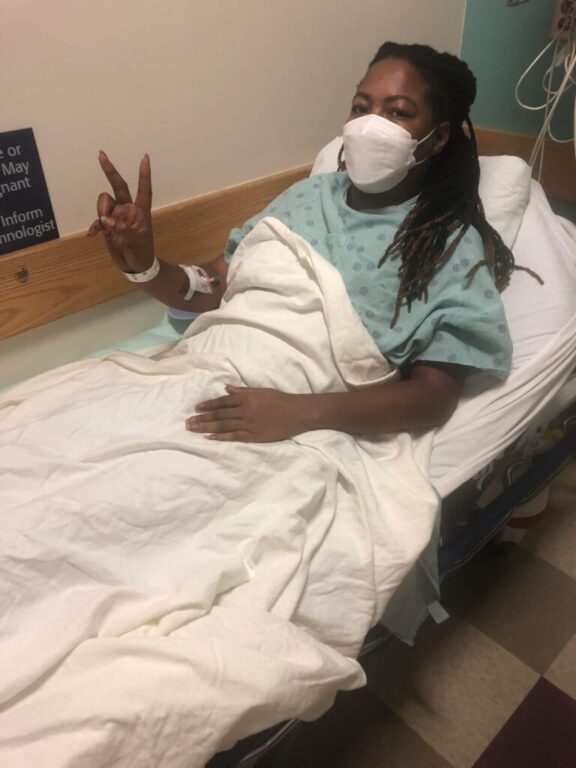
I have not had a doctor yet who has treated anyone with Nutcracker Syndrome other than me. They will even tell me that. A few times, I did feel like a circus attraction in the hospital because everyone wanted to see the patient who had vascular compressions.
Rare Disease Month means more support and education becoming available for everyone involved. It’s also why I have great reason to spread awareness like wildfire. Knowledge is power. The more people who know about Rare Disease Month, the better. My advocacy around rare diseases is kind of like a calling for me since I ended up being a part of this community. I always say people don’t get it till they get it.
About the Author: Tytina Sanders-Bey is a Lactation Counselor, Doula, and public health advocate. She’s a mom of six located in the Midwest.
Tytina lives with rare diseases classified as vascular compression syndromes, or vascular compression disorders. She was diagnosed with Nutcracker Syndrome in 2020. This diagnosis left her unable to work and provide for her family. After being denied treatment in multiple states, she became the second person to receive a renal auto-transplant of her left kidney. Prior to her Nutcracker Syndrome diagnosis, she was diagnosed with Pelvic Congestion Syndrome. After the Nutcracker Syndrome diagnosis, she was diagnosed with May-Thurner Syndrome. It wasn’t until years later that the cause of her Pelvic Congestion Syndrome was linked to both Nutcracker Syndrome and May-Thurner Syndrome, which had been missed and undiagnosed.
In January of 2026, Tytina was nominated as a member of the Leadership Committee for the Nutcracker Syndrome Association. To learn more about Nutcracker Syndrome, you can visit: https://www.nutcrackersyndrome.com/
You can find Tytina on Facebook, Instagram, and TikTok.