My name is Amanda. I was diagnosed with a genetic connective tissue disease called Hypermobile Ehlers-Danlos Syndrome (h-EDS) about four years ago. However, the diagnosis was a decade in the making; I spent over ten years searching for answers, finally receiving them when I was nearly thirty years old. There are over thirteen types of EDS, and every patient navigates a different path.
The Long Road to Validation
Early in my journey, I was told I couldn’t have children. After the birth of my oldest daughter, I began experiencing significant pain and medical issues. I consulted numerous doctors who were often confused by my symptoms and unable to provide a clear path forward. My condition worsened during and after my second pregnancy.
Eventually, I sought help at a major hospital where a team of specialists finally provided a diagnosis. While it wasn’t the answer I wanted, it offered vital validation: it wasn’t just in my head. Looking back, the signs were present even in my childhood, but because my eight siblings and parents didn’t show symptoms, there was no baseline for comparison. I recently discovered that the condition comes from my mother’s side; she believes her own mother, who passed away young, may have had it as well. When I began spreading awareness of Hypermobile Ehlers-Danlos Syndrome (h-EDS), members of my mother’s side of the family read my story, and recognized in it, some of their own symptoms. This led to their seeking medical attention and being diagnosed as well.
The Reality of Chronic Illness
Since my diagnosis, I have seen over twenty doctors and sought multiple opinions from top specialists. Unfortunately, many have admitted they cannot manage my case due to the complexity of the disease. I’ve heard “we’re out of options” more times than I can count.
Living with EDS is a constant uphill battle. It has resulted in:
- Over 25 separate diagnoses: Including comorbidities like POTS (Postural Orthostatic Tachycardia Syndrome), CCI (Craniocervical Instability), and MCAS (Mast Cell Activation Syndrome).
- Failed Treatments: I often have rare or adverse reactions to medications, or they simply fail to work. I have tried over 30 different medications to date.
- Severe Physical Impact: The disease affects my bones, muscles, ligaments, tendons, and nerves, causing severe musculoskeletal, gastrointestinal, and neurological pain.
- Medical Gaslighting: I have faced dismissive comments from providers, ranging from being told to “eat a Happy Meal” during a period of severe malnutrition to being told to simply “do some yoga.”
Fighting for the Next Generation
The hardest part of this journey is watching my daughter go through the same struggle. It is heartbreaking to see a vibrant, energetic child deal with extreme fatigue and pain that limits her ability to use her legs or enjoy the activities she loves. She doesn’t fully understand why this is happening, but she is tough and strong-willed.
I strive to be a role model for my daughters. We deserve a life that is more than just “surviving.” Because there is no cure, EDS is often not taken seriously enough in the medical field, but it is so much more than being “bendy.” It is unpredictable and exhausting.
Advocacy and Awareness
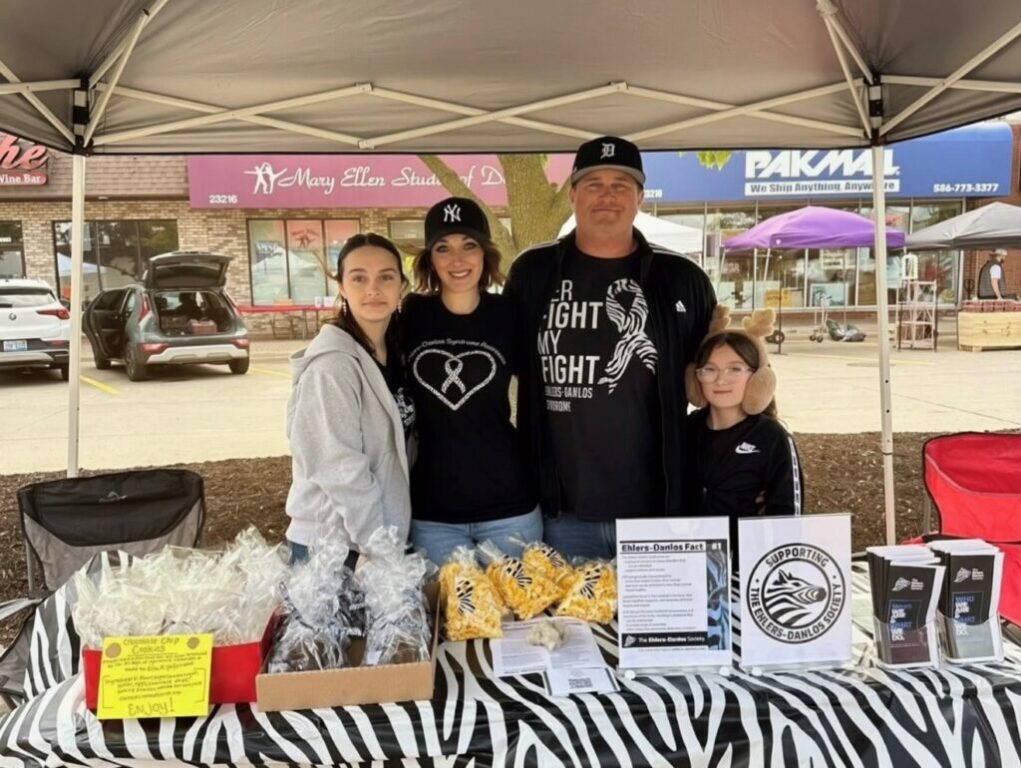
Spreading awareness is my mission. I want to ensure that others don’t feel as alone as I did during those ten years of searching. Last year, I held an awareness bake sale and raised $431 for the Ehlers-Danlos Society.
Real people suffer every day and want nothing more than a normal life. By sharing my story, I hope to help others get the answers they need. My voice matters—and so does yours.