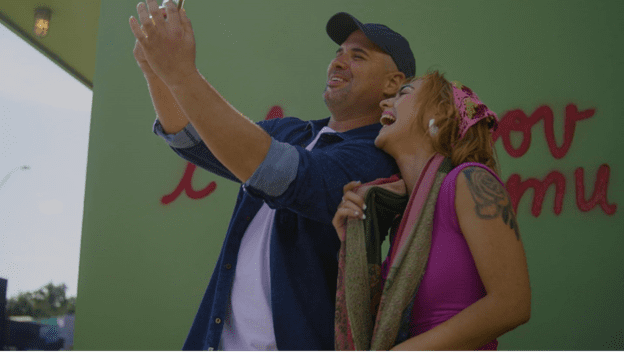
I was born in Long Island, New York, and raised in Southern California, where I grew up surrounded by sunshine and the beauty of the ocean. For the past 14 years, I’ve called the Austin area home, and I’ve truly fallen in love with the community and the outdoor lifestyle it offers. I enjoy paddleboarding, tubing, and anything that allows me to connect with nature and the water.
At the age of 39, my life took an unexpected turn when I was diagnosed with bladder cancer. I had been a smoker. Hearing those words was initially numbing, but that feeling quickly gave way to the realization of how serious my condition was.
My family and close friends rallied around me immediately. Their support became my anchor as I tried to make sense of it all. We talked through treatment options, and there was this mixture of fear and determination in those early conversations. I knew I had to fight, and I knew I couldn’t do it alone.
My journey began with surgery to remove a tumor roughly the size of a large egg. Unfortunately, my recovery was complicated when the catheter I was sent home with became clogged with blood clots, resulting in an emergency room visit and the most intense pain I have ever experienced.
Following that, I underwent three additional surgeries. Then I started Bacillus Calmette-Guérin (BCG) treatment, which is the usual, initial treatment for my type of bladder cancer: what’s called non-muscle invasive bladder cancer (NMIBC). The BCG is actually a weakened form of TB bacteria that is infused through the urethra. Then, one waits for a couple of hours before urinating it out. This is done multiple times, over weeks. It stimulates the immune system and attacks the cancer cells. This treatment has been in short supply, but I was able to get it. The treatment proved to be both physically and emotionally taxing however and unfortunately it did not work for me.
After everything I had endured up to that point, learning that BCG hadn’t worked left me feeling defeated. Until now, most patients in my situation would be left with bladder removal which would be a huge lifestyle change and something I was not ready to consider. The possibility of losing my bladder was deeply concerning to me. As someone who values an active lifestyle and is still building a future, including hopes of finding love, I feared how dramatically that outcome might impact my life.
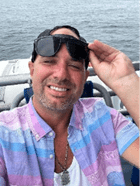 Shortly after, my doctor introduced me to INLEXZO™ (gemcitabine intravesical system) as a potential treatment option that meant keeping my bladder for now. I was immediately open to trying it, or willing to do whatever it took to preserve my health and, importantly, my quality of life.
INLEXZO™ is a a small drug-releasing system, literally shaped like a pretzel. It’s placed directly into your bladder by your doctor. It’s different from the BCG treatments because it holds the medication for you and releases medicine over time. Once it’s in, I don’t even feel it.
When I began this treatment it worked for me. At one point, I did have an issue with my personal insurance coverage but was ultimately able to receive the treatment at no cost because of a patient assistance program called INLEXZO withMe, which was an incredible blessing.
As with any treatment, there were some difficult moments particularly due to general bladder cancer symptoms like frequent urination and UTIs, which I was prone to. Luckily, I have a great relationship with my Physician Assistant who I feel comfortable speaking to and who listens to me. By working with her, I got to stay on treatment and found ways to reduce the severity and frequency of the symptoms.
My body began to adjust, and I started to feel a renewed sense of hope. I am now approaching my 8th final induction dose before shifting to a quarterly dosing schedule, after which I will continue treatment for the remaining year and a half.
What began as one of the most challenging experiences of my life has, in many ways, transformed into something meaningful and unexpectedly positive. Through sharing my story, I’ve had the opportunity to speak on panels across the country, connecting with others, and raising awareness about advancements in bladder cancer treatment.
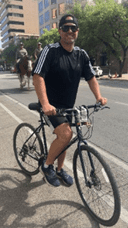 I am incredibly grateful to share that at my last four appointments, I have been cancer-free. My scans have come back clear, meaning no evidence of active cancer. Those are words I wasn’t sure I’d ever hear, and they continue to fill me with both relief and gratitude.
My hope in sharing this journey is to offer encouragement to others facing similar battles to fight through it. Cancer is not just a physical fight. It challenges you emotionally and mentally as well. But even in the darkest moments, there is reason to hold on to hope. What I’ve learned is: stay positive, lean on your support system, check out resources from advocacy organizations like the Bladder Cancer Advocacy Network, Triage Cancer and Man Up To Cancer, and keep fighting. There is strength in perseverance, and there is always the possibility of a better outcome ahead.