I remember the day I realized something was wrong, as clearly as if it happened this past weekend. It was a beautiful morning in June. I was taking part in my first 5K for a local charity and had walked most of the race, chatting with friends and enjoying the fresh air. That was until we neared the finish line. Since we were all in our early to mid teens, my friends and I decided to sprint. That’s when my legs decided they had had enough. It felt like I was trying to sprint on an ice rink, my limbs refusing to move forward as I struggled to stay upright. Embarrassed and confused, I walked a quiet walk of shame across the finish line.
From that point on, I became more aware of the challenges rapidly developing: a hand tremor when I held something out in front of me, the feeling of trudging through molasses at the end of a long day, and an inability to progress in ballet—instead fighting just to keep up with other students. When I reflect on those years, I am hit with a wave of sadness. I can still feel the fear that overwhelmed me at 15. Undiagnosed and confused by my symptoms, I tried everything I could. Keto—maybe that would help. Every vitamin and supplement possible—that should help, right? Moving my body constantly, losing weight, anything to feel in control of my health and symptoms. But unfortunately, none of it supported my undiagnosed teenage self, and in turn gave me an eating disorder.
For the next two to three years (timelines have blurred together), I went through a rigmarole of tests in search of answers: countless MRIs, a spinal tap, EMGs, EKGs, EEGs, genetic studies, and blood draws. Yet nothing came of them. I was a teenager stuck in a body that felt like it was failing, without the words to describe what the future might hold.
In my late teens, I was given a sliver of clarity when I was partially diagnosed with leukodystrophy. It’s an umbrella term for white matter disorders that affect neurotransmitters and, depending on the subtype, can impact every muscle group. But being “unspecified” meant my future still wasn’t mapped out. We knew from MRI findings what I had, but not how it would progress—where it would start or how quickly it would take hold.
For the past 10 years, I’ve lived with the knowledge that my time is slowly being taken from me—that one day will be the last time I take a step, one night the last time I get into bed on my own. One meal will be the last time I eat independently. I’ll have a final hockey game without knowing it’s the last. These years have been filled with lasts: the last dance performance, the last step barefoot in the grass, the last deadlift, the last jump, the last run. This is the reality of progression—the part I try to hide from the world.
But if I could go back and hug that younger version of myself, I would tell them the road ahead will be hard. There will be long nights of pain, moments when the tears won’t stop, and times when frustration feels overwhelming. I would tell them to be a little kinder to themselves. It will be tough, but this diagnosis will also bring experiences, perspectives, and lessons they wouldn’t have had otherwise. It will be scary, but your worst fear of being alone won’t come true. You will have people who aren’t terrified of what the future holds. You will be surrounded by support at many different levels. You won’t have to walk this alone.
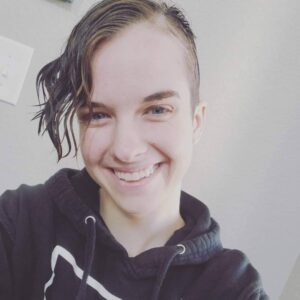 About the Author: Connor Downer is living a beautiful life in Colorado with their service dog, Vespa and two cats, Hazel and Oliver. While Leukodystrophy and Restrictive Lung Disease are daily challenges and often front of mind, Connor enjoys being able to move their body in any possible way through adaptive sports and dance. Living a full life is one of Connor’s greatest passions and life’s message to everyone. Feel free to follow their social media to get a glimpse into the highs and lows of living with multiple diagnoses.