I am sharing my journey to give a voice to patients who suffer from extreme poly-pathology and are often left behind by the medical system. I know that my medical history is exceptionally rare and complicated, but this is exactly what I have lived through. I am still living it every day, constantly fighting this very severe form of Crohn’s disease, and I want to share my journey as an advocate for others.
At the center of my nightmare is a severe, drug-resistant form of Crohn’s disease. The illness led to extreme cachexia, dropping my weight to barely 40 kg with a BMI of 13.8. I lost response to standard biological treatments like Infliximab and Ustekinumab.
However, the most terrifying part of my journey was that the disease did not stay in my intestines. It triggered a cascade of incredibly rare and agonizing complications that affected almost every system in my body:
Mucosal and Skin Manifestations: I developed a painless but terrifying perforation of the nasal septum. I also suffers from recurrent, severe ulcers in my mouth and on my genitals, which led doctors to suspect a rare condition called Behçet’s disease. Additionally, I battle inverse psoriasis (psoriasis inversa).
Neurological Agony: I developed trigeminal neuralgia, causing unimaginable facial pain that triggers severe blood pressure spikes at night, endangering my heart.
Gastrointestinal and Skeletal Damage: Imaging showed a long-segment intestinal intussusception (telescoping of the intestine) reaching up to 11 cm. Meanwhile, years of aggressive steroid therapy destroyed my bones, resulting in severe iatrogenic osteoporosis with a critical T-score of -3.7 and spondyloarthropathy in remission.
Urological Crisis: I battle secondary hyperoxaluria leading to recurrent kidney stones, which required surgeries (URSL, RIRS) that ended in urosepsis.
For years, I bounced from one specialist to another. Doctors were terrified to treat me because fixing one organ meant risking the failure of another due to severe drug interactions.
My miracle came when we were taken under the care of outstanding specialists at the University Hospital in Krakow (Szpital Uniwersytecki w Krakowie)– specifically, Prof. Michał Kukla and Dr. hab. Dorota Cibor. They were not afraid of my complex medical chart. They coordinated my care and made the bold decision to start a new targeted therapy: a drug called Rinvoq (upadacitinib) and Entocort.
Rinvoq proved to be the absolute breakthrough we had been praying for. It successfully suppressed the monstrous inflammation where all other biologics failed, allowing my body to finally start healing.
Right now, I am waiting to qualify for a procedure called thermolesion of the Gasserian ganglion to treat my agonizing trigeminal neuralgia. If that doesn’t work, the next step is Gamma Knife radiosurgery, and if that fails too, I will have to undergo microvascular decompression (MVD).
On top of that, I am dealing with severe hypertension and hypercholesterolemia —my doctors keep warning me about the risk of severe dyslipidemia. I also struggle with drastic blood sugar fluctuations, ranging from 56 to 145, and recently experienced a terrifying drop in my glucose levels.
I am also fighting mixed anemia caused by chronic illness, medications, and iron deficiency. Furthermore, I have bone marrow issues; I suffered from leukopenia after previous treatments with Metex and Imuran. However, the absolute game-changer for my Crohn’s has been my current medication, Rinvoq. Thanks to it, my recent abdominal ultrasound (USG) was finally clear, and I am currently waiting for a follow-up colonoscopy.
EURORDIS and NORD have officially recognized my case as rare.
I want the world to know that even in the darkest medical labyrinths, there is hope when you find doctors who look at the patient as a whole human being, not just a set of broken organs.
About the Author:
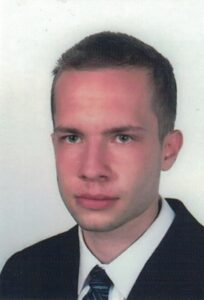 Wojciech Biesaga
A 32-year-old rare disease advocate surviving extreme poly-pathology triggered by severe Crohn’s disease. After years of navigating a medical labyrinth and life-threatening drug interactions, he is finally on the path to healing thanks to breakthrough targeted therapy and a dedicated interdisciplinary medical team. He shares his story to bring hope to other patients who feel like medical “system orphans.”