My name is Stephen Savage.
I’m happy to say I’m a cancer survivor. I was diagnosed in February, 2019 with a form of adenocarcinoma: esophageal cancer of the lower sphincter. I had actually seen a gastroenterologist doctor earlier that year, and his diagnosis was that I just had celiac disease. I responded to him that it was so much more than that, because I’ve been having trouble for a while digesting food and getting some very bad heartburn. He basically became belligerent over the phone and told me no, that’s what I have, and to stay off of gluten. I told him I had been off of gluten for about two years and it hadn’t made a difference. I told him that he didn’t know what he was talking about and I don’t think I wanted to deal with him anymore. After hanging up with him, his physician’s assistant called me back later that day and tried to explain the same thing to me, and I basically told them both that they should get a new job because neither one of them knew what they were talking about.
So I went on my own and spoke to another GI doctor who actually worked in the same network, and he did a scope. He is the one that found out I had a tumor at the base of my esophagus connected to my upper intestine. The most disturbing part about that was I came home from work one night and the message was on my answering machine telling me that I had cancer.
Needless to say, that’s not the kind of thing you want to hear on your answering machine.
But what I take away from all this is you have to be your own advocate, get second opinions (or maybe even third). If I wouldn’t have done that, I feel very strongly that my situation would have been much worse if I stuck with a first doctor.
I did have a PET scan done and they said it had not spread anywhere else. I was totally relieved about that until I had an appointment with an oncologist surgeon, who explained to me how I would have to have surgery done to take the tumor out. One day I felt like I was cured. The next day I felt like my life was in jeopardy.
I asked them what would happen if I didn’t have it done, and they basically shook their head and said, “This is not something you want to avoid. This could be dangerous.” They even described to me how they were going to operate and hopefully they could just do it without having to cut my chest open.
I knew I could do this. I wasn’t worried or afraid of the outcome. Within the last year, I had lost my sister to glioblastoma (brain cancer), my mother to pneumonia, and my father to renal and spine cancer. Six months after my father passed away is when I was diagnosed with cancer myself. I spent so much time taking care of them and seeing how they dealt with it, and I knew that if they could deal with this as bravely as they were, I could too. Needless to say, they were my support for so many years and not having them going through this on my own still lays heavy on my heart.
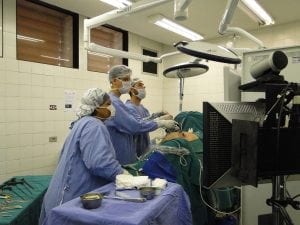
I was essentially diagnosed with stage one, and I’ve spoken to so many other patients over the years that weren’t as lucky. It seems like most of the time, they don’t catch this until it’s spread to other organs. But I did have the surgery – the Ivor Lewis procedure – and spent a week in the hospital. I knew my life was going to change after I got home. I had actually prepared myself, as well as my home, so I could get around with the tube-feeding IV pole. Learning how to clean my wound site, trying to wash, and even getting dressed was always an interesting chore. But I never failed to let a day go by without doing something important or catching up with old friends, watching old movies I’ve hadn’t seen before, reading a lot of new books, and on those good days, just sitting outside to get some fresh air even with a tube still sticking out of my stomach.
The one thing I did discover is that most surgeons are great with the surgery, but the aftermath is a big experiment. I knew I would lose some weight, but I ended up starting out at 180 pounds and got down as low as 137 at one point. I found most nutritionists and dietitians are very good at telling people how to lose weight, but putting weight on is another story.
Seven years later, and every day is still trial-and-error with what you can eat, and what will absorb. The biggest issue most of us have these days is malabsorption, as well as “dumping syndrome.” Eating too many carbs and eating large meals, sometimes your system would become flushed out, and you feel like you’re going to pass out. Anyone with diabetes can definitely identify with this. But my surgeon told me years ago that, since my stomach was pulled up, it is not a reservoir anymore, but a conduit where food and especially liquids will just dump through me very quickly and sometimes bloat and cramp up my colon.
To this day, there are some weeks where you deal with a lot of constipation and other times a lot of diarrhea. Other days, you read something that works great and two days later you eat the same thing and it causes you a lot of discomfort or pain in the chest and heartburn. But I did find keeping a journal of everything I eat helps tremendously. It does get a little frustrating that you can’t eat or drink the things you used to do years ago.
But like I tell everyone: this is my new normal.
The best thing I’ve ever done is connect on a few support groups on Facebook, and other places online. Esophageal cancer support groups and the group called smartpatients.com has helped quite a bit, because you’re sharing your story with other people that have gone through the same situations that you have. Knowing you’re not in this alone helps immensely. Everyone’s always sharing diet advice, as well as giving each others support that we can share what we’ve been through and it might help someone else.
My career has been working in a hospital pharmacy as an IV and chemotherapy technician, so I’m very familiar with the drugs that are available out there, as I have worked in a clean room for a number of years, actually making the IVs and infusion for patients. Even though I never had to do chemotherapy, I can appreciate and understand what these patients are going through. Matter of fact, since I retired two years ago, I actually volunteer at a local infusion center to help with the patient’s getting them settled, talking with them, food and drink, and making them comfortable. I always have found that these patients never seem to complain or ask “Why me?” As I felt it’s like we’re getting a second chance and we have to make the most of it. We’re just happy to be surviving and hopefully thriving.
I recently signed up with a group called Cancer Hope Network, where I’m a mentor to, at the moment, three esophageal cancer patients from all over the country. This network hooks up people who are dealing with this (usually in the very beginning of their journey), and I can help them maybe understand what they’re going through and what might lay ahead for them. Given that I’ve actually worked in the chemotherapy part of healthcare, and being a patient myself, it makes me feel like I’m giving something back. To tell you the truth, it gives my life a little purpose where I can help other people out so they are supported, well-informed and know that there is hope.
This past April, I hit my seven-year anniversary of surviving cancer; since I retired and moved to Florida two years ago, I have begun running (well, sometimes walking) in 5k’s, and at the moment I have done seven of them.
I’m happy to be alive and make every day extremely special. I felt like I got a second chance and I’m not going to waste it.
There is one other thing I have done:
People tell me that I should write my story, and for the last seven years, I’ve been keeping a little journal and diary and diet list of what I’ve gone through. A few weeks ago I dictated it out to myself, thinking there will just be a few pages.
It turned out to be forty-two pages long.
It’s amazing how I can still recall every moment vividly in my head, even without referring to my notes.
It made me feel good in getting it down on paper, and just realizing how far I’ve come.
My story will still continue. I look forward to every day.
-Stephen Savage
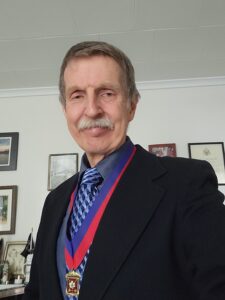 About the Author: “I am a 70-year-old male who was diagnosed in February, 2019 with adenocarcinoma of the lower esophagus. I was one of the extremely lucky ones who was diagnosed at Stage 1. I had the major esophageal surgery, but did not have to have chemotherapy or radiation therapy.
I did lose about 40 pounds after the surgery and my daily adventure is trying to get the weight back up which I’ve gotten about 20 pounds back. I just hit my seven-year anniversary in April of this year.
The toughest part about my journey has been losing the support of my family. I lost my older sister and best friend to glioblastoma in August, 2017, my mother to pneumonia in February, 2018, and my father to renal and spine cancer in July of 2018. Six months after my father passed away, I was diagnosed with cancer. So needless to say the people I needed around me and to support me were gone.
Beyond that, I’ve worked in the chemotherapy infusion center, making chemotherapy IV’s for patients for several years, so I was well aware of what patients were going through. I got to know their struggles as well from a professional and personal level.
I’m retired now, but I still volunteer two days a week at a local cancer infusion center to pay it forward and give these people comfort and a little hope if I can.
I’m also on several cancer support group sites as well as mentoring two people going through the same cancer issues that I have gone through. The worst thing people could ever deal with is to go at it alone.
And that’s a little bit of the reason why I am here.”