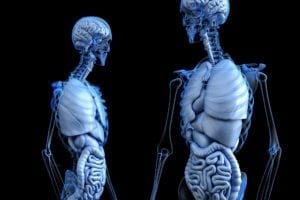
At the age of 18, I was diagnosed with a rare swallowing disorder called Achalasia. At the time of this video, I had undergone several surgeries, procedures, and countless appointments, but this particular hospitalization was at a time where I was physically at my lowest. I had began having body-convulsions, similar to seizures, due to nutritional deficiencies and electrolyte imbalances. I was hospitalized for many weeks while trying to get my body strong enough for another operation.
While I was lying in that hospital, I wrote a song called “Lead the Way.”
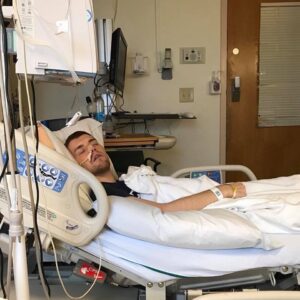
This song came from the uncertainty I was experiencing in real time. I was scared, frustrated, and exhausted, but I knew that I had to trust God even when I couldn’t understand what He was doing. Writing “Lead the Way” became my way of putting that prayer into words.
It was during that hospitalization that I made my way to the public piano inside Duke Hospital’s Cancer Center and sang the song I had just written.
Someone recorded it, and I had no idea just how important that video would eventually become.
For someone whose life revolves around performing, there have been times when my health and my calling have seemed almost at odds with one another. But through all of it, music has remained one of the ways I process what I’m experiencing.
“Lead the Way” was one of those songs.
Years after that hospitalization, I decided to share the video of myself singing it at the cancer center on social media. I had no idea what was about to happen.
The video took off.
Within weeks, it had been viewed more than 1.7 million times. My social media audience grew by thousands, people began discovering the song, and messages and comments started coming in from people who were walking through difficult circumstances of their own.

The numbers were exciting, of course, but what affected me most were the stories behind them.
People heard “Lead the Way” through the lens of their own lives. Some were dealing with illness. Others were grieving. Some were facing uncertainty about what their future looked like. A song I had written because I needed hope during my own hospitalization was suddenly finding its way to people who needed that same reminder.
I think that is one of the biggest things my health journey has taught me. We often want to wait until we reach the other side of something before we believe our experience can have purpose. But sometimes purpose is being formed right in the middle of the part we would rather skip.
My journey with achalasia didn’t end when I walked out of that hospital. It remains part of my life, and there are still difficult days. I don’t have every answer about what lies ahead.
But that’s also why the words I wrote then still mean so much to me now.
I wrote “Lead the Way” when I needed to believe that God could take me somewhere beyond what I could see from that hospital room. Years later, watching more than 1.7 million people encounter that song has given me an entirely different perspective on that chapter of my life.
I would never have chosen the circumstances that put me in that hospital.
But I’m incredibly grateful for what came out of them.
Sometimes the moments we would give anything to escape become the very moments that allow us to reach someone else.
For me, that moment became a song.
And that song was “Lead the Way.”
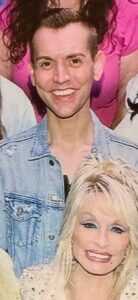
Dustin Chapman Music is in Pigeon Forge, TN.
“Countless people in the music industry were influenced by Dolly. Few have got to call her their “dreamer in chief,” and I have been extremely blessed to be a performer who got to see her generosity, entrepreneurial spirit, and selfless dedication firsthand. To put into words the impact she’s had on country music — really music in general— would be impossible. I owe all the joy of the past three years of my life to her. Thank you for the music and memories, Dolly. So thankful I’ll always have this picture. You’re forever in our hearts and we’ll always love you.”