“For people living with a progressive rare disease, time is measured differently. Research and clinical trials can take years while patients continue to lose strength and function,” said Kathryn Bryant Knudson, founder and CEO of The Speak Foundation, who lives with LGMD. “Patients are not a renewable resource. Every blood draw, muscle biopsy, tissue donation and research visit is a significant contribution from a very small community, and every one of those contributions should move the science forward.”
Summary
The Speak Foundation – was founded by patients for patients with Limb-Girdle Muscular Dystrophy. The organization supports patients, funds research, and importantly, has developed designated centers of excellence for individuals with these rare forms of muscular dystrophy. There currently is no treatment and no cure, only supportive care available. The prevalence of LGMD is difficult to accurately determine. Some rare variants have only recently been identified. Some geographically isolated populations appear to have incidence rates dramatically higher than other populations. An article in Genetics in Medicine titled “Estimating prevalence for limb-girdle muscular dystrophy based on public sequencing database” actually utilizes the number of suspect alleles to estimate incidence. Genetic testing is the only way to diagnose LGMD when the pattern of progressive muscle weakness, causes suspicion. Two organizations are currently providing free genetic testing: The Lantern Project Limb-Girdle Muscular Weakness | Revvity and Detect Muscular Dystrophy Sponsored genetic testing | Detect Muscular Dystrophy Program | Invitae.
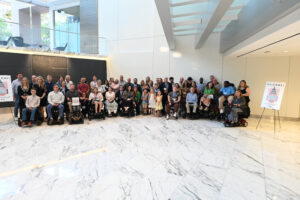
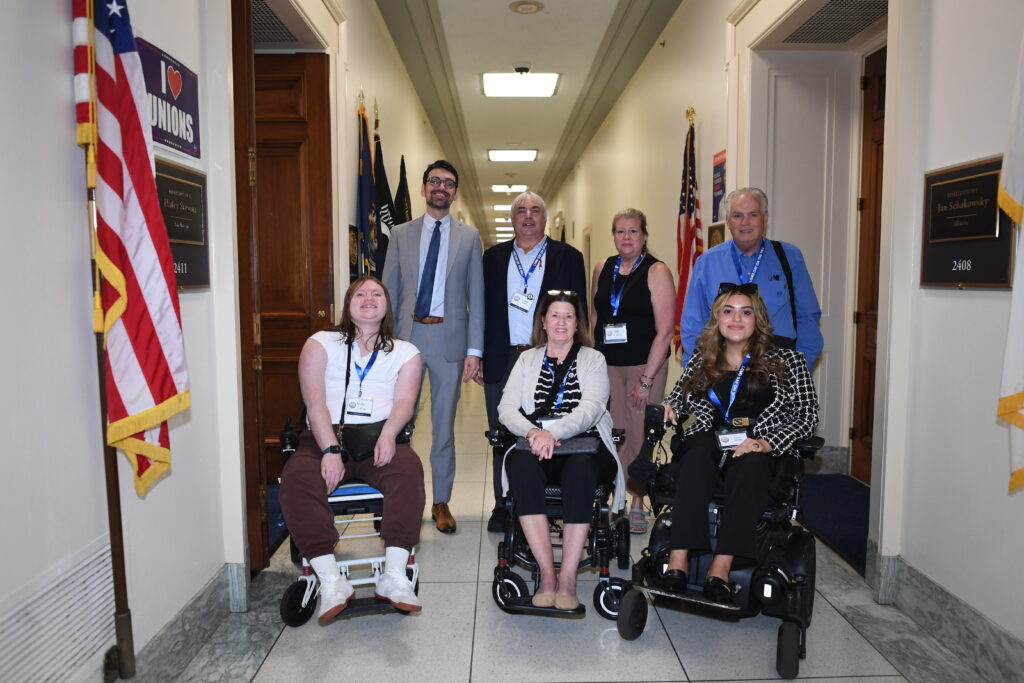
The Speak Foundation brought LGMD families to Washington D.C. for its LGMD Day on the Hill, holding more than 60 meetings with congressional offices. Advocates urged Congress to increase federal investment in LGMD research, expand access to relevant Department of Defense funding, and help promising rare-disease treatments reach patients more quickly.
The Foundation emphasized two key policy priorities:
- Consistency in regulatory guidance: Rare-disease programs often work with limited funding, small patient populations and incomplete data. The Foundation called for clearer, more predictable and consistently applied regulatory expectations so that requirements do not change late in development, potentially delaying treatments or discouraging investment.
- Greater flexibility and ease in clinical trials: The Foundation urged policymakers and developers to involve patients before trials are designed. Patient input can help shape meaningful endpoints, eligibility criteria, visit schedules and outcome measures, while reducing unnecessary burdens on participants. This is especially important for LGMD patients, for whom repeated blood draws, muscle biopsies, tissue donations and research visits represent significant contributions.
 The advocacy effort comes as LGMD research reaches an important milestone. BridgeBio is developing a potential treatment for LGMD 2I/R9, an LGMD subtype, bringing the community closer to the possibility of its first FDA-approved therapy specifically for LGMD. The Foundation highlighted this progress while stressing the need for regulatory clarity and patient-centered trial design to ensure promising science can advance efficiently.
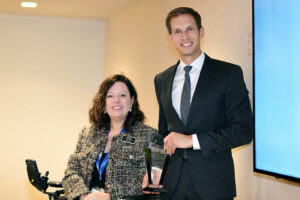
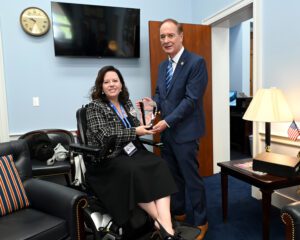 The Speak Foundation also honored Reps. John Joyce, M.D. (R-PA) and Jake Auchincloss (D-MA) as its 2026 Congressional Champions for Limb-Girdle Muscular Dystrophy for their bipartisan efforts to advance rare-disease research, modernize clinical development and preserve incentives for continued drug development.
The Speak Foundation is a 501(c)(3) charity. Sept 18th registration opened for the July 2027 International LGMD Conference in Orlando, Florida, sponsored by the foundation. Contact: The Speak Foundation – Limb Girdle Muscular Dystrophy.