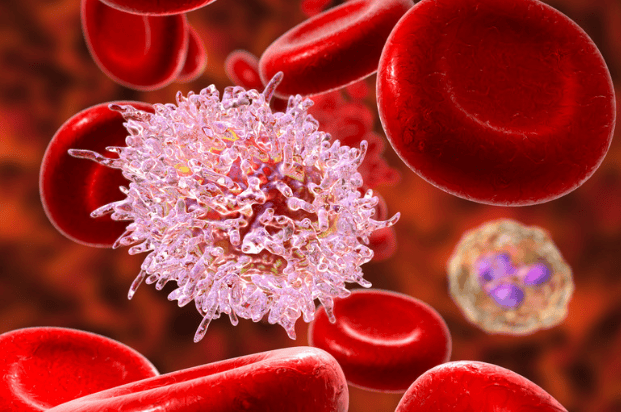
AML is an aggressive cancer of the blood and bone marrow, that sometimes moves so quickly, that treatment cannot conquer it. Car-T cell therapy has been incredibly successful in B-cell leukemias and lymphomas, but thus far CAR-T has not been approved for AML and remains in early pre-clinical and very early clinical trials. There are many challenges to applying CAR-T to AML and researchers continue to search for ways to over come these, for AML is a cancer that certainly needs some new approaches.
As reported on Inside Precision Medicine, Swiss scientists have recently found that many acute myeloid leukemia (AML) cells carry high levels of a surface protein called LILRB2. In lab tests, the protein weakened CD33-targeted CAR T cells: the immune cells killed fewer leukemia cells, multiplied less, released fewer immune-signaling chemicals, and showed signs of becoming worn out.
Blocking LILRB2 partly improved the CAR T cells’ activity. The researchers also tested CAR T cells designed to recognize LILRB2; these attacked leukemia in mouse models and showed activity against leukemia taken from patients, without observed damage to blood-forming marrow in those experiments.
The findings suggest LILRB2 could be a target for improving CAR T-cell treatment for AML, but the work is still at an early stage and needs further study.