The Basic Problem: Why One Bad Gene Can Cause Big Trouble
Imagine your body as a giant factory. Like any factory, it needs quality control—machines that make sure good products are kept, broken items are discarded, and everything runs smoothly. But what happens when the quality control system itself breaks down? Scientists at the International Institute of Molecular and Cell Biology (IIMCB) in Warsaw just published groundbreaking research suggesting this is exactly what causes many rare genetic diseases.
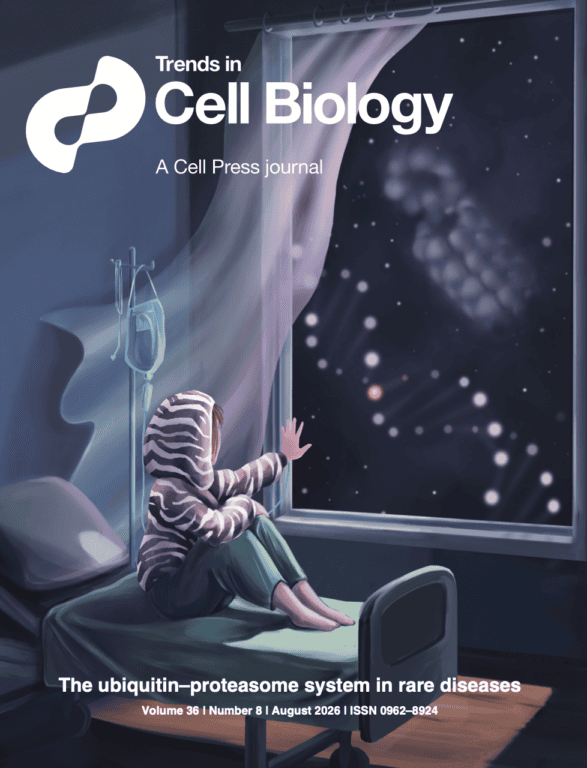
The research team, led by Prof. Wojciech Pokrzywa, has identified how problems in a specific type of cellular “quality control worker”—called substrate receptors—can trigger serious health conditions. Their findings were published on the cover of Trends in Cell Biology, one of the most respected journals in cell biology research.
Meet the Researcher Behind the Discovery
Prof. Wojciech Pokrzywa heads the Laboratory of Protein Metabolism at IIMCB, where he and his team study how cells manage their internal proteins. Pokrzywa’s research focuses on understanding the ubiquitin-proteasome system—essentially the cellular machinery responsible for deciding which proteins stay and which ones get destroyed. His laboratory has become a leader in connecting these molecular mechanisms to real human diseases. By studying how genetic mutations affect this protein-management system, Pokrzywa and his colleagues are helping doctors and researchers understand why single-gene mutations can sometimes cause devastating multi-system diseases.
How Your Cells Sort and Discard Proteins
To understand why this research matters, you need to know a bit about how cells work. Your cells are constantly making proteins—thousands of different kinds. Some proteins work great and stick around for a while. Others are damaged, outdated, or no longer needed. Your cells have an elegant system for deciding what to keep and what to throw away.
This system works like a mail-sorting facility. First, enzymes attach a chemical tag called “ubiquitin” to proteins that need to be discarded or regulated. This tag is basically the cell’s way of saying “this protein’s time is up.” Then, a molecular machine called the proteasome—think of it as the cell’s shredder—recognizes these tagged proteins and destroys them.
The entire process depends on precision. The cell has to recognize exactly which proteins need tagging. This is where substrate receptors come in. They’re like the postal workers who read the address labels and decide which packages go to the shredder. When a receptor works correctly, it tags the right proteins for removal. But when a gene mutation damages a receptor, the sorting system goes haywire.
The Discovery: 267 Receptors, 93 Linked to Disease
The IIMCB team just created the first complete catalog of 267 different substrate receptors. Think of this like creating the first comprehensive phone book after years of having scattered notes. What’s really important: they found that 93 of these receptors are already connected to genetic diseases in humans.
Natalia Szulc, a PhD student and the first author of the study, explains the significance: researchers previously identified gene mutations in patients without fully understanding what went wrong at the cellular level. “With this catalog, we can now connect the dots,” Szulc notes in essence through the press release. When doctors find a mutation in a patient, this resource helps them understand whether that mutation might be affecting one of these receptor proteins, and if so, how that could lead to specific disease symptoms.
Why Does This Help Understand Rare Diseases?
Here’s where this research becomes particularly valuable for medicine: rare genetic diseases are like nature’s experiments that reveal how our bodies actually work. When something breaks in just one gene, and that causes a specific disease, scientists can trace the path from that single genetic change all the way to the symptom.
Most of these 93 receptors are not restricted to just one tissue or organ. Yet patients with mutations in these genes often develop symptoms in the brain and muscles specifically. This puzzle helps researchers understand that it’s not just where a protein is expressed, but when during development it’s made, how much of it is produced, and which other proteins it interacts with. By studying rare disease patients, scientists learn that the cell’s protein-control system is far more complex and interconnected than previously understood. This knowledge then applies to much more common diseases. For example, many cancer researchers are now studying how to deliberately disrupt these protein-control systems to kill cancer cells—and understanding how these systems naturally fail in rare diseases provides a crucial roadmap for that work.
What Happens When the System Fails?
The research shows something striking: when these receptors malfunction, patients often develop neurological and neuromuscular symptoms. A receptor mutation might cause the cell to destroy proteins it shouldn’t destroy, fail to destroy proteins it should, or upset the entire balance of the protein-control complex.
The consequences can be severe. Some cells might be able to compensate for a mutation—like having a backup system kick in. But in other cases, particularly in the developing brain and muscles, the cell has no workaround. Disease develops.
A Tool for Discovery and Drug Development
The practical impact of this work is significant. This catalog gives researchers a reference guide. When doctors identify a rare disease mutation in a patient, they can check whether it affects one of these 267 receptors. If it does, they now have a framework for understanding the disease mechanism.
Even more exciting: understanding how these receptors work is opening doors for new drug development. Scientists are now designing therapies based on deliberately manipulating protein degradation—essentially hacking the cell’s quality control system for medical benefit. But as Prof. Pokrzywa notes, rare diseases teach us that this system requires precision. By studying how natural mutations disrupt it, researchers can design therapies that are more targeted and safer.
The Big Picture
The IIMCB team’s work represents a crucial shift in how scientists approach rare genetic diseases. Rather than seeing them as isolated curiosities, they’re recognizing them as windows into fundamental cellular processes that apply to all of us. One bad receptor gene can trigger a cascade of problems because cells depend on these proteins to survive and function. By cataloging these receptors and linking them to disease, researchers aren’t just helping the relatively small number of people with these rare conditions—they’re building knowledge that will improve medicine across the board.
In the world of genetics and cell biology, that’s a major breakthrough.