
My name is A. Sabesan. I am 25 years old, living in Chennai, Tamil Nadu, India. Up until the age of 18, my life was completely ordinary. But at 19, in 2020 during the final months of my first year in college, everything changed. I was diagnosed with Limb-Girdle Muscular Dystrophy Type 2R (LGMD2R). This is a rare, progressive genetic condition caused by a mutation in the DYSF (dysferlin) gene.
From being a normal person up to 18 years old, to suddenly getting a rare genetic disease that became a disability was something I could not make myself accept, leading to crying, panic, and deep depression. The smile completely vanished from my face. It was 2020, the height of the COVID-19 pandemic. My second year of college shifted completely online. During my third year, only a few classes in the fifth semester and the entirety of the sixth semester were held in person. My body began to change rapidly. Walking became difficult, and climbing stairs became an immense hurdle. I began to fall frequently, relying on the immediate kindness of nearby people and friends to help me up.
Yet, while my muscles lost their power, my mind refused to surrender. I chose to fight back with intellect and action.
Though I have LGMD, I have a stronger mind and the full intensity to study for my postgraduate degree and secure a job. I left my hometown of Gobichettipalayam, Erode, and traveled over 400 kilometers to Chennai to pursue my M.Sc. in Biostatistics at the ICMR-National Institute of Epidemiology (NIE). Living in a hostel during both my undergraduate and postgraduate years presented severe physical trials. I fell down many times and sustained real physical injuries. The emotional weight was heavy; my parents constantly felt a deep, aching anxiety for my safety. Yet, my friends and the people around me always supported me.
Today, by God’s grace, that relentless execution has paid off. I secured a job as a Technical Assistant in Biostatistics at ICMR-NIE. Currently, I am also pursuing my part-time Ph.D. in Medical Research through AcSIR at the same institute. Recognizing the progressive nature of my condition, my parents made the profound sacrifice to shift to Chennai to stay with me, supporting me fiercely every single year.
Living with a dysferlinopathy means navigating steep daily hurdles. LGMD2R is a progressive condition that can eventually affect the respiratory muscles. Today, I experience severe difficulty with transitions from sitting to standing at a table. I cannot use stairs at all, I struggle to climb basic ramps, and lifting a weight as light as 1 kg is incredibly difficult. Because my hand muscles cannot lift above shoulder height, everyday tasks like washing my hair or reaching for items in a cupboard are a quiet battle. When I fall down, feelings of nervousness and embarrassment still try to creep in.
The emotional toll remains heavy. I have a deep desire to ride a bike and to travel freely to conferences, workshops, shops, and movies. When I see my friends go outside spontaneously, my mind screams “yes,” but my physical condition dictates “no.” Traveling by train to my hometown has now become nearly impossible. Beyond these daily limitations, the uncertainty of the future weighs heavily on my mind. I often worry about whether I will ever get married, or how a family will accept me and give their bride to a man with this physical condition. It is a silent anxiety that is difficult to carry.
To step away from these physical trials, I find great peace in my favorite hobbies. I love listening to music, reading books and daily newspapers, watching cricket, and looking out at calm, lush greenery to recharge my inner strength.
Living with this disease requires constant management because there is currently no approved medicine or cure. If we do not maintain the body properly with targeted care, full wheelchair assistance becomes necessary. To slow down muscle deterioration and build a better quality of life, I perform low-impact physical exercises four times a week. I am a registered member of the Jain Foundation for DYSF, praying to God and holding onto steady hope. My realistic goal for the near future is not a complete cure, but a treatment that can at least stop the progression of the disease. However, I deeply worry that when treatments finally arrive, they will carry a very high cost that ordinary people cannot afford.
Until accessible medical options arrive, my focus is entirely on active advocacy. There is an immense lack of public, institutional, and state awareness regarding rare genetic diseases like dysferlinopathies. I want to build strong awareness campaigns across every single state, district, and rural city. We must celebrate Rare Disease Day every year by organizing local, supportive programs. Most importantly, I encourage all rare disease patients to actively participate in clinical trials, medical conferences, and registries. Becoming an active part of these research networks is the only way to accelerate the quick discovery of treatments and create a safe future for our community.
I am guided by the words of Stephen Hawking: “To do something good in the world, you must first believe that your mind is your greatest tool. Physical limitations are just the boundaries of the canvas; your intellect is the brush.”
God knows what to give and what not to give, but our joy remains firmly in our own hands. Whatever happens, I choose to be happy and protect my inner strength. To everyone worldwide living with Muscular Dystrophy: you are not alone. A diagnosis is not the end of your story; it is the beginning of a profound new chapter. Seek support, stay informed, and never lose hope.
Strength is not defined by muscle power, but by the resilience of the heart and mind.
Stay resilient. Stay strong. Stay hopeful.
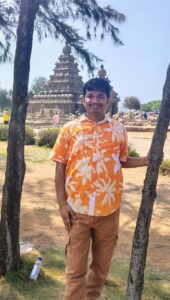 About the Author: A. Sabesan is a 25-year-old Technical Assistant in Biostatistics at the ICMR-National Institute of Epidemiology (NIE) in Chennai, India. He holds a Master of Science degree in Biostatistics and is currently pursuing a part-time Ph.D. in Medical Research through the Academy of Scientific and Innovative Research (AcSIR). Living with Limb-Girdle Muscular Dystrophy Type 2R, Sabesan combines his professional expertise in data analysis with a deep personal passion for global rare genetic disease advocacy, working to bridge the gap between clinical research and patient community awareness.