
Editor’s Note: The following story was submitted to us by Pam Mason, Patient Speaker & Advocate.
If you looked at a picture of me, you probably wouldn’t see someone who has spent the last 17 years living with complex chronic illness.
You wouldn’t see the procedures, surgeries, hospitalizations, feeding tubes, chronic pain, or the countless hours I’ve spent in doctors’ offices and hospitals. You wouldn’t see the days when simply getting through normal life required more strength than anyone around me realized.
And that’s exactly the point.
Some of the hardest things people live with are the things you cannot see.
I live with multiple chronic illnesses. Some affect my digestive system. Others affect my joints, bones, muscles, breathing, and everyday functioning. My medical history is complicated enough that sometimes even I get tired of explaining it.
But if you passed me in a grocery store, sat next to me at a restaurant, or saw a photograph of me on social media, you might never know.
That’s the reality of invisible illness.
When You Don’t “Look Sick”
There is a strange burden that can come with living in a body that doesn’t always show the outside world what is happening on the inside.
When you’re visibly injured, people tend to understand. A cast tells a story. Crutches tell a story. A bandage tells a story.
Invisible illness doesn’t always come with something other people can immediately recognize.
And sometimes that means patients feel as though they have to prove that they’re sick enough, hurting enough, struggling enough, or deserving enough to be taken seriously.
I’ve learned over the years how deeply being believed matters.
Being believed doesn’t mean that every doctor has to immediately know what is wrong.
It doesn’t mean every test will provide an answer.
And it doesn’t mean patients and healthcare professionals will always agree.
Sometimes medicine is complicated. Sometimes there isn’t an easy answer.
But listening is always possible.
Respect is always possible.
And treating the person sitting in front of you as a partner in their own care is always possible.
The Difference One Person Can Make
My healthcare journey hasn’t been one story.
I’ve encountered medical professionals who made me feel unheard, and I’ve experienced what it is like when communication and trust begin to break down.
But I’ve also had doctors, nurses, specialists, and other healthcare professionals who listened to me, fought for me, investigated further, and reminded me why good patient-provider relationships matter so much.
Those experiences have taught me something important:
One person who truly listens can change the direction of a patient’s experience.
Sometimes what a patient needs most isn’t someone who promises to fix everything.
Sometimes we need someone willing to say, I hear you. Let’s figure out what comes next.
Finding My Voice
I didn’t wake up one morning and decide I wanted to become a patient advocate.
It happened slowly.
It happened through 17 years of appointments, procedures, setbacks, questions, victories, fear, frustration, and learning.
I learned to ask questions.
I learned to prepare for appointments.
I learned that it is okay to ask a provider to explain something again.
I learned that seeking another opinion doesn’t make someone a difficult patient.
And perhaps most importantly, I learned that my voice belongs in the room.
Eventually, I realized that everything I had learned while fighting for myself might be able to help someone else.
That realization changed something for me.
My experiences were still painful. I wouldn’t have chosen many of them. But I could choose what I did with what I had learned.
That is where advocacy became part of my life.
To the Person Reading This Who Feels Invisible
Maybe you’ve practiced what you’re going to say before a medical appointment because you’re worried you won’t explain it correctly.
Maybe you’ve walked out of an appointment and remembered all the things you meant to ask.
Maybe someone has looked at you and said:
“But you don’t look sick.”
Maybe you’ve even wondered whether you somehow need to look as sick as you feel before someone will understand.
I see you.
Your experience doesn’t become less real because another person cannot see it.
And you don’t have to earn the right to have a voice in your own healthcare.
You are allowed to ask questions.
You are allowed to ask for clarification.
You are allowed to say that something doesn’t feel right.
You are allowed to participate in decisions about your own body.
And you are allowed to keep using your voice.
Why I’m Telling My Story
I don’t have all the answers.
After 17 years, I’m still learning too.
That’s one of the reasons I want to write about this journey honestly – not only about what has been difficult, but about what has helped me, what I wish I had known earlier, and what I’ve learned from the people I’ve met along the way.
I’ll write about chronic and invisible illness.
I’ll write about navigating healthcare.
I’ll write about medical trauma and how past healthcare experiences can follow us into future decisions.
I’ll write about advocating for yourself while still building productive relationships with the healthcare professionals caring for you.
And I’ll write about the human side of being a patient – the part that doesn’t always appear in a medical chart.
Because somewhere, someone may be sitting in a waiting room feeling frightened and alone.
Someone may be wondering whether anyone understands.
Someone may be questioning whether their voice matters.
If something I share helps even one person feel seen or heard, then sharing it has a purpose.
After everything I’ve experienced, that is the kind of advocate I want to be and the kind of space I hope to create through my writing.
Because every patient deserves to be seen.
Every patient deserves to be heard.
And every patient deserves to be believed.
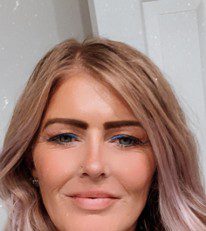 Pam Mason
Patient Speaker & Advocate
Pam Mason is a patient speaker and advocate who has spent more than 17 years navigating complex chronic illness and the healthcare system. Her lived experience has shaped a deep commitment to advocating for people living with chronic and invisible illnesses.
Pam believes every patient deserves to be seen, heard, and believed – even when their illness cannot be seen from the outside. She volunteers with the Association of Gastrointestinal Motility Disorders and the Short Bowel Syndrome Foundation and speaks about patient advocacy, medical trauma, healthcare decision-making, and life with chronic illness.
Through speaking and writing, Pam uses her lived experience to help others feel less alone and more confident using their own voice.
Seen. Heard. Believed.