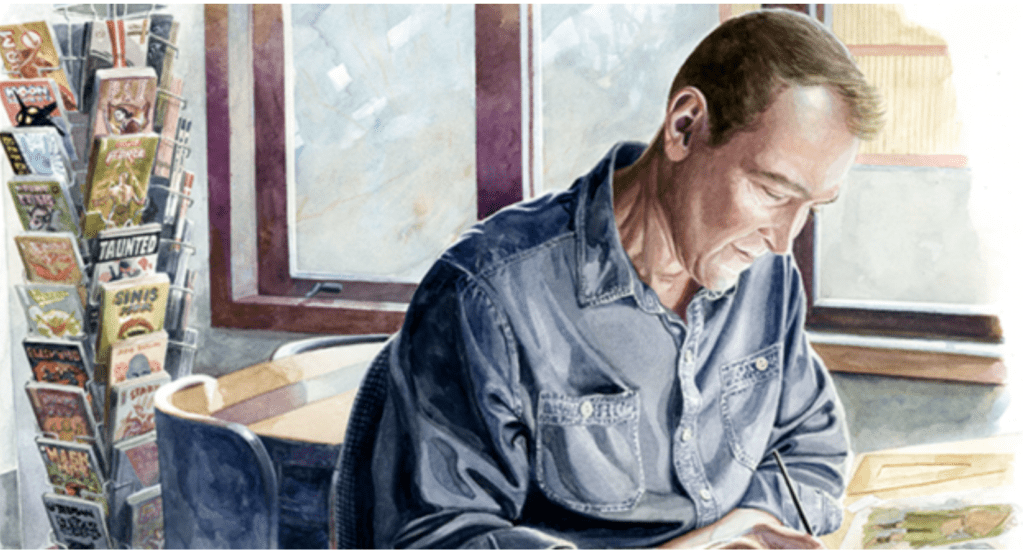
Editor’s Note: The above photograph is credited to Patient Voice.
“Ringing the bell” is an enduring image associated with cancer survivorship. It represents victory, celebration and the end of treatment. But for some of us, especially those living with chronic cancers, this ritual will never be a part of our story.
Finding My Way Through Myelofibrosis
My journey with Myelofibrosis (MF) began in 2017, when I was forty-two. I had been experiencing hot flashes and suspected peri-menopause. This was my only symptom. After meeting with my nurse practitioner, I began a series of blood-testing. Two consecutive sets of tests showed a very high blood cell count, and an ultrasound confirmed a slightly enlarged spleen. I was then referred to my current hematologist at my local cancer centre. A bone marrow biopsy identified the JAK2 gene mutation and confirmed a diagnosis of Polycythemia Vera (PV), one of three diseases under the umbrella of Myeloproliferative Neoplasms (MPNs). I soon learned that MPNs are rare, chronic and slow-growing blood cancers, in which the bone marrow goes into overdrive, producing too many blood cells for the body to manage. Despite the initial shock, I was comforted to learn that I would likely live a fairly normal life, with average life expectancy.
But as with many rare diseases, this wasn’t the end of the story.
For six years, I was treated for PV with a combination of daily low-dose aspirin and regular phlebotomy. I responded well to this treatment regime and settled into this “new normal” until January 2023, just six weeks after losing my father to Alzheimer’s, my MPN shifted again. At a routine appointment, my hematologist discovered further spleen enlargement. An ultrasound and second bone marrow biopsy showed increased scarring of my bone marrow and transformation to myelofibrosis (MF). I was blindsided. Only about 10% of PV patients experience this transformation. A referral to an MPN specialist followed and my treatment method changed. I now take a drug called Hydroxyurea, which has reduced the size of my spleen and stabilized my blood levels. I have tolerated this drug well, my symptoms are currently well-managed and I live a mostly normal life, day-to-day.
The Emotional Journey
After the second set of blood testing in 2017, my nurse practitioner explained the diagnosis in a kind, compassionate way, providing me with printed materials about PV. Still, hearing the word “cancer” was shocking, even with the clarification that it was a chronic rather than acute. My lowest moment came while waiting for my first hematology appointment. Sitting in the “cancer centre” made everything suddenly real. I cried, overwhelmed by thoughts of my children, who were 11 and 14 at the time, and the fear of not being there to watch them grow. Thankfully, my hematologist is a caring and empathetic professional. I felt at ease immediately, and his ongoing support has been invaluable. Thinking of MF as a slow-moving, chronic cancer has helped me to stay grounded. I’ve been clear with all my medical professionals that I do not wish to discuss life expectancy. Prognosis varies widely, and I prefer focus my energy on living well today, rather than worrying about a future no one can predict.
Navigating the Health Care System
Overall, I’ve navigated Ontario’s health system well – but I recognize that this is partly due to my background as a social worker and my personal privilege. Many people face significant barriers: low income, disability, language challenges, lack of transportation or not having a family doctor. These factors can make accessing care incredibly difficult. I am fortunate to have long-standing support of my local Community Health Centre, my nurse practitioner, whom I have known for many years, and a caring and attentive hematologist who responds to any concerns I may have. Communication among my care team has always been excellent. I also benefit from living in a city with a dedicated cancer centre. Many MPN patients must travel long distances, sometimes outside of their province, to access specialized care.
What Keeps Me Grounded
Since my diagnosis, I’ve embraced wellness as a holistic approach to my health. I cannot rewrite my diagnosis, but I can care for my body, mind and spirit in meaningful ways.
- Movement and yoga have been key components of my wellness plan. Yoga, especially, strengthens both my body and emotional resilience. Time spent in the gym or yoga studio leaves me feeling refreshed, emotionally stronger and better able to manage life challenges.
- Complementary therapies such as massage and chiropractic treatment do not change my blood, but they do help me to feel better in my body.
- Finding community has been absolutely essential to feeling empowered around my disease. Early on, I found the Canadian MPN Network and a circle of friends and supporters who truly understand. I now help facilitate an online MPN support group in Ontario, and serve as part of the education committee, planning webinars and conferences.
Finding my Voice Within my Rare Disease Story
Nine years after my initial diagnosis, I decided to take ownership of my story in ways that felt authentic to me.
In January 2026, I started an Instagram account dedicated to life with myelofibrosis. My goal is to create a space for honesty, connection and community, where people with MPNs or other rare diseases can feel seen and supported. I’m still learning about the world of content creation but I’m enjoying the process. You can find me at @gritandmarrow.
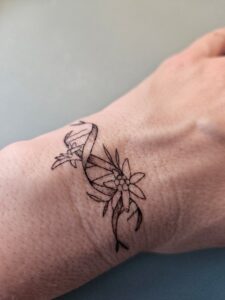 Tattoos have become a part of my storytelling. I spent a long time imagining how to mark this journey on my skin. I chose a broken strand of DNA, wrapped in edelweiss, a resilient flower that grows where almost nothing else can. When I look at my wrist, I’m reminded that even in the hardest chapters, quiet strength can bloom.
The uncertainty of rare disease inspired me to create my first “bucket list.” I’ve checked off a few items and the list seems to keep growing! I’m determined to embrace joy wherever I can find it and make space for the things that make me feel alive.
For Those Beginning the Journey
Receiving a rare disease diagnosis can feel like a blow, but you’re not alone. Here’s what I’ve learned over the past nine years:
- Try not Google your disease too often. Much of what you’ll find is outdated or unreliable and can send you into unnecessary fear.
- If you do look online, choose sources that are current, trustworthy, and evidence-based.
- Remember, you’re allowed to ask questions, seek second opinions, and express your concerns. Self-advocacy is a vital part of your care. Your voice matters!
- Above all, find your community. This might look like an organization or a support group of others with your disease. But it can also include the medical and wellness professionals involved in your care, supportive family members and friends, care coordinators or patient advocates who can help you navigate a complex health care system, and other types of care partners. Connection is powerful medicine.
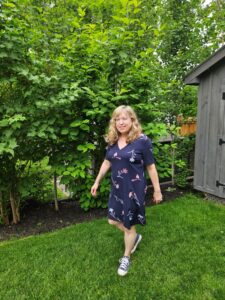 About the Author: Kristen is a retired social worker based in Barrie, Ontario, living with myelofibrosis. She earned her Bachelors of Social Work from Western University in 2000 and her Masters of Social Work from York University in 2015. Over nearly two decades in developmental services, she supported individuals and families in a range of roles, most recently supporting children with special needs and their caregivers navigate community resources and services. She is the parent of two young adult children, ages 19 and 22.
Kristen serves on the Board of Directors for the Barrie Community Health Centre and is a support group facilitator and committee member with the Canadian MPN Network. Outside of advocacy and community work, Kristen enjoys exercise, yoga and reading as many books as possible. Her future goals include completing yoga teacher training, growing her Instagram community at @gritandmarrow, and travelling as often and as widely as she can.