For nearly two decades, I’ve been building and maintaining a global online community for individuals and families affected by Moebius syndrome, a rare neurological condition that most people have never heard of. What began as a small website built from 14 collected stories has grown into a network of people connecting across countries, sharing experiences, and supporting one another in ways that didn’t exist before. It also led to the creation of Moebius Syndrome Awareness Day, which started as a small grassroots effort and gradually expanded as more people chose to take part.
From the outside, that kind of work can look like awareness — posts, stories, and moments that bring attention to the condition. But after 18 years, what stands out isn’t the awareness itself. It’s what happens outside of those moments, and what it actually takes to keep something like this going over time.
To understand that, you have to understand how it started.
I lost my father at thirteen and my mother at fifteen. When I was a child, they didn’t have answers. They didn’t know what my condition was called. There were no specialists guiding them and no community to turn to. Everything they did, they figured out on their own. They paid attention to everything — my behavior, my needs, what worked and what didn’t — trying to understand something no one had explained to them. At the same time, they were each facing their own battles with cancer, and even then, they never stopped putting me first.
Growing up, that was simply how life worked. There was nothing to compare it to and no reason to question it, because we didn’t even have a name for what I had.
For most of my life, I was led to believe that I was unique, that there weren’t others like me. Because of that, I never looked for anyone else. There was nothing to find, and no reason to think there would be.
In early 2003, that began to change. For the first time, I was introduced to the name Moebius syndrome and to a family who had a daughter living with it. After decades of believing I was alone, I met someone like myself.
In 2008, I met Katie Pennycate a mother whose daughter had passed away from complications related to Moebius syndrome. We met at her daughter’s gravesite, and standing there, I asked a question I didn’t have an answer to: why did I live when she didn’t?
That moment didn’t create a plan, but it changed how I saw everything that came before it.
Watching what my parents went through made me want to help other families. Seeing Hannah’s gravesite was the moment that brought everything together and pushed me to do something about it.
Originally, Katie and I came up with an idea to gather stories and take them onto the Oprah Winfrey Show. When that fell through, I took the 14 stories I had and created the first Many Faces of Moebius Syndrome website.
There were other Moebius syndrome organizations at the time, but they weren’t using social media in a way that consistently brought people together. What I was trying to create was something different — not just information, but a place where people could find each other.
People did find it.
They found us on Facebook and the website. They started sharing their experiences. Conversations began between individuals and families who had spent years without contact with others who understood what they were going through. Questions were asked and answered in ways that hadn’t been possible before — not because the information suddenly existed, but because people were finally able to connect. That’s when the global online Moebius syndrome community began to take shape.
As more people found their way in, the community grew. It wasn’t structured, and it wasn’t organized in the way people might expect looking back. It developed through continued participation, through people returning, sharing, and staying involved.
During that time, the idea for what would become Moebius Syndrome Awareness Day began to take shape. Early involvement from individuals like Donnie Downs and Gavin Fouché helped that idea move beyond the initial group, and over time, more people became involved.
Looking back, these developments can look like milestones. They can look like growth, progress, and success. But from the inside, they came from something much simpler and much harder to maintain — people continuing to show up.
Over time, that distinction becomes clear.
Awareness creates moments. It brings attention to a condition and helps people understand that it exists. But those moments don’t sustain themselves. They pass unless something holds them in place.
What holds them in place is connection.
People don’t remain part of a community because they saw a post or read an article. They remain because they connected with someone who understands what they are going through. They remain because they found something that reflects their experience in a way that isn’t temporary.
As the work continued, the structure around it began to change. What started as a volunteer-driven effort eventually moved into a nonprofit model. At the time, it seemed like the next logical step, a way to build on what had already been created and expand its reach.
What I didn’t do at that point was maintain the same level of direct involvement I had from the beginning. The individual who was essential to setting things up stepped away early on, and instead of stepping in and taking full responsibility for the nonprofit, I chose a different approach. I hoped that what had already been built would continue to move forward in the same way, but it didn’t develop in that direction.
Despite that, the organization continued for several years, and during that time there were meaningful contributions and real impact. We helped people around the world. One little boy in the Philippines received a new pair of glasses. A boy in the United States received a new wheelchair. One of our board members, Will Harrison, came up with the idea of Moebius Blessings, and together we provided Christmas presents and meals to families in need. Another board member organized a motorcycle fundraiser ride each summer and often hosted MSAD events. Another helped bring Camp Moebius to life.
Eventually, that phase came to an end. The organization continued for several years, but it never fully moved forward in the same direction as it had in the beginning. As the work grew, it required clearer leadership and timely changes to keep that growth moving forward, and I didn’t step in early enough to make those changes.
Over time, it reached a point where it could not be sustained in that form. What that experience made clear is that structure by itself does not sustain something like this. In a small community, what matters is consistency, presence, and direct involvement.
Since returning to a fully volunteer-driven approach, the work hasn’t slowed down. It has expanded.
Over the past year alone, we ran a successful giving campaign that delivered presents to individuals with Moebius syndrome across the United States. We had one of our strongest Moebius Syndrome Awareness Day campaigns, with participation from around the world and people choosing to represent the day through graphics we created. We carried out a proclamation campaign that resulted in multiple official state recognitions. At the same time, we published three books, including one that was translated into Spanish to reach a broader audience. We also launched a parents resource page with a nationwide craniofacial hospital directory, a new kids section, a dedicated story platform, and an interview series.
That work continues to build.
We are already planning ahead for Moebius Syndrome Awareness Day 2027. We are organizing a Moebius Blessings Holiday Circle Campaign with a team made up entirely of individuals with Moebius syndrome. We are developing a retreat designed to bring people together in a way that hasn’t been done before. At least two more books are currently in progress.
None of this is separate from what came before it. It is the continuation of it, built on the same foundation, but with a clearer understanding of what it takes to sustain it over time.
The difference now is clarity. The focus is not on creating moments that come and go, but on building something that continues — through participation, consistency, and people choosing to stay involved.
After 18 years, the difference between awareness and connection is no longer theoretical. Awareness brings attention, but connection is what holds everything together over time. It is what allows something to continue beyond a single moment, beyond a single post, beyond a single event.
That has been true from the beginning.
The structure has changed. The approach has changed. The way the work is done has changed.
What started then is still moving forward now.
And it continues — not as a single moment, but as something that keeps moving forward, built by the people who choose to take part in it every day.
Tim Smith
MFOMS.org
About the Author:
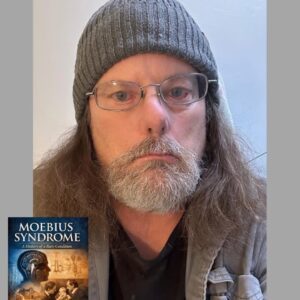 Tim Smith is the founder of Many Faces of Moebius Syndrome (MFOMS), a global, volunteer-driven organization he started in 2009 to connect individuals and families affected by Moebius syndrome. Along with early collaborators, he played a central role in building what would become the online global Moebius syndrome community, helping bring together individuals and families from around the world through shared stories, resources, and support.
He is also the creator of Moebius Syndrome Awareness Day, a grassroots effort that has grown into an internationally recognized day of awareness observed each year on January 24.
In addition to his advocacy work, Tim is an author and publisher, having released multiple books focused on Moebius syndrome awareness and community experiences. He lives in Virginia and continues to focus on building connection within the Moebius syndrome community.