For more than 20 years, I had a treatment routine that worked. My specialty pharmacy delivered the medications I needed and coordinated trained nurses who came to my home for infusions. It was complicated care, but it was reliable.
Then my drug coverage changed.
What looked like a routine insurance transition quickly unraveled the system that had kept me stable for years. Suddenly, I was navigating denials, prior authorizations, new specialty pharmacies, medication changes and difficulty securing in-home infusions. Seven months later, I am still trying to get back to a reliable treatment schedule.
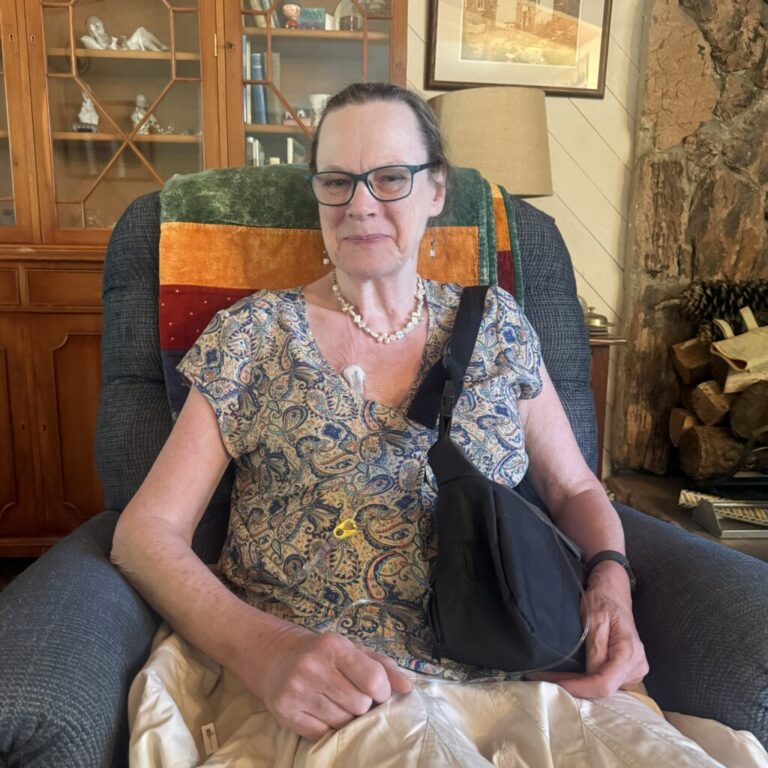
I’m Angela Patterson, 67, and I live in a rural community in California with several complex conditions, including Alpha-1 antitrypsin deficiency, common immune deficiency, protein S deficiency and short gut syndrome. I rely on weekly Alpha-1 therapy and IVIG every three weeks. My infusions can last eight to 11 hours and require pre- and post-medications, IV hydration, port access and trained nursing support. The nearest infusion center is more than an hour away and I can’t drive myself home afterwards. Because of these complexities, I’m prescribed in-home infusions.
Since the coverage change earlier this year, I’ve received only three Alpha-1 doses even though I need them weekly. My IVIG infusions, normally given every three weeks, stretched to roughly five-week intervals. My immunoglobulin levels dropped below the minimum range, leaving me more vulnerable to serious infections. I also worry about what the missed Alpha-1 treatments may have done to my lung function, since damage from the condition cannot be reversed.
Accessia Health has helped me afford the supplemental insurance coverage that makes my in-home nursing possible. That support has been critical because my experience has shown me that access to treatment is about much more than whether a medication is technically covered. I also need the specialty pharmacy, supplies, hydration and trained nursing necessary to receive it safely.
One of the most frightening parts of this experience came when my insurer required me to try a different IVIG medication before it would cover the treatment I had used successfully for approximately 15 years. During the infusion, I had a serious allergic reaction and needed immediate intervention from the nurse who was with me. Only afterward was I able to return to the medication I already knew worked for me.
The physical toll is only part of it. The uncertainty around whether I will receive treatments on time, combined with constant phone calls, paperwork and administrative hurdles, is overwhelming, leaving me feeling anxious and sometimes hopeless.
I consider myself a strong advocate for my own care. I learned much of that while caring for my late son, who had Duchenne muscular dystrophy. But even with that experience, navigating this system has pushed me to my limits. I often wonder what happens to people who are older, sicker, more isolated or simply do not have the experience or support to keep fighting through another denial.
My experience illustrates why step therapy and other insurance barriers can be so dangerous for people living with rare and chronic conditions. Delays and forced medication switches can destabilize someone who has been successfully managing a serious condition for years. Physician judgment and continuity of care should matter when these decisions are made.
That is one reason I am sharing my experience as an advocate with Accessia Health. In addition to helping make care more affordable for people like me, the organization advocates for policies that address step therapy and other barriers that can interrupt access to prescribed treatment.
Patients should not have to become sicker or experience a dangerous reaction before being allowed to receive a treatment that has already been working for them.
I am sharing my story because I know I am not the only one. I hope that by speaking up, I can help make the system safer and easier to navigate for the people who come after me.