If you had asked me a few years ago what I thought my biggest health concern would be, lung cancer wouldn’t have even crossed my mind.
I’ve never smoked. I’ve always been active. I work as a business banker, but hockey has always been my passion. For years, I’ve refereed youth hockey games all winter. At 58 years old, I was still skating several nights a week and didn’t have much time to get out of shape.
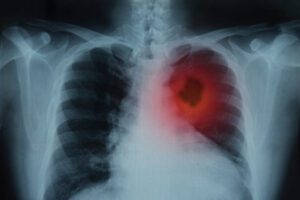
So when I developed a cough in the spring of 2024, I figured it was just a “hockey cough.” Then I fractured a rib, which led to a CT scan. That scan found a mass in my lung, and after more testing, I was diagnosed with advanced non-small cell lung cancer.
My first thought was, “Why me?” I had always been healthy, and the diagnosis came as a complete shock.
My medical team at the University of Minnesota moved quickly. Between June and September 2024, I completed four rounds of chemotherapy before having surgery to remove the upper lobe of my left lung that November. The chemotherapy wasn’t easy, but I tried to keep life as normal as possible. I’d have treatment on Wednesday, work Thursday and Friday, feel a little off over the weekend, and be back at work on Monday.
After surgery, the team used the removed tissue to conduct comprehensive biomarker testing, which includes DNA and RNA. The results showed my cancer had a ROS1 mutation, which is the mutation that drives the cancer in about 2% of non-small cell lung cancer patients. That meant I was eligible for a targeted therapy. I started on one ROS1 inhibitor, but the side effects—including pins and needles, balance issues, and neck muscle problems—became difficult to manage, even after adjusting the dose. My doctor then switched me to a different targeted therapy that was approved in June 2025.
The change made a real difference for me. I appreciated that it was only three pills a day instead of eight, and I was able to be on the standard dose while continuing to move forward with my life.
Today, my scans every three months continue to show no evidence of disease. Of course, there’s always that thought in the back of your mind about whether the cancer could come back. I think everyone who’s been through cancer has those moments. But I’ve learned not to let those thoughts define me.
Instead, I’m focused on living my life and being on the ice.
Even after recovering from lung surgery and a rotator cuff operation, I returned to refereeing hockey games. Being back at the rink isn’t just about the sport. It’s where I feel like myself.
People laugh when I say it, but where else can you go to have kids and parents yelling at you while players are shooting pucks at you? For me, it’s therapy.
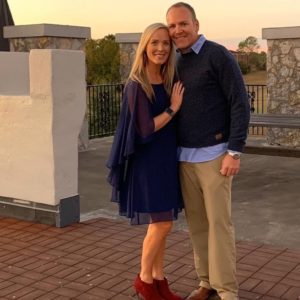
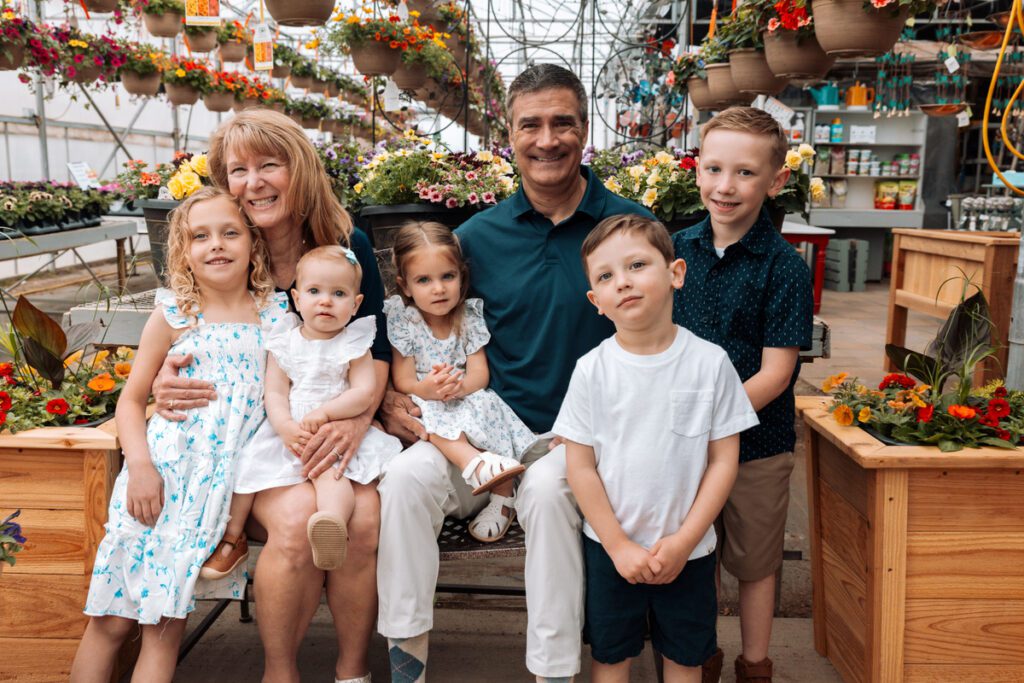
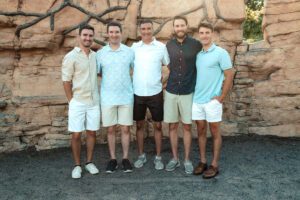
I couldn’t have gotten through this journey alone. My wife, Esther, who’s a respiratory therapist, was by my side for nearly every appointment. She helped translate all the medical information and was my biggest advocate. Our four sons and daughters-in-law, and our five grandchildren reminded me every day what I was fighting for.
The hockey community also rallied around me in ways I’ll never forget. While I was away from the rink, fellow officials and friends checked in, stopped by to visit, and kept me connected. You really find out who cares when life takes an unexpected turn.
Today, I am beginning to volunteer with A Breath of Hope, a lung cancer advocacy organization in Minnesota. If sharing my experience helps even one person feel less alone, it’s worth it. When you’re first diagnosed, everything feels uncertain. Sometimes you just need someone who’s been there to tell you what to expect and remind you that there is hope.
If there’s one thing I’ve learned, it’s that you don’t have to face cancer by yourself. Lean on your family, your friends, and your community. Their support and a positive attitude makes all the difference.