To this day, I still don’t remember the car accident that changed my life.
It was Thursday, August 8, 2024 — a day like any other. I’d gone to BioFit, my local gym, for an hour-long conditioning class that afternoon. I finished hot and sweaty from a good workout, grabbed my keys, wallet, and phone from the cubby, and walked toward the door.
That’s the last thing I remember.
The next thing I’m aware of, I’m in a hospital bed, mid-conversation with a doctor. I did a double take. “Wait. What’s going on right now?” The doctor kind of chuckled. “I think you’re finally back with us,” he said.
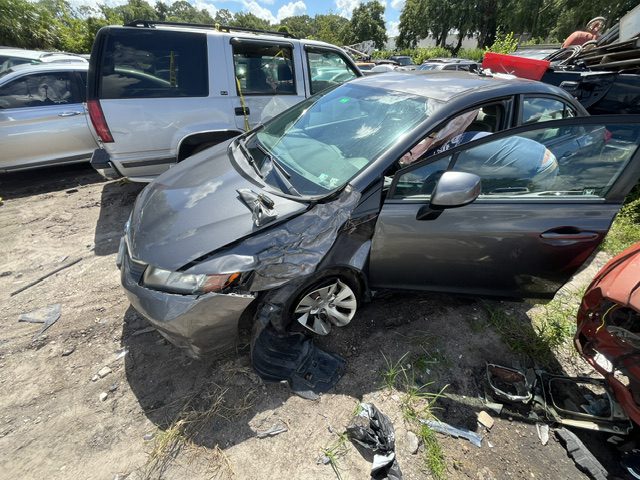
What happened in between, I’ve had to piece together from other people. The working theory: I finished my workout overheated, then stepped outside into a late August afternoon in Florida. More heat. Then I got into my gray 2012 Honda Civic, windows rolled up, sitting in the sun. It was, as you might imagine, hotter than hell in that car. I started driving home, less than two miles away. Somewhere along the way, my body overheated. I passed out at the wheel and drove into a tree, totaling the car.
The ambulance came. I was transported to AdventHealth Winter Park Hospital and admitted. I don’t remember any of that. The first thing I remember is being in a conversation with a doctor and realizing, mid-sentence, that I had no idea where I was or how I got there.
The doctor told me I’d been asking the same questions on a loop for hours. “Where am I? What happened?” They’d answer. Fifteen minutes later, I’d ask again. That went on for a long time.
Meanwhile, I had effectively disappeared.
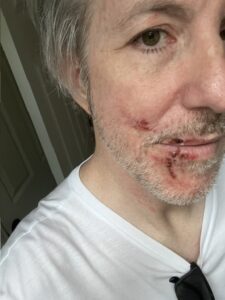 I didn’t have my cell phone. I didn’t have my glasses. I assumed both were still in the car. All I had was a pair of prescription sunglasses which had been in my front pocket. Here’s something I didn’t know before this happened: if you’re in a car accident, at least in Florida, whatever isn’t on your person stays with the car. So when the nurses asked if I wanted to contact my family, I realized I had no phone numbers memorized. Everything was stored in a phone sitting in a wrecked car at some impound lot. I remembered my parents’ landline, but that was it. I gave the nurses what I could — names, home addresses — and hoped for the best.
Simultaneously, my coworkers figured something was wrong on Friday morning when I missed a string of meetings and didn’t respond to any emails or text messages. My manager reached out to my brother using the emergency contact information from my HR file. He had no idea anything was wrong. He went to my house. My car was gone, and my cats hadn’t been fed. Now it was urgent. My family started calling hospitals and police stations.
It was sometime late Friday afternoon, about twenty-four hours after the accident, when a nurse came into my room and told me they’d found my dad. My dad had called the hospital, and they transferred him to my room. We connected, and I told him I was going to be released. They’d run a bunch of tests. Everything looked fine, other than the scrapes on my face and the bruising covering my face, arms, and legs. My parents came to the hospital, and I went home to my cats.
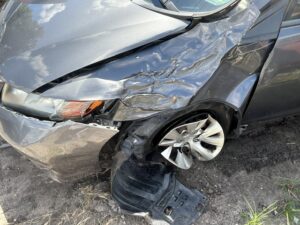
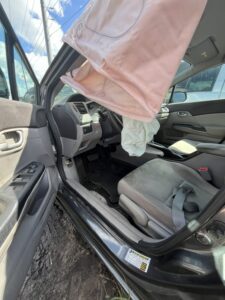
The next day, my dad tracked down my car through the police department. We drove out to the impound lot. The car was totaled: front end crushed, both airbags deployed, the steering column pushed into the driver’s seat and hanging loose. I had been wearing my seatbelt, something I am grateful for every time I think about what that car looked like afterward.
I found my keys, my broken glasses, and my cell phone, which had somehow survived. I stood there staring at a car I had absolutely no memory of crashing.
Life resumed. I went back to work. I replaced my glasses. I spent a couple of weeks squinting through prescription sunglasses at computer screens and televisions, which was its own particular challenge. Everything seemed fine.
About six weeks later, I began to notice changes. They were subtle at first.
My balance and equilibrium were wonky. I couldn’t walk in a straight line. I kept bumping into furniture, misjudging corners, collecting new bruises on top of old ones. I couldn’t hold anything level. I remember filling up my cats’ water bowl, walking the five feet from the sink to set it down, and spilling half of it before I got there. I had what I can only describe as brain fog. It was heavy, constant, like I was thinking through wet concrete. My feet shuffled when I walked. Everything was an effort.
 I kept explaining it away. I’m just overtired. My body went through an ordeal. Give it time. One morning I went out to walk the nature trail near my house — something I’d been doing for miles every day for over a year — and I couldn’t get very far. I had a weird throbbing on the left side of my head. I kept tripping. I kept veering to the left. It took a ridiculous amount of time just to get back home. Still, I told myself it was probably nothing.
What finally made me realize something was seriously wrong was an email I received at work. Someone had sent me something that required an easy response. I sat there staring at the keyboard, concentrating with everything I had, trying to hit the letter K. That’s when I knew something was really wrong.
I went to see my regular doctor, who was aware of my accident. He ordered a CT scan for the following week, but he told me not to wait. If things didn’t improve or got worse, I should go sooner. A few days later, early afternoon on Thursday, September 26, I felt really lousy. I called my dad and told him I didn’t trust myself behind the wheel. Could he take me to get the CT scan done?
He came over. We went to AdventHealth Winter Park. I had the CT scan. And then everything moved fast.
I was transferred by ambulance to AdventHealth Orlando. One of the paramedics in the back referred to it as the “mothership.” He could see I was anxious, so he put his hand on my arm and reassured me. He told me I was going to get great care, that AdventHealth Orlando was the best place for me to be right now.
The CT scan had found two large subdural hematomas — slow brain bleeds, one on either side of my brain, both quite large. One had grown large enough that it was beginning to push my brain out of position. They wanted me in surgery within twenty-four hours.
The night before surgery, nurses came in what seemed like every ninety minutes. It was the same questions every time. What’s your name? What’s your date of birth? What year is it? Who’s the president? Over and over. At some point between two and four in the morning, I was lying wide awake, starting to feel the weight of what was happening. I was getting somewhat choked up, and that’s when one of the nurses noticed. She came over, sat down, and held my hand. We talked for a long time. She was lovely, and she talked me back from the edge.
The next morning, a nurse came in for the usual round of questions. What’s your date of birth? I said, September 27th and then paused. “Today is actually my birthday,” I told her. “And I’m having brain surgery.” She stopped, looked up, and said, “Oh my heavens. You’re right, it is your birthday. Happy birthday!” A little while later, she came back with a slice of cake from the cafeteria and put balloons up on the whiteboard in my room. It was a small, human thing in the middle of something very serious. I won’t forget it.
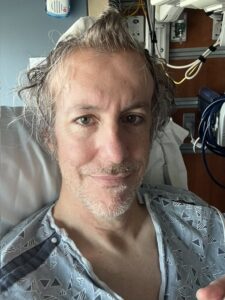 Surgery was originally scheduled for late Friday afternoon, around five-thirty, but I was told it could happen earlier depending on the schedule. Between eleven and noon, the nurses came in and said I’d be heading down to surgery within the next 60 minutes. My parents sat with me until they took me down.
In the operating room, it was freezing. It literally felt as cold as a meat locker. The team introduced themselves. My surgeon, Dr. Kelvin Wilson, came over and explained what they were going to do. He asked if I had any questions. I told him I was a little nervous. He said he’d be concerned if I wasn’t. “This is a big thing,” he said. “But we’ve got this.”
They gave me the anesthesia. That’s all I remember.
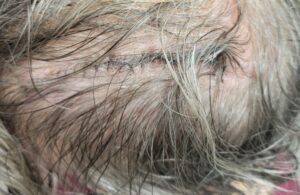
When I woke up, I was back in my hospital room. My parents were there. I was surprisingly not in pain. My skull felt tight, which is the only way I know to describe it. The surgery had involved removing sections of my skull on both sides, clearing out the hematomas, and putting everything back. My head hadn’t been fully shaved, but they’d shaved the areas where the incisions were made. I now have titanium hardware in my head and a five-inch scar on the left side and a four-inch scar on the right.
Pretty quickly after surgery, they had me up and moving. A nurse walked with me as I did laps around the hospital floor with a walker, checking my balance and gait. I noticed immediately that I wasn’t shuffling anymore. The nurse told me I had a solid gait. I told her I’d been walking several miles a day for almost two years. She said that had probably helped me more than I knew.
I was discharged from the hospital around lunchtime on Monday, September 30th. My brother came to get me, and I moved into my parents’ house for the next six weeks. The doctors didn’t want me alone, and the stairs in my own house were off-limits. The cats came too.
 Recovery was slow. I started physical therapy. I went twice a week for three months, focusing on balance, equilibrium, and strength. Much of the work took place between parallel bars — stepping forward, backward, and side to side, with something to grab onto if I lost my balance.
My personal trainer Tyler was also a key part of my recovery. Since weight training was off the table for quite some time after brain surgery, we focused on exercises to rebuild my leg strength and help restore my balance and equilibrium. Things like walking with kettlebells, which sounds simple but made a real difference. He also had me stand on one foot and bounce a tennis ball between us. I had a lot of trouble balancing during this exercise. Tyler told me to focus on one spot on his body and that would help with my balance. I focused on a logo on his sneakers, and to my surprise, it helped.
One morning in December, on my way to an early physical therapy appointment, I was sitting at a red light and felt a strange sensation wash over me. I got very light-headed, and my arms and legs went tingly. I pulled over and canceled the appointment. My doctor said it was likely a panic attack. He suspected anxiety and PTSD from the accident, which he said was completely understandable. He referred me to a therapist.
 It turns out, yes, I do have anxiety and PTSD around cars, whether I’m driving or riding as a passenger. I started therapy; I had weekly telehealth sessions for about six weeks, which made sense given I wasn’t comfortable in a car. My therapist helped me work through those fears and gave me tools to manage the anxiety. I also started a low-dose anti-anxiety medication, which has been helpful. Until I got comfortable being in a car by myself, I relied on family and friends – and Uber – to get me around.
I returned to work in early December 2024, after having been out on short-term disability for two months. Slowly, things started to feel more like themselves.
At my six-month checkup post-surgery, I mentioned the sensory issues I’d been experiencing. It was mostly vision, and to a lesser extent, hearing. My doctor wasn’t alarmed. He said it was expected after brain surgery and that the symptoms would likely fade with time, though he couldn’t say exactly when. It could be six months, a year, or longer. The uncertainty was frustrating, but knowing it was normal was reassuring.
I am now about 19 months post-brain surgery.
My sensory issues remain. Certain lights are blindingly bright — a red traffic light against a dark sky, sunlight after rain. I keep sunglasses with me most of the time now, especially being indoors under fluorescent lighting. I’ve made peace with looking like a budget version of Roy Orbison. Certain sounds feel unexpectedly loud too, so I carry earplugs. And every once in a while, my sense of smell is super sensitive. I can smell things before other people, which is one of the lamest superpowers to have. None of these sensory issues hurt. They’re just something I’ve learned to work around.
I continue to walk several miles a day on the nature trail near my house. And I still see my trainer weekly at BioFit.
My most recent birthday, September 2025 – the one-year anniversary of the surgery – was very difficult for me. In the weeks leading up to it, family and friends wanted to celebrate. I just wanted the day to pass quietly without incident. I think I was equating my birthday with trauma. That sent me back to my therapist who helped me work through that as well. My birthday carried more weight than I expected.
 I’m not a hundred percent back to where I was before August 8, 2024. But all things considered, I’m in a pretty decent place. That single day in August changed everything, but it didn’t break me. I still don’t remember that accident. What I do know is this: I walked away. And I’m still walking.