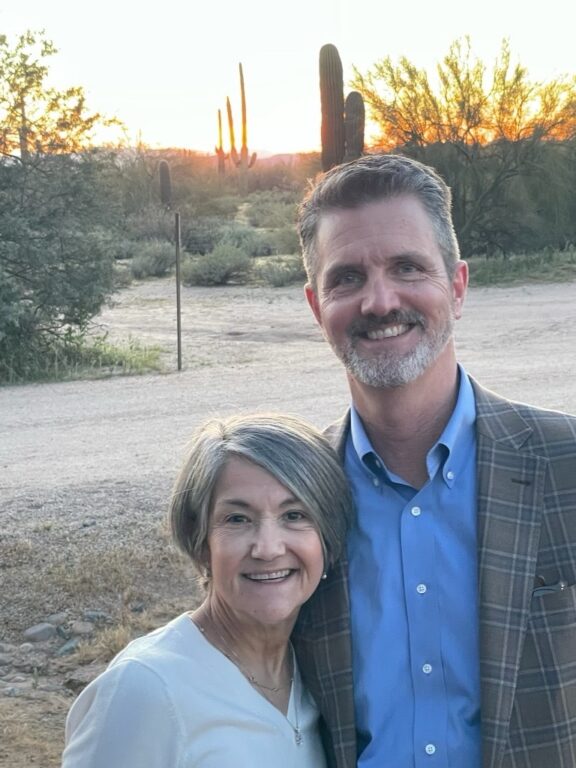
My name is Terri, and I live in the small town of Searcy, Arkansas, where I’ve proudly connected with countless people and their families over the years, especially while working at the front desk of a local elementary school. Six and half years ago, I was 55, juggling working at that front desk, looking after my aging parents and spending the rest of my time with my husband of 37 years and our two grown kids. Life was full, the way it is for most of us, with what felt like little to no time to slow down and pay attention to what my body was trying to tell me.
It started with me having trouble swallowing, and then every now and then I’d get sick after eating. Heartburn made its way into the picture and progressively got worse. I chalked it all up to getting older, maybe I was carrying a little extra weight, or the food I ate was spicier than my stomach could handle. It’s easy to explain away symptoms like that when you’re busy. I think a lot of us are conditioned not to listen to our bodies and just keep moving forward, especially when it isn’t convenient to stop and deal with them.
The symptoms I was experiencing kept getting worse, so I finally mentioned it to the school nurse who told me that what I was experiencing was worth a call to my doctor. That’s the beauty of a small town. I knew my doctor from church, so I was able to see him quickly. He ordered me a gallbladder ultrasound, since that’s usually what people my age hear first. But the technician kept stepping in and out of the room for longer than I expected, and then my doctor recommended we get some bloodwork done too.
I hadn’t even made it back home from leaving that appointment before his office called and told me to come back and to not come back alone. Which of course is never a good sign. I walked in and saw the nurse practitioner standing there with tears in her eyes and next thing I knew I learned I had stage IV cancer at the gastroesophageal junction, which had already spread to my lungs, liver and lymph nodes.
My local oncologist was very honest with me. He said he could treat me right there at his hospital, but he was upfront that a larger hospital with more resources and experience treating cases like mine might have more to offer. That kind of honesty meant everything. Within a few weeks, my husband and I made the drive to Houston. Shortly into that appointment the nurse told me that this cancer had probably been growing for close to a year. It wasn’t news you’d expect to feel relief from, but somehow knowing what was behind my symptoms provided clarity and a path forward to start doing something about them.
I wasn’t a candidate for surgery, so my options were limited. My new care team ran additional testing on my tumor and found a specific biomarker – called HER2, and that finding opened up a new treatment path chemotherapy alone couldn’t have given me. Without that testing, I wouldn’t have known that option existed. That’s one of the most important things I can tell anyone newly diagnosed: ask about biomarker testing. Ask more than once if you have to because it can change everything about what treatment options may be right for you.
For a long time, I traveled out of state regularly, and for the first couple of years my husband made every one of those hours-long trips with me. Eventually I started flying without him as I received help through the Angel Flight volunteer pilot program where folks donated their planes and their time to fly patients like me, and to this day I still get emotional thinking about the kindness of those people who didn’t have to help me but were more than happy to.
There have been hard days. Fatigue that completely takes the wind out of your sails. Stomach trouble no one warns you about ahead of time. But what I hold onto most is that neither of my doctors ever gave me a timeline. I wanted reality, but never wanted a doomsday, and I got exactly that balance from the people taking care of me.
Along the way I’ve met patients from all walks of life, fighting their own version of this disease, some with situations far more difficult than mine, and I’ve learned that each journey looks different even when the diagnosis sounds the same. There’s a real camaraderie in that, even with people you barely know.
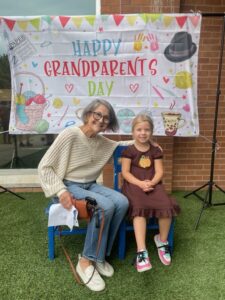 These days it brings me so much joy to say that what’s keeping me busy is being “Granny B” to my five-year-old granddaughter, being there to support the rest of my family, still keeping up with my flowers and my Australian Shepherd. Life stayed full. It just looks a little different than it used to.
If there’s one thing I want anyone reading this to walk away with, it’s this: you are stronger than you think you are. Have faith, lean on the people around you, and don’t let someone else’s experience define what yours has to look like. Dig your heels in. Pull up your bootstraps. You might just surprise yourself. I know I did.