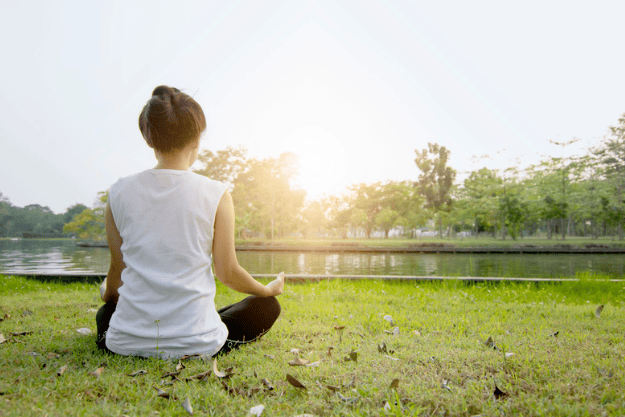
I want to share this to give some ideas I have found that help me move through difficult days with more steadiness and self compassion, especially when things are flaring up or I feel overwhelmed. I hope some of them resonate with you. Please send me a message if you would like the link to the actual blog.
CREATING INNER SPACE TO REDUCE PAIN AND BURNOUT
I want to explore what it truly means to hold space for ourselves—emotionally, mentally, and physically—and how doing so can reduce pain, ease burnout, and create a greater sense of internal steadiness. For anyone living with a chronic condition, this practice is not optional; it’s foundational. I live with dystonia, a neurological movement disorder, along with chronic neck and back pain. The strategies I’m sharing are essential to my daily functioning, and I hope they offer something meaningful for you as well.
What It Means to Hold Space for Yourself
Holding space means intentionally creating moments where you tune into your needs, listen to your body, and support yourself without rushing, judging, or dismissing what you feel. It is the act of stepping out of autopilot and into mindful awareness. Jon Kabat-Zinn describes mindfulness as, “paying attention, on purpose, in the present moment, as if your life depended upon it.” That is the essence of holding space.
Before and After: The First Layer of Self-Support
Making time before and after any event is an essential step. Rest, recovery, and intentional preparation create a buffer that protects our nervous system from overload. When I know I’ll be exerting myself (exercise, yard work, travel, socializing), I prepare my body by resting in the most comfortable position I can find. I prepare my mind through meditation, breathing exercises, visualization, or other relaxation practices. These small investments of time dramatically change how my body responds to stress and strain. I go into the activity steadier, and I recover more efficiently afterward.
Celebrate Yourself and Practice Gratitude
When you accomplish something — anything — pause and acknowledge it. Chronic pain often makes even simple tasks feel monumental. Honor that. Reflect on what you experienced, what you learned, and what you overcame to do it. Even if you weren’t at your best, you still showed up. That matters.
Decompress After Social Interactions
Socializing can be draining, especially when pain or symptoms are present. After interactions, give yourself space to decompress. If a particular moment lingers, reflect on what you might do differently next time—not to criticize yourself, but to reduce rumination. Then let the interaction go. Turn the page. Visualize it floating away in a bubble. Release it.
Integrate What You Learn
When you finish reading an article or book, or watching a movie or show, pause before jumping to the next thing. Ask yourself what your takeaway was. What resonated? What can you carry forward? This helps your mind slow down and absorb meaning instead of racing from one stimulus to the next.
Slow Down Your Movements
Living with pain often increases adrenaline. We rush because we fear losing the small window of time when we feel capable. But rushing intensifies symptoms and burnout. Try doing everything at half speed.
When I began consciously slowing myself down, I noticed I felt more grounded and more in control. My body felt less chaotic. Surprisingly, I accomplished more — not because I worked harder, but because I stopped burning out so quickly. “Do less, accomplish more” became a guiding principle.
Be Present with Your Senses
In any moment, tune into your senses: sound, light, taste, smell, touch. Notice without labeling. Not “good” or “bad.” Just experience. This is especially important with pain. Our minds love to judge pain, which increases tension. Instead, observe it as a sensation and nothing more.
Relax Into the Experience
This is difficult, but transformative. Whatever you’re feeling—pain, discomfort, emotion—try relaxing into it rather than resisting it. Don’t categorize it. Don’t fight it. Let it be. When you stop adding emotional resistance, your nervous system softens. Calm becomes more accessible.
Speak Kindly to Your Body
If your neck hurts, don’t call it stupid. It’s the only neck you have. It’s listening. It needs care, not criticism. Shift your language from frustration to compassion. Words shape perception, and perception shapes pain.
Quiet the Internal Commentary
Our minds run constant commentary- judgment, worry, assumptions about others’ opinions, anxious predictions. It’s like trying to watch a movie while someone talks over every scene. We never get to fully experience our own life.
Imagine what it would feel like to quiet that commentary. To simply live the moment without labeling it. To see the movie of your life clearly, without subtitles of fear or frustration.
Our minds can work for us or against us. When we reduce the commentary, we reduce suffering. We create space for clarity, peace, and presence.
The Goal of Holding Space
The goal of all these practices is simple: to bring more calm, focus, peace, and joy into your mind and body. To reduce the internal noise that amplifies pain and create a life where you feel more connected, more steady, and more compassion toward yourself. Holding space is not a luxury. It is a form of self-respect. It is how we learn to live alongside pain without letting it define us.