Rose became acquainted with Patient Worthy after her husband was diagnosed with Acute Myeloid Leukemia (AML) six years ago. During this period of partial remission, Rose researched investigational drugs to be prepared in the event of a relapse. Her husband died February 12, 2021 with a rare and unexplained occurrence of liver cancer possibly unrelated to AML.
For years, scientists have known the mechanisms underlying normal, as well as the disease-causing (pathogenic) versions, of prions. But according to a recent article published in Sci-Tech Daily, no one…
Continue Reading
Researchers Have Uncovered a Missing Link That May Lead to Development of Brain Disorder Treatments
Marian McGlockin was eighteen months old when she was diagnosed with Niemann-Pick Type C disease, a rare and fatal disorder. Marian could barely speak and was unable to walk. According…
Continue Reading
Parents Receive News That Their Child’s Niemann-Pick Disease Medication Will be Discontinued
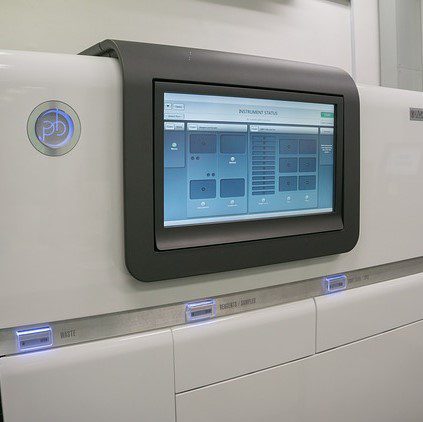
No longer the new player on the team, next-generation sequencing (NGS) is well established as having an influence in clinical care. In recent years, NGS has been responsible for many…
Continue Reading
Next Generation Sequencing Leads to New Options When Standard Treatments Fail
Emflaza (deflazacort), a corticosteroid, was originally approved by the FDA in 2017 to treat Duchenne muscular dystrophy (DMD) in patients five years or older. This approval was expanded in 2019…
Continue Reading
Doctors Listened and Duchenne Muscular Dystrophy Patients Benefited
The majority of Parkinson’s patients treated with Levodopa experience relief from the major motor effects of Parkinson’s. However, according to a recent article in Biospace, after prolonged use of Levodopa…
Continue Reading
Levodopa, Parkinson’s Disease, and Dyskinesia: The Benefits of Levodopa May Not Outweigh the Risk
According to a recent article in Fierce Biotech, most cancers progress through constant cell division. Scientists at Vanderbilt University are determined to find the reason for this mysterious cell division.…
Continue Reading
Oncology Researchers Are Beginning to Focus on Ways to Stop Uncontrolled Cancerous Cell Division
Most people who are unhappy with the price of their medication are not aware of drug prices in the truly high-end segment of the market. GoodRx, the prescription drug watchdog,…
Continue Reading
GoodRx Has Assembled a List of the Top Ten Highest Priced Drugs
Genetec Engineering and Biotechnology News recently carried a story giving credit to Baylor College researchers for finding microbes living in the gut that are associated with specific symptoms of neurological…
Continue Reading
Researchers Identify Microbes Causing Symptoms in Neurological Disorders
We seldom see articles about multiple system atrophy (MSA also called Shy-Drager syndrome). The disease is extremely rare and currently, there is no effective treatment. But according to a recent…
Continue Reading
New Drugs Are Being Developed for Multiple System Atrophy
A person’s true feelings are often difficult to express during an interview. When asked a question by the interviewer there is no time to rehearse but only grasp at the…
Continue Reading
A Mother Shares the Daily Challenges She Faces Caring for Her Special Needs Son
According to a recent article in the Seattle Cancer Care Alliance, the FDA’s recent approval of Axi-cel (Yescarta) will improve the chances of survival for relapsed or refractory follicular lymphoma.…
Continue Reading
FDA Clears Axi-cel for Relapsed/Refractory Follicular Lymphoma
Molecular Targeting Technologies (MTTI), a radiopharmaceutical company, announced through Biospace that the FDA has given its approval for MTTI to move forward with a Phase 1 clinical trial to study…
Continue Reading
The FDA Approves the Investigational Drug EBTATE for Neuroendocrine Tumors
It is estimated that one person in forty to sixty thousand is affected by Fabry disease. Approximately five hundred Canadians are known to have Fabry disease. Newswise recently carried the…
Continue Reading
A World-first: Canadians Use Gene Therapy to Successfully Treat Fabry Disease
Aljazeera recently published an article that highlights the difficulty several families have had waiting for a rare disease diagnosis. In the majority of cases, when the families finally received the…
Continue Reading
Rare Disease Patients and Families Share Fears and Frustrations
A recent article in the journal Nature describes the first draft of human genome analysis and sequencing published in 2001 by the Human Genome Project international consortium. The consortium included…
Continue Reading
The Revolution: Human Genome Sequencing
According to a recent article featured in News5Cleveland.com, there are over seven thousand rare diseases worldwide that affect over thirty million people in the United States. Several days ago, patients…
Continue Reading
Two Sisters With Rare Diseases Are Working Towards Recovery With the Help of Their Family
When a patient is told that they have a life-threatening rare disease and then told that there is no cure, every effort is made to attend to their physical needs.…
Continue Reading
The Need to Research Mental Health Issues for Rare Disease Patients and Families is Evident

source: pixabay.com
The Orange County Guide features doctors’ articles in each issue. Dr. Justin West’s search to cure his son’s rare disease will be familiar to families also in search of…
Continue Reading
Seeking a Cure for a Rare Form of Childhood Epilepsy
Crispr is no longer a buzzword. According to a recent article in The Guardian, it has become the ‘molecular scissors’ that will enable scientists to rewrite our genes or as often said,…
Continue Reading
CRISPR-Cas9 Has Achieved Worldwide Acceptance
During a recent WZDX News interview with Dr. David Bick, HudsonAlpha Faculty Investigator Dr. Bick stated that in Alabama alone, there are approximately four hundred thousand people with rare diseases.…
Continue Reading
Whole Genome Sequencing Can Search 20,000 Genes to Find Rare Diseases

source: pixabay.com
Billions of dollars have been spent in research over decades, resulting in only two therapies that treat symptoms of Alzheimer’s disease (AD). There are no approved methods that diminish the…
Continue Reading
A First: Human Clinical Trial Assessing Gene Therapy for Alzheimer’s Disease

source: pixabay.com
Research by scientists at Cornell University and Weill Cornell centered around the endothelial cells that form a barrier between tissues and vessels. They control the flow of fluid and substances…
Continue Reading
A New Study Casts Doubt on Lab Models of the Blood Brain Barrier

source: pixabay.com
Policymakers Must Offer Solutions That Provide Patients with Lower Out-of-Pocket Costs For Critical Medicine In addition to coping with chronic illness, many patients are faced with the challenge of…
Continue Reading
A Call To Policymakers For Lower Out-of-Pocket Costs

source: pixabay.com
Dr. Oliver Dorigo of the Stanford University Medical Center was the medical source for an article featured in Oncology. Dr. Dorigo explained that if a woman with ovarian cancer has…
Continue Reading
The FDA Has Approved Niraparib (Zejula) for Platinum-Sensitive Recurrent Ovarian Cancer

source: pixabay.com
Scientists are researching Alzheimer’s disease (AD) from all angles and gradually closing in on the cause of the disease. According to an article in Neuroscience News, a discovery by researchers…
Continue Reading
Each New Discovery Brings Scientists Closer to Finding the Cause of Alzheimer’s Disease